The Kremlin asserted that the rapid developments on the ground and the recent successes of the Russian military on Ukraine's eastern front have significantly strengthened Moscow's negotiating position in ongoing talks with the United States to end the war. These statements come at a sensitive time, as the international arena witnesses intense diplomatic activity aimed at ending the conflict, considered the most serious in Europe since World War II.
Field gains and their diplomatic impact
Last month saw a marked acceleration in the pace of Russian advances, particularly in eastern Ukraine, a development Moscow has capitalized on politically. In this context, Yuri Ushakov, a Kremlin political advisor and participant in the Russian-American talks, stated that "the Russian military's battlefield successes in recent weeks have directly influenced the nature and progress of the negotiations.".
Ushakov added, explaining the strategic impact of these gains: "Through their military achievements, our Russian soldiers have contributed to pushing our foreign partners to reassess the paths to a peaceful settlement, making them more realistic and compatible with Russian demands." This statement points to a Russian strategy that relies on creating military facts on the ground to improve its negotiating position.
Behind the scenes of the talks with the American envoys
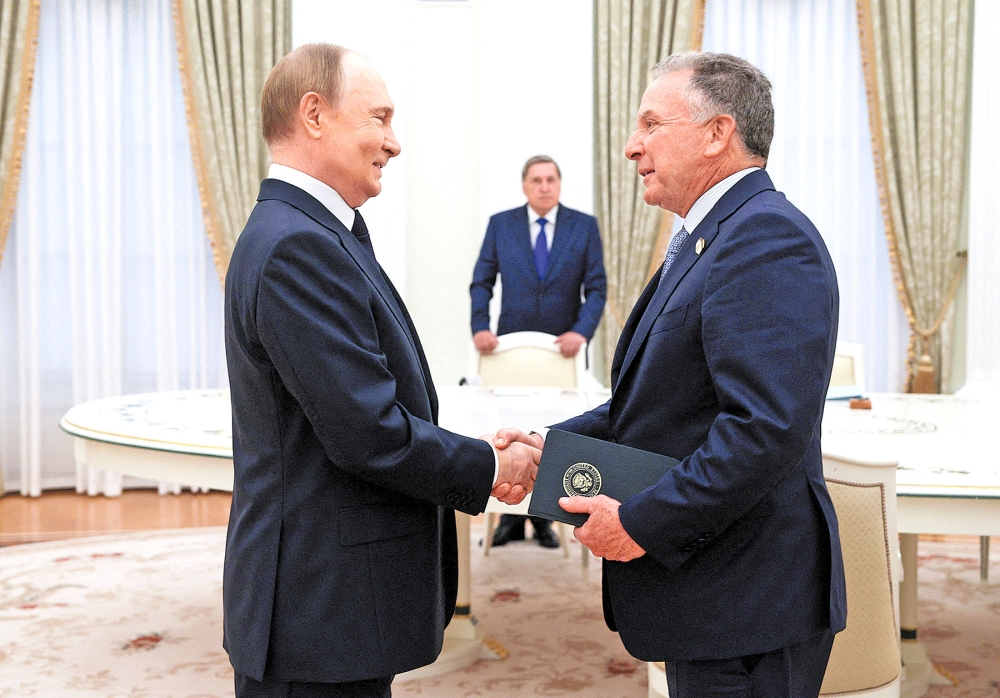
On the diplomatic front, talks between the Russian side and US President Donald Trump's envoys, Steve Wittkopf and his son-in-law Jared Kushner, continued into the early hours of Wednesday. Despite the White House's earlier optimism regarding its peace plan, the Kremlin indicated that there were significant obstacles, with Moscow deeming certain provisions in the revised version of the American plan "unacceptable.".
Kremlin spokesman Dmitry Peskov confirmed Russia's commitment to the diplomatic path, saying: "We are still ready to hold meetings as many times as necessary to reach a peaceful settlement," but he stressed at the same time that President Vladimir Putin did not reject the plan in its entirety, but rather had reservations about specific points that affect Russian national security.
NATO's knot and disputed territories
The core disagreements revolve around two main points that have formed the heart of the conflict since it erupted in February 2022. The first point concerns the issue of Ukraine joining the North Atlantic Treaty Organization (NATO), an issue that Moscow considers a "red line" and an existential threat to its security, and insists on Kyiv's neutrality as a prerequisite for any agreement.
The second point concerns the recognition of the new regional reality. The Kremlin insists on not reaching any "compromise" regarding the territory seized by Russian forces and considered part of its sovereignty. Putin has explicitly warned that Moscow is prepared to continue fighting for full control of the remaining territories it claims if Kyiv and the West do not show flexibility on this issue.
This hardline stance reflects a Russian conviction that time and field conditions are working in its favor, making a quick settlement complicated despite the declared desire of international parties to end the ongoing military and economic bleeding.