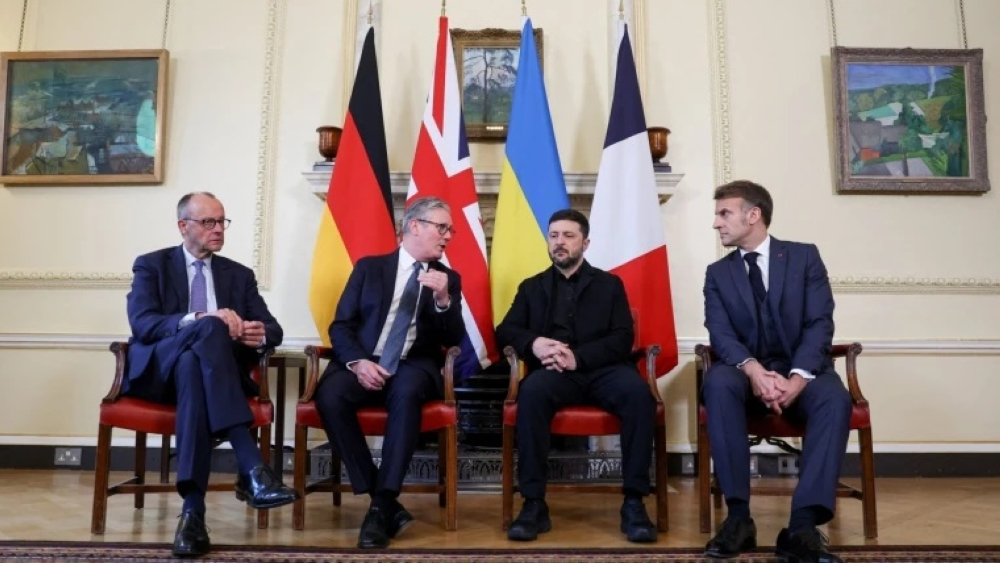
The Kremlin expressed deep skepticism and outright criticism of European involvement in the ongoing negotiations regarding the US peace plan for Ukraine, describing this intervention as “not a good omen.” These statements come at a sensitive time, as the international arena witnesses intense diplomatic activity aimed at ending the ongoing conflict.
In statements carried by Russian news agencies, Kremlin spokesman Dmitry Peskov asserted that European involvement in the process could complicate Moscow's chances of accepting any potential agreement. Peskov explained that the Russian leadership has not yet been briefed on the official results of the recent talks held in Berlin, emphasizing that Moscow must study the outcomes of the dialogue between the Ukrainians and Americans before considering any further meetings involving Russia.
Context of the conflict and historical Russian concerns
To understand Russia’s hardline stance toward the European role, one must return to the roots of the crisis. Since the outbreak of war in February 2022, and for years prior, Moscow has viewed European and NATO expansion eastward as an existential threat to its national security. Russia considers European countries to be biased parties in the conflict, given the massive military and financial support they have provided to Kyiv, in addition to the unprecedented economic sanctions imposed on the Russian economy.
Therefore, the Kremlin considers any peace plan that includes European guarantees or a European military presence to be a consecration of NATO’s influence on its immediate borders, which is the red line that originally led to the outbreak of military operations.
Zelensky and Berlin's optimism
On the other hand, Ukrainian President Volodymyr Zelensky expressed notable optimism following his meetings in Berlin on Monday with US envoys Steve Wittkopf and Jared Kushner. Zelensky praised the progress made in the negotiations, indicating a concerted effort to formulate an agreement that might be acceptable to both Western powers and Kyiv.
The parallel European proposal: a new obstacle?
What further heightened Russian tensions was the proposal by European supporters of Kyiv to counter the American plan. This proposal included deploying a multinational force within Ukrainian territory, providing Kyiv with security guarantees similar to those stipulated in Article 5 of the NATO treaty (collective defense), and building a strong Ukrainian army of 800,000 troops.
These provisions are completely unacceptable to Moscow, as the Kremlin has previously rejected any scenario that would allow foreign forces to be present in Ukraine or turn it into an advanced military stronghold for the West.
The ambiguity of the American plan and its geopolitical impact
Despite the diplomatic efforts, the details of the revised US plan remain largely undisclosed. However, Zelensky's previous hints suggested it might include painful concessions for Kyiv, including the relinquishment of parts of its territory, which aligns with earlier leaks about a realistic vision for ending the war.
Observers believe that the European Union's current strategy, as confirmed by a diplomatic source in Kyiv, is to try to separate the American position from the Russian perspective and prevent Washington from being drawn into a settlement that Europe might perceive as a capitulation to Moscow. This divergence in views between the two sides of the Atlantic could reshape Western alliances and directly impact the future of security on the European continent for decades to come.