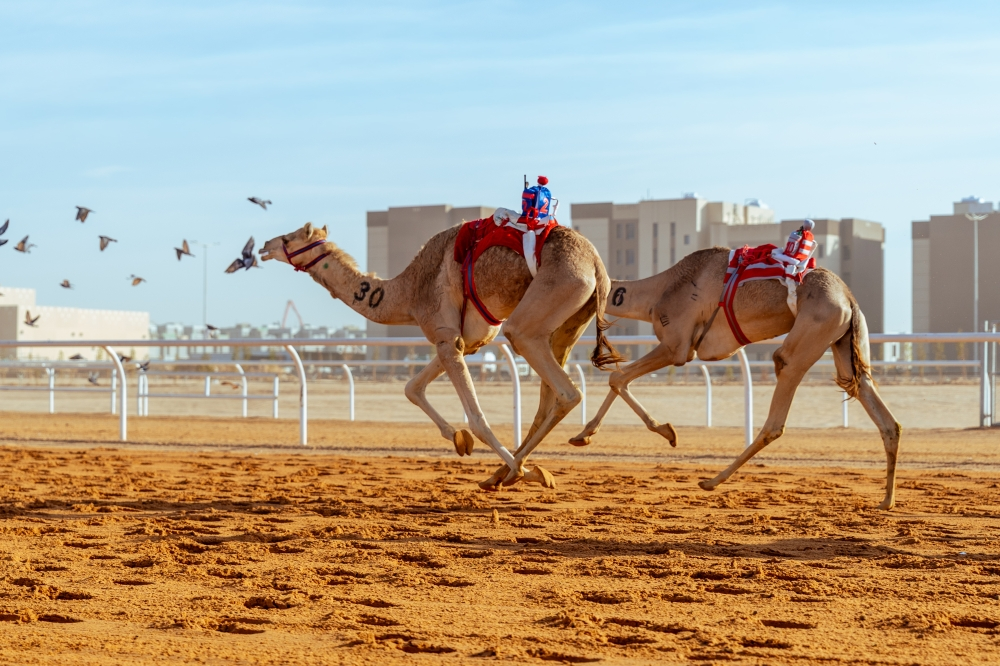
On Wednesday, the eyes of fans of purebred camel racing will turn to the historic Janadriyah field in Riyadh, where the curtain will fall on the “Jathaa” category, one of the most prominent categories of the third edition of the Custodian of the Two Holy Mosques Camel Festival 2026, with the crowning of the champions in four final rounds, for which the festival’s cups and huge financial prizes amounting to 5.5 million riyals have been allocated.
This closing ceremony marks the culmination of intense competitions that began last Friday under the generous patronage of the Custodian of the Two Holy Mosques, King Salman bin Abdulaziz Al Saud – may God protect him. The ten-day festival is one of the largest heritage sporting events in the region, with total prizes exceeding 75 million riyals, distributed across multiple categories including “Haqayiq,” “Laqaya,” “Jathaa,” “Thanaya,” and “Heel and Zamoul,” in addition to camel racing for male and female riders.
Historical background and cultural significance
Camel racing holds a special place in the cultural heritage of Saudi Arabia and the Arabian Peninsula, where camels have historically been linked to desert life and symbolized strength and authenticity. In recent decades, these races have transformed from a traditional practice into a professional, organized sport, thanks to significant government support aimed at preserving this rich heritage and passing it on to future generations. The Janadriyah Camel Racing Track is considered a historical stage for this sport, having witnessed its development and flourishing over the years, transforming it into a global event that attracts participants and enthusiasts from around the world.
Details of the "Jathaa" category competitions
The fifth day of the festival featured 25 exciting races in the "Jathaa" category, with 17 races in the morning and 8 in the evening. The participating camels covered a total distance of 150 kilometers, with each race covering 7 kilometers. Amidst great anticipation from owners and trainers, the camels participating in all the competitions in this category are expected to cover a total distance of 276 kilometers, striving to win top positions and the valuable prizes, especially the "Festival Cups," which represent the pinnacle of competition and prestige.
Local and regional impact of the festival
The impact of the Custodian of the Two Holy Mosques Camel Festival extends beyond the sporting realm, serving as a significant economic and tourism driver. It stimulates economic activity across multiple sectors, supports the camel owners and breeders community, and contributes to boosting domestic tourism and attracting visitors from the Gulf Cooperation Council (GCC) countries. Furthermore, the festival solidifies the Kingdom's position as a leading destination for heritage sports, aligning with the goals of Saudi Vision 2030, which focuses on enriching culture and entertainment and diversifying sources of income.
In conjunction with the speed races, the “beauty” rounds for the category (individual single camels - female camels) for the two colors “Al-Wadh” and “Al-Majahim” also conclude. These are beauty competitions that highlight the purebred camel breeds and their beauty, and add a cultural and aesthetic dimension to the events accompanying the festival, which confirms the comprehensiveness of the event and its interest in all aspects of this authentic heritage.