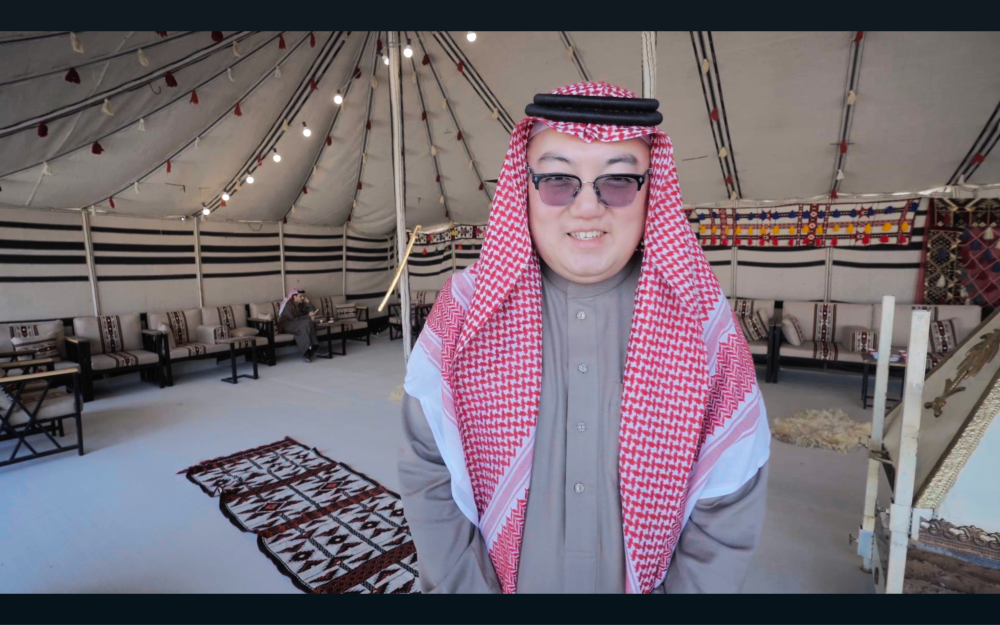
In the heart of the historic Janadriyah Square, where the richness of the past blends with the aspirations of the future, Chinese visitor Yassin Lu was more than just a passing tourist. He became an eyewitness to a major cultural and sporting transformation taking place in the Kingdom of Saudi Arabia. Yassin, who has considered the Kingdom his second home for over 15 years, stood in awe of the precision and scale of the organization of the third edition of the Custodian of the Two Holy Mosques Camel Festival , describing the event as having transcended the traditional concept of racing to become a global carnival reflecting Saudi identity.
Festival Launch: Reviving Heritage with a Modern Vision
The third edition of the festival, held under the patronage of the Custodian of the Two Holy Mosques, King Salman bin Abdulaziz Al Saud, has commenced, underscoring the profound place camels hold in Saudi cultural heritage. Camel racing is an authentic Arab sport deeply rooted in the history of the Arabian Peninsula, where camels were companions and a source of sustenance. Today, thanks to unlimited government support, this sport is transforming into a massive sports and economic industry, aligning with the goals of the Kingdom's Vision 2030 to strengthen the culture and sports sectors.
The festival continues for 10 days on the grounds of Al-Janadriyah Square in Riyadh, with a total prize pool exceeding 75 million riyals. It includes the participation of five approved categories, in addition to the camel race for human riders (men and women) and the "beauty" rounds, making it the most prominent driver for the camel sector in the region.
Yassin Lou's experience: From visitor to aspiring competitor
Yassin, who serves as the director of the China-Arab Regional Center for Cultural and Tourism Cooperation Studies, spoke enthusiastically about his experience, saying, "I heard and read about this festival in the media and was eager to attend. I was truly amazed by the quality of the organization; the festival is absolutely fantastic." He added, explaining how deeply moved he was: "In two weeks, I visited the site four times to learn and gather information. Today, with the festival underway, my amazement at the enthusiasm and public engagement has only grown. This exceptional experience has prompted me to seriously consider owning camels and participating in races in the future, and it would be wonderful to be the first Chinese person to take part in this event.".
Reflections of tourism and economic development
Yassin didn't overlook the connection between what he saw at the festival and the tourism boom the Kingdom is experiencing, noting that the positive developments after 2018 were a pivotal turning point. He explained, "Previously, it was rare to find Chinese people here, but today the number of Chinese residents in Riyadh has exceeded 80,000, and this is due to the new developments that have attracted the world.".
Recent statistics indicate the Kingdom’s success in securing its place among the top 10 fastest-growing global tourism destinations, after receiving more than 30 million tourists, which reinforces the importance of heritage events such as the Camel Festival in attracting international visitors and introducing them to the local culture.
Yassin concluded his remarks by emphasizing his role in conveying this bright image of his country, saying: “Living in Saudi Arabia has given me a lot of knowledge, and my role as head of the center is to contribute to conveying what I see of development and civilization to my country, China.”.