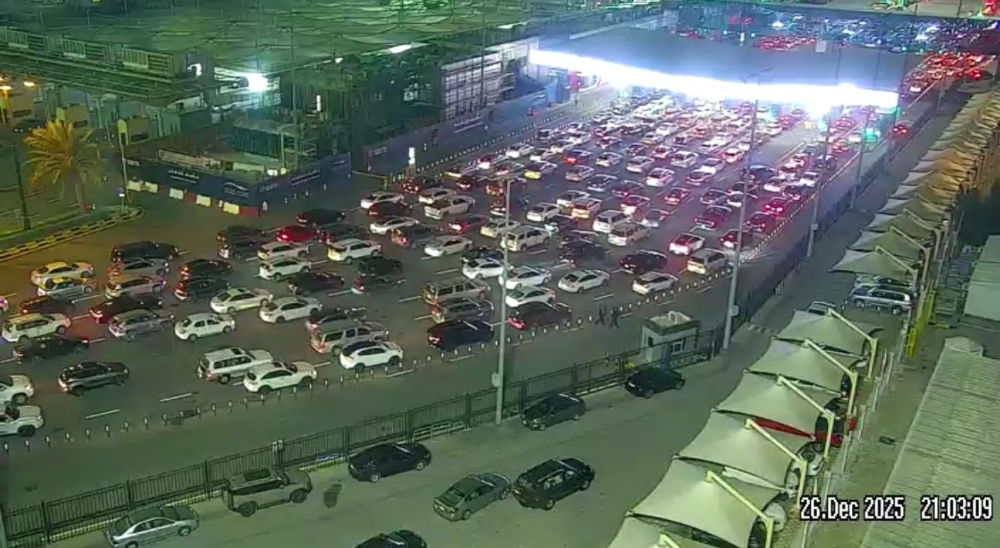
The King Fahd Causeway is experiencing heavy traffic and significant delays today, Friday, both inbound to Bahrain and inbound to Saudi Arabia. This congestion coincides with the weekend, which typically sees a large influx of travelers and tourists between the two neighboring countries.
Reasons for vehicle congestion and fingerprinting procedures
Field sources and eyewitnesses attributed the slow traffic to the implementation of new regulatory and security procedures at passport control. These procedures require fingerprinting and biometric verification for every passenger in the vehicle, not just the cardholders or the driver as was previously the case. This stringent measure, despite its security importance, has increased the time required to process each vehicle, resulting in long queues.
Furthermore, these measures coincided with field operational plans that included diverting the “student route” to serve the incoming reverse traffic to Saudi Arabia in order to accommodate arrivals, which led to the integration of departing passenger traffic into the regular routes and increased pressure on them.
The strategic importance of the King Fahd Causeway
To understand the context of this event, one must consider the strategic importance of the King Fahd Causeway, which officially opened in 1986. This bridge is not merely a 25-kilometer road; it is a vital economic and social artery connecting the region's largest economy with the Kingdom of Bahrain. Serving millions of travelers annually, the bridge is heavily relied upon by the tourism and trade sectors, meaning that any changes to crossing procedures directly impact the economic and social activity in the Eastern Province and Bahrain.
The balance between security and smooth traffic flow
The new procedures are part of the security, passport, and customs authorities' commitment to enhancing security accuracy and ensuring the matching of all passenger data via the updated fingerprint scanners. While this may cause temporary delays, it reflects a commitment to high security standards. Real-time monitoring indicates that the average processing time currently ranges between 32 and 40 minutes, though these times are subject to change based on the number of passengers in each vehicle and the system's response time.
Travel tips and digital solutions
Passport and customs officials are currently working at full capacity to expedite processing and reduce waiting times. Under these circumstances, travelers are advised to utilize available digital services, particularly the "Jisr" app, which provides real-time information on congestion and estimated crossing times, helping them plan their trips and choose less busy times for a smoother and more comfortable travel experience.