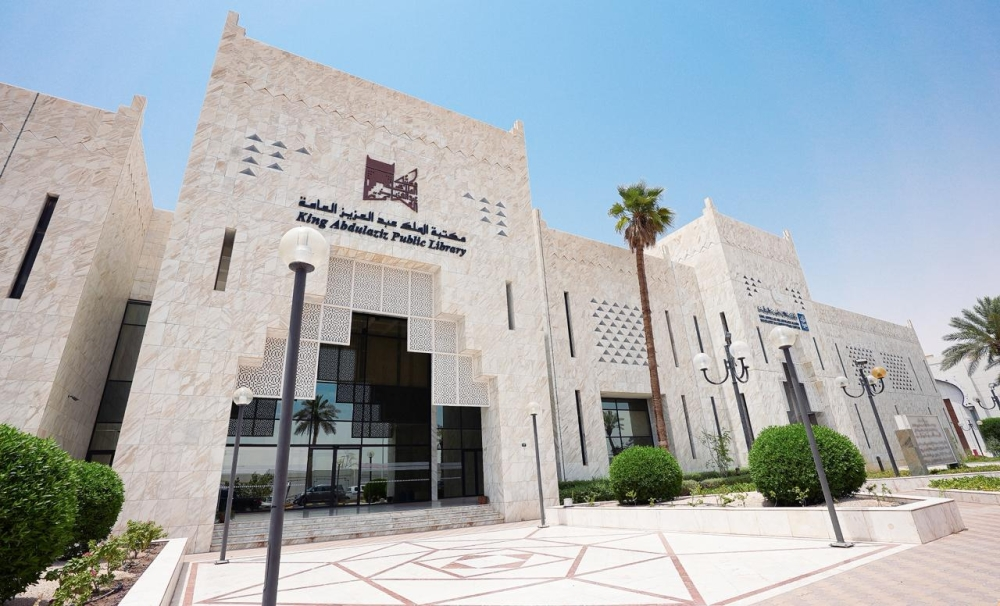
King Abdulaziz Public Library: A cultural beacon in the heart of Riyadh
Founded in 1985, the King Abdulaziz Public Library is a leading cultural and intellectual institution that serves not only the Kingdom of Saudi Arabia but also extends its influence to researchers and scholars worldwide. Among its holdings of over 2.5 million items, the library houses a unique collection known as the "Special Collections," a treasure trove of primary sources that illuminate the history of the Kingdom, the Arab world, and the Islamic world.
These collections are not just books and documents, but a living memory of nations, including rare manuscripts, historical documents, photographic archives, old maps, and private libraries of prominent figures, making them an essential destination for anyone seeking a deeper understanding of the history and heritage of the region.
Rare archives tell the history of the region
Throughout its history spanning more than four decades, the library has formed collections of exceptional value, providing researchers with accurate scientific material to reread and rewrite history from its original sources.
Photographs: A Window to the Past
The library possesses a vast archive of over 7,811 original photographs taken by pioneering photographers in the Middle East since the 19th century. Among the most notable collections are:
- The Muhammad Sadiq Pasha Collection: It includes rare photographs of the Two Holy Mosques taken in 1880 AD, in addition to his four books that document the Hajj journeys and the social and urban situation of the Hijaz.
- Hieroglyphic Snouck Hurgronje: The library possesses the first photograph taken by a foreign orientalist of Mecca in 1888 AD, by the Dutchman Snouck Hurgronje, which represents a unique visual document.
- The Princess Alice Collection: Documenting the journey of the Queen of Britain’s granddaughter to the Kingdom in 1938 through 324 previously unpublished photographs, in addition to the oldest known documentary film about the Kingdom.
- Other collections: These include treasures from the works of photographer Ahmed Pasha Helmy and Brazilian Humberto da Silveira, which document different aspects of the kingdom’s history before the modernization phase.
Documents and manuscripts: Treasures of paper
The library contains priceless manuscripts and documents, including:
- Abbas Pasha’s manuscript “The Origins of Horses”: written in 1852 AD, it is considered a fundamental reference in horse lineages and the history of Arab tribes and their rulers during that period.
- British documents: Images from the British archives relating to the founding King Abdulaziz Al Saud, providing deep insights into the history of the Kingdom’s founding and its international relations.
- The documents of Abd al-Rahman Azzam Pasha: They focus on the origins of the Arab League and the Palestinian issue, making them an important source for the study of modern Arab history.
Private libraries of influential figures
The library was keen to acquire the private libraries of figures who left a mark on history and culture, most notably:
- The George Rentz Collection: The library of the American historian and researcher who served the history of the Kingdom includes more than 2,165 rare documents and thousands of books in Arabic and English, reflecting a deep Western vision of the history of the region.
- The Khair Al-Din Al-Zarkali Collection: Contains 4,574 documents of correspondence between the writer, historian, and diplomat with the kings of the Kingdom, covering a crucial period in the history of Saudi diplomacy.
- The Sheikh Hamza Abu Bakr Library: The library of the former Imam of the Grand Mosque of Paris contains more than 17,000 titles in multiple languages, embodying the cultural exchange between the Arab and Western worlds.
The importance and cognitive impact of groups
The significance of these collections extends far beyond their status as mere historical artifacts. Locally, they contribute to preserving national identity and provide reliable sources for Saudi researchers. Regionally, they document the shared history of Arab and Islamic nations, from pilgrimage routes to political relations. Internationally, these rare collections attract the attention of academics and scholars from around the world, offering an authentic perspective on the region's history, free from stereotypes, thus reinforcing the Kingdom's position as a global center of knowledge and culture. Making these treasures available to researchers strengthens the scientific research movement and opens new horizons for studies in the fields of history, politics, sociology, and geography.