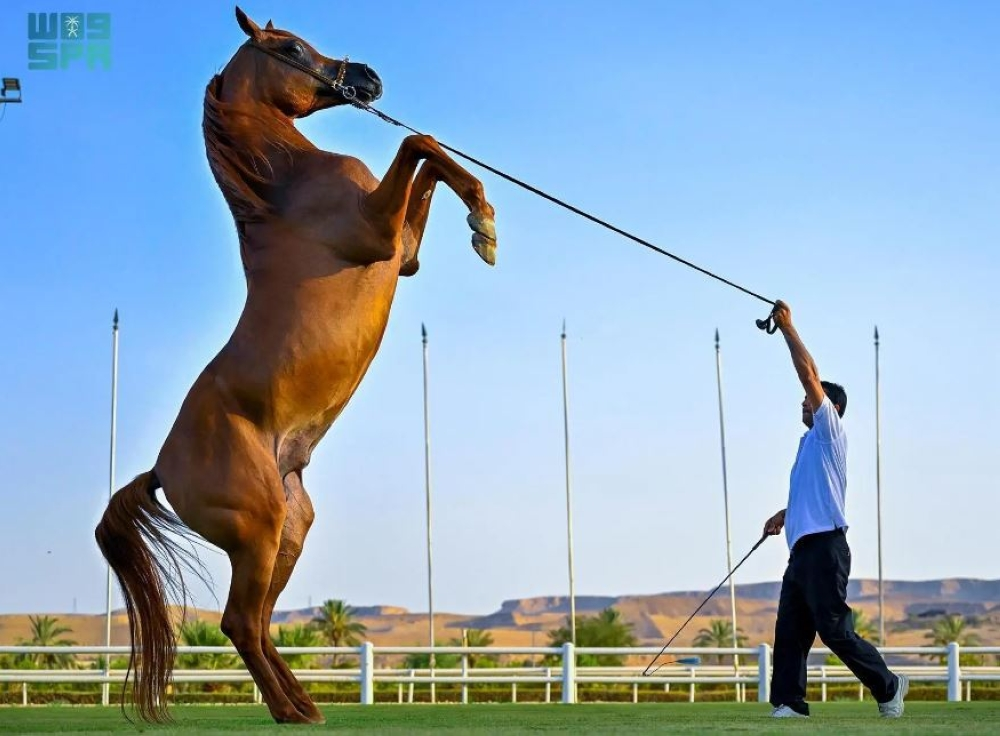
The Board of Directors of the King Abdulaziz Arabian Horse Center has approved a new regulatory framework governing the disposal of horses owned by the Center. This strategic step aims to protect the purebred Arabian horse lineage and reinforce the Kingdom of Saudi Arabia's position as a leading global authority on this ancient breed. The framework regulates sales, loans, gifts, and safe disposal through standardized official procedures that ensure transparency and preserve the pedigree.
Historical depth and global standing
This decision gains significance from the historical standing of the King Abdulaziz Arabian Horse Center (in Dirab), the official body responsible for registering and documenting Arabian horses in the Kingdom and representing it in international organizations such as the World Arabian Horse Organization (WAHO). The Kingdom is the original homeland of the Arabian horse, making the preservation of the breed's purity and its protection from indiscriminate practices a national and historical responsibility, consistent with the state's efforts to preserve its cultural and civilizational heritage.
Details of the regulations and procedures
The approved regulations included precise mechanisms for disposing of horses, encompassing multiple options such as sale via public or online auction to ensure fairness and competition, as well as regulating loan and grant processes for public purposes that serve the national interest. The regulations also established strict controls for the safe disposal of horses in cases of extreme necessity, ensuring no harm to the environment or violation of veterinary regulations.
A specialized committee and precise standards
According to the new system, a five-member committee will be formed by a decision of the board, tasked with evaluating horse disposal processes. The committee will comprise a select group of experts, including a specialist in Sharia law or regulations, a veterinarian, an expert in equine affairs, and a financial specialist. Committee members will serve three-year terms, renewable, and will issue their recommendations by majority vote within 30 days, subject to approval by the center's director general.
The committee bases its decisions on precise technical criteria, including verifying the suitability of the horse for production, shows, or training programs, in addition to assessing the productive age and health status, and ensuring that the horse is free from genetic defects that may negatively affect the breed in the future.
Procedures for sale, loan, and grant
The regulations meticulously organized the sales procedures, mandating that horses offered for sale be advertised through the center's official channels for a minimum of 15 days, and that sales be completed through documented contracts and the issuance of official ownership certificates. Regarding loans, the regulations stipulated a formal contract outlining the borrower's obligations and guaranteeing the return of the horse in its original condition. As for grants and gifts, the regulations limited them to decisions issued by the council for national, social, or cultural purposes, with full documentation in the records to protect the horse's pedigree.
Economic and cultural dimensions
This regulation is expected to contribute to raising the market value of Arabian horses in the Kingdom by ensuring the quality of the horses supplied by the center and enhancing investor and breeder confidence in government procedures. This initiative also supports the goals of the Kingdom's Vision 2030 to develop the equestrian sector and transform it into an economic and cultural pillar, while preserving authentic Arabian identity.
Compliance and animal welfare
The regulations emphasized full compliance with animal welfare standards, stipulating the safe disposal of unfit horses based on approved veterinary reports and in accordance with legal and regulatory procedures. The regulations also prohibited any action that could harm the pedigree or contradict the center's objectives, and prevented conflicts of interest by prohibiting transactions with relatives up to the second degree. Furthermore, the regulations imposed strict penalties, including the cancellation of transactions where manipulation is proven and the referral of violators to the appropriate authorities.