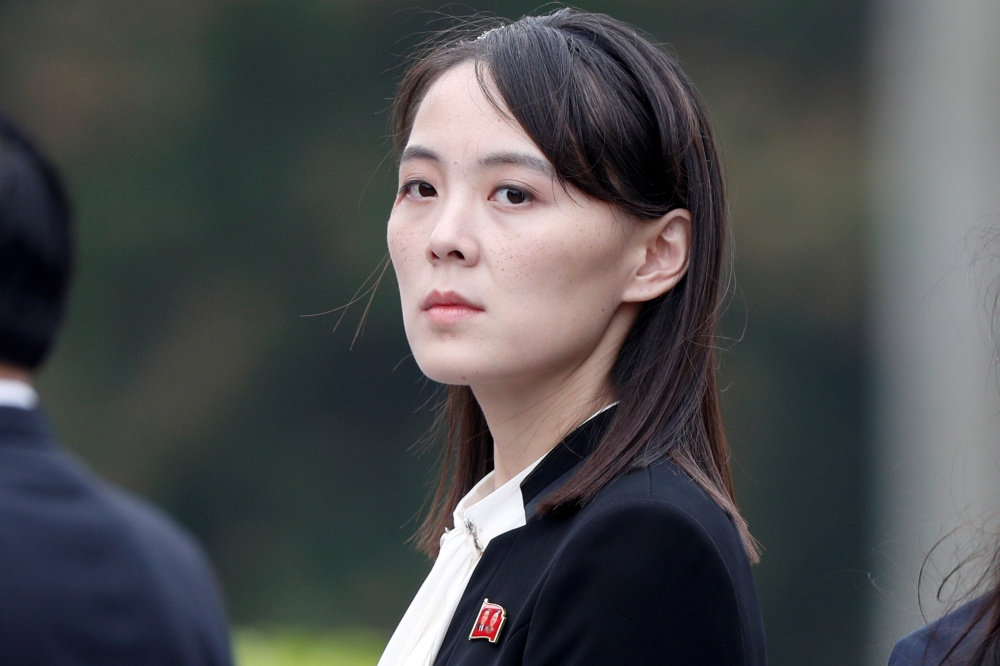
In a further escalation that deepens the rift between the two bitter rivals, Kim Yo-jong, the sister of North Korean leader Kim Jong-un, dashed any remaining hopes for improved diplomatic relations with South Korea on Tuesday. In fiery remarks carried by the official Korean Central News Agency, Kim Yo-jong dismissed South Korean aspirations for rapprochement as a "daydream," effectively ruling out any rapprochement at present.
The drone crisis and the demand for an apology
This verbal escalation came in response to accusations by Pyongyang that Seoul had violated its airspace. Kim Yo-jong, a high-ranking and influential member of the ruling Workers' Party's Central Committee, demanded a formal and unequivocal apology from the South for the drone incursion that North Korea claims was launched from the South and shot down near the border city of Kaesong in early January.
In her strongly worded statement, Kim said, "As for Seoul's delusional and wishful dreams under the guise of improving relations, none of them will ever come true." She added, warning that a repetition of such violations of her country's sovereignty would force the South to "pay a heavy price they cannot afford," describing the incident as a serious military provocation that could not be tolerated.
South Korean narrative and investigations
In response, Seoul quickly denied the North Korean account, with its military officials asserting that the drone Pyongyang presented images of did not match the models used by the South Korean military. In addressing the crisis, Seoul's political leadership ordered a joint police and military investigation into the incident, emphasizing that any involvement by civilian or unofficial entities would be considered a "serious crime threatening peace and stability on the Korean Peninsula.".
The context of historical tensions and the political role of Kim Yo-jong
These remarks reinforce Kim Yo-jong's role as a key figure in her country's foreign policy, often tasked with delivering hostile messages and direct threats to both South Korea and the United States. This stance reflects the ongoing stalemate in inter-Korean relations, as the two Koreas technically remain at war since the Korean War (1950-1953) ended with an armistice, not a peace treaty.
Observers of Asian affairs believe that the drone issue has become a new front in the cold war between the two sides, with the increasing number of mutual airspace violations in recent years, raising military tensions in the region. Pyongyang's categorical rejection of dialogue indicates a continuation of its strategy of military and political escalation, posing growing security challenges to the region and making de-escalation scenarios unlikely in the near future.