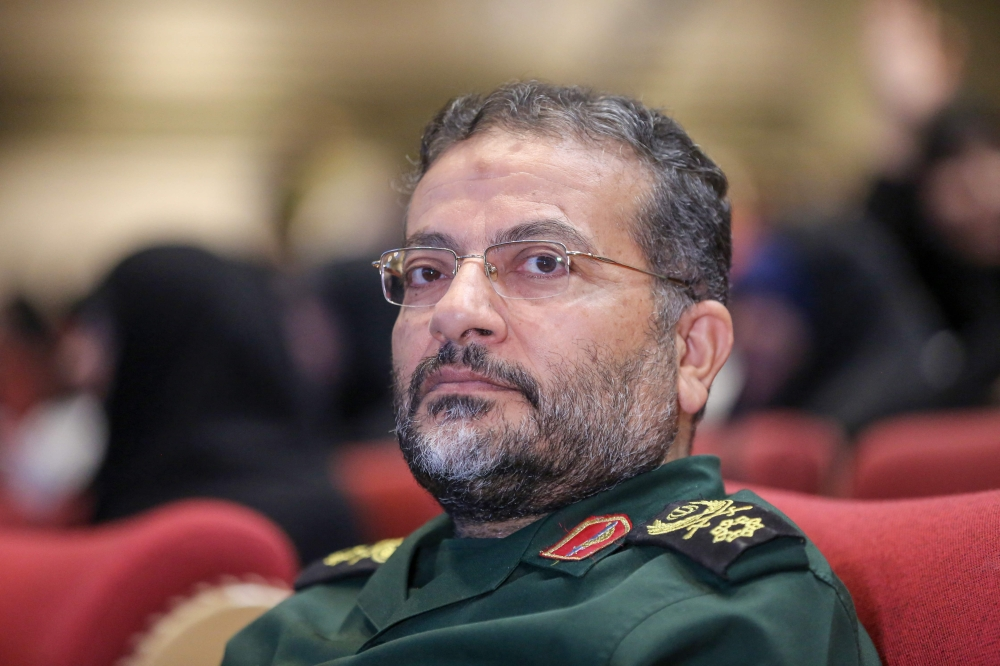
Iran's Islamic Revolutionary Guard Corps (IRGC) officially announced the death of Gholamreza Soleimani , commander of its Basij militia, in a significant security and military development. The confirmation came via the IRGC's official website, Sepah News, which published a statement explaining that the Basij commander had died in an airstrike. This announcement came shortly after statements from the Israeli military indicating that it had targeted him in a complex military operation, amidst escalating tensions and indirect and direct clashes in the region, where the interests of the United States and Israel intersect in their confrontation with Tehran.
History of the Basij forces and their role in the Iranian military structure
To understand the dimensions of this event, one must consider the historical and military context of the Basij, the paramilitary force. Established in 1979 by order of Iran's first Supreme Leader, Ruhollah Khomeini, it was initially a paramilitary force composed of civilian volunteers. Over time, the Basij has become one of the most important security and military arms of the Islamic Revolutionary Guard Corps (IRGC). It plays a vital role in maintaining internal security, suppressing protests, and providing logistical and personnel support to the Iranian armed forces during times of conflict. Gholamreza Soleimani assumed command of the Basij during a critical period, working to strengthen its capabilities and expand its influence within Iran, thus making him a pivotal figure in the Iranian security establishment and a strategic target in the ongoing conflict.
Regional and international repercussions following the killing of Gholam Reza Soleimani
The assassination of Gholamreza Soleimani undoubtedly leave a clear mark on both the regional and international scenes. Domestically in Iran, the loss of such a prominent figure represents a significant blow to the morale and organizational structure of the Islamic Revolutionary Guard Corps (IRGC), potentially prompting the Iranian leadership to implement stricter security measures and reorganize its internal structures to ensure the cohesion of the Basij forces. Regionally, this event will further inflame already heightened tensions in the Middle East. This targeting is expected to lead to an escalation in hostile rhetoric and possibly retaliatory military actions by pro-Iranian armed groups operating in several Arab countries, threatening maritime security and the stability of neighboring states.
The future of the conflict between Tehran, Washington, and Tel Aviv
Internationally, this dangerous development reflects a shift in the rules of engagement between Iran on one side, and the United States and Israel on the other. Targeting top-tier leaders within the Iranian military hierarchy indicates a new strategy based on precise preemptive strikes. This approach could push the international community into a state of high alert, fearing the region's descent into a full-blown regional war that could impact global energy supplies and the international economy. Given these circumstances, attention is focused on the potential Iranian response and how the US administration will handle this escalation, especially as accusations and threats continue to be exchanged among all parties involved in this complex conflict.