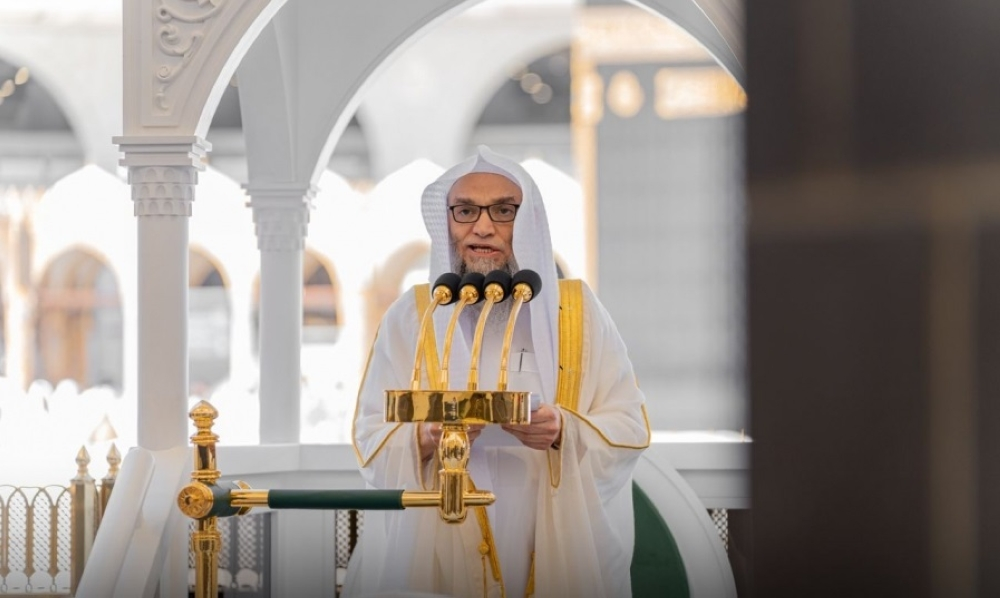
His Eminence Sheikh Dr. Faisal bin Jamil Ghazawi delivered sermon at the Grand Mosque in Mecca , urging Muslims to fear God Almighty and to make the most of the remaining days of the blessed month of Ramadan. He emphasized that concluding acts of worship in this holy month with excellence is among the greatest things a believer should strive for, given the immense opportunities it offers for forgiveness, mercy, and deliverance from Hellfire.
The spiritual and historical context of the sermons at the Grand Mosque
Throughout Islamic history, the pulpits of the Two Holy Mosques have served as beacons of guidance and direction for millions of Muslims worldwide. The sermons delivered in the last ten days of Ramadan acquire added historical and spiritual significance, as the hearts of Muslims turn towards Mecca seeking spiritual blessings during this blessed month. These sermons are an extension of an authentic Islamic tradition aimed at reminding the Muslim community of the importance of making the most of these virtuous times and renewing their covenant with God—a leading role undertaken by the Kingdom of Saudi Arabia in serving Islam and Muslims.
The themes of the sermon by the Imam of the Grand Mosque in Mecca regarding making the most of opportunities
In his sermon, Sheikh Faisal Ghazawi explained that the remaining days of Ramadan offer ample opportunity to increase acts of worship and multiply good deeds. He urged Muslims not to be complacent in seizing opportunities for closeness to God and to hasten to perform righteous acts before it is too late. He emphasized that one of the greatest losses is for a person to experience this blessed month and then miss out on the reward of forgiveness. He affirmed that God's bounty is vast, and a servant may attain great reward for a simple act if their intention is sincere and their action is done purely for His sake. He stressed that the true measure of a Muslim's life is a good end, for whoever repents and reforms at the end of their life will have their past shortcomings forgiven by God.
Striving against one's desires and preparing for the Day of Reckoning
His Eminence called upon Muslims to strive against their own desires, to avoid sins and transgressions, and to invest the remainder of their lives in obedience and good deeds. He reminded them that time passes quickly and that death can come suddenly, which necessitates that every person prepare to meet their Lord through righteous deeds and sincere repentance. He pointed out that the door of repentance is open as long as one lives, urging all who have fallen short or transgressed against themselves with sins to hasten to repent and turn to God, and to work towards rectifying their past actions. He explained that whatever good deeds a person performs today will be stored up for them on the Day of Resurrection.
The Islamic and global impact of the directives of the Two Holy Mosques
The importance of the sermons delivered at the Grand Mosque in Mecca extends far beyond the local level, reaching broad regional and international dimensions. Locally, these sermons strengthen social cohesion and adherence to the tolerant values of Islam. Regionally and internationally, millions of Muslims follow these sermons through various media outlets, making them a powerful tool for unifying the Muslim community, spreading the message of moderation and tolerance, and guiding Muslims worldwide to uphold the teachings of their faith, especially during times of crisis and global challenges.
Signs of acceptance, rulings on Zakat al-Fitr, and Sunnahs of Eid
His Eminence pointed out that the month of Ramadan is a witness for or against the servant; it testifies to the good deeds of the righteous and to the shortcomings of the negligent. He explained that the truly fortunate are those who are granted the ability to complete their deeds with sincerity, to take account of their actions, and to seek forgiveness at the end of the month. He clarified that one of the signs of an accepted deed is its sincerity to God coupled with the servant's fear of its rejection, following the example of the righteous predecessors. He noted that Ramadan passes quickly, necessitating a continued covenant with God to maintain obedience and righteousness after the month's conclusion. He emphasized that a complete act of worship at the end of Ramadan is the payment of Zakat al-Fitr, as it purifies the fasting person and provides support to the needy. He concluded by reminding everyone that Eid is a day of legitimate joy through obedience and gratitude, highlighting the Sunnahs of Eid such as reciting Takbir, performing Ghusl (ritual bath), wearing one's best clothes, and breaking the fast before the Eid prayer, in addition to the recommended practice of fasting six days in Shawwal due to its great merit.