In the final days of Ramadan, Madinah witnesses an unprecedented influx of millions of worshippers. The Taraweeh prayers during the night of the Quran's completion at the Prophet's Mosque represent an early peak in this crowded atmosphere. Worshippers and visitors begin arriving in the early afternoon to secure their places, creating a magnificent display of faith that reflects the smooth flow of movement and meticulous organization. The wise leadership places great importance on ensuring the comfort and safety of those visiting the mosque, guaranteeing that worship is performed in an atmosphere of tranquility and peace.
Ramadan spirituality is renewed in the heart of Medina
Throughout Islamic history, the last days of the blessed month of Ramadan have been a major spiritual milestone for Muslims from all corners of the earth. For decades, it has been customary for hundreds of thousands to travel to the city of the Prophet Muhammad (peace be upon him) to witness these blessed moments. This great gathering on this night is not merely a passing event, but rather an extension of a profound religious and historical legacy. Hearts yearn to hear the supplication recited at the conclusion of the Quran in the vicinity of the Prophet's Mosque and the surrounding courtyards, bestowing upon the place a reverence and awe that Muslims inherit from generation to generation.
Strategies for organizing the night of completing the Quran in the Prophet's Mosque
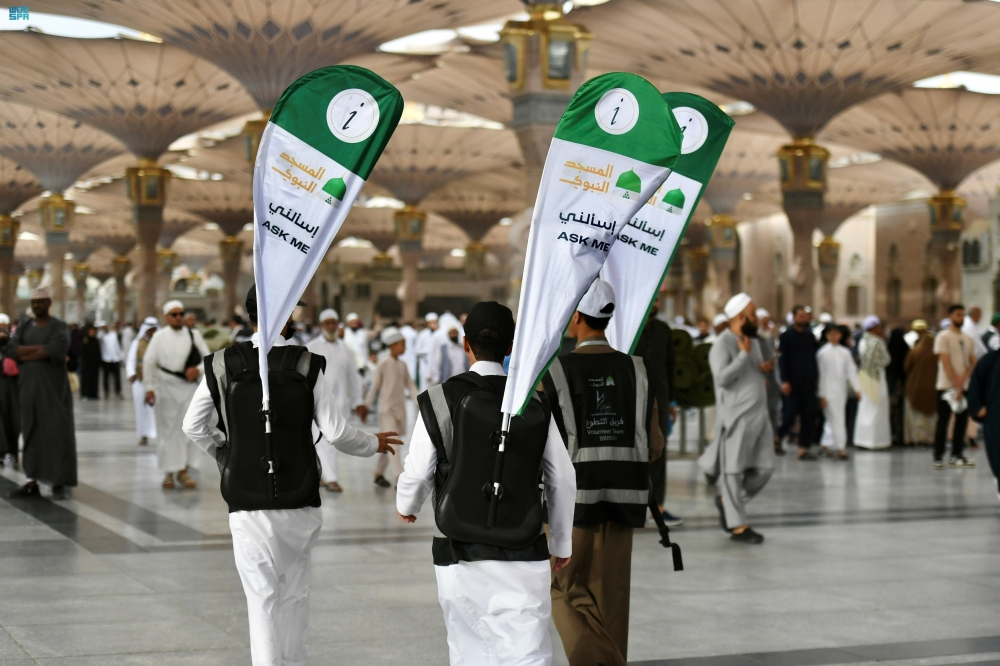
To accommodate these millions of worshippers, the General Authority for the Care of the Grand Mosque and the Prophet's Mosque undertook exceptional efforts. The operational plan was implemented well in advance, beginning with the preparation of prayer areas within the mosque and its outer courtyards, and the organization of vital pathways. Field teams were deployed to strategic guidance points, directly contributing to the gradual absorption of the increasing crowds and minimizing any congestion at the main entrances. Flow management mechanisms were activated with high efficiency, directing worshippers to less crowded areas and maximizing the full capacity of the mosque, its courtyards, and its roof.
Integrated efforts to serve the guests of God
In this context, Mohammed bin Ali Faqihi, Director General of Crowd Services at the General Presidency for the Affairs of the Two Holy Mosques, explained that the Presidency is working in full coordination and integration with various security and service agencies. This synergy aims to intensify organizational efforts to serve visitors to the Prophet's Mosque. Guidance points have been reinforced, and field teams have been increased and are highly prepared to handle various emergencies. In addition, a package of support services has been provided to enhance the comfort of worshippers, including the distribution of drinking water bottles, the continuation of cleaning and sanitizing operations, carpet maintenance, facilitating movement, and providing wheelchairs for the elderly and people with disabilities.
Global implications of successful crowd management for millions
The remarkable success in managing these massive crowds during Taraweeh and Tahajjud prayers carries far-reaching implications beyond the local level. Regionally and internationally, the Kingdom of Saudi Arabia presents a model to be emulated in managing large gatherings. This meticulous organization sends a reassuring message to the entire Muslim world about the Kingdom's capability and constant readiness to serve the Two Holy Mosques. These efforts also reflect a comprehensive operational system managed according to the highest standards of efficiency, enabling worshippers to perform their rituals in an atmosphere of security and smooth flow, and confirming the operational system's ability to handle even the highest levels of crowding with utmost professionalism and competence.