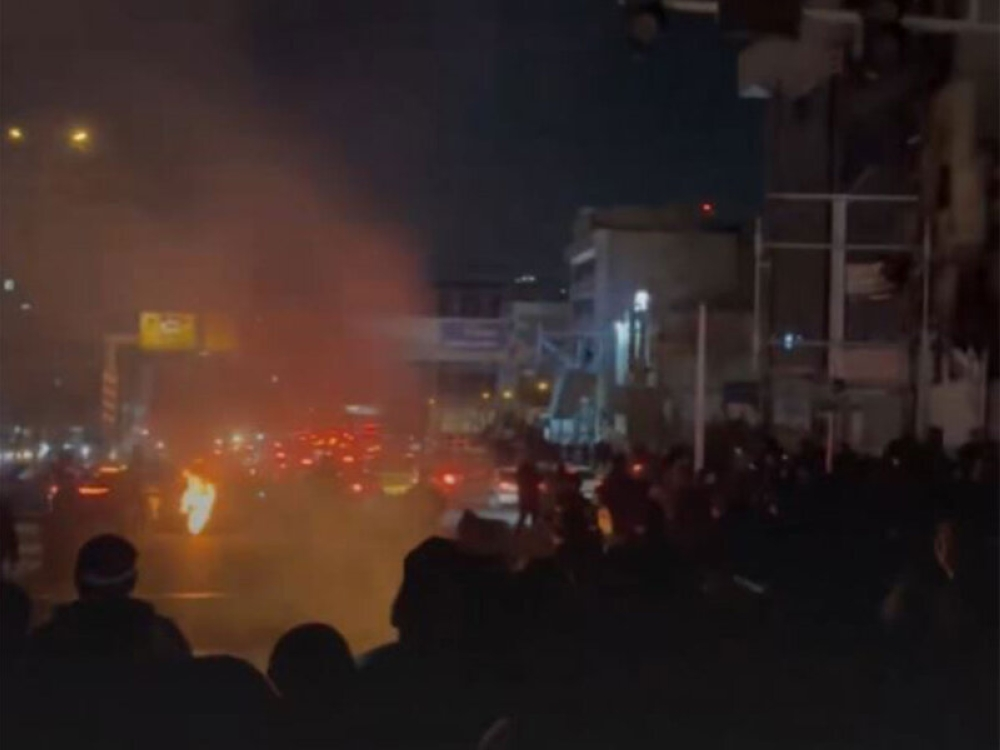
Iran's Supreme Leader, Ali Khamenei, praised the massive pro-government rallies, describing them as a strong warning to the United States and Tehran's enemies. These remarks come amid escalating internal and external tensions, as the country experiences a wave of anti-government protests, which the government has countered with rallies aimed at asserting national unity and the legitimacy of the regime.
Political messages for domestic and international audiences
In an official statement broadcast on Iranian television, Khamenei asserted that the Iranian people had once again demonstrated their resolve and revolutionary identity in the face of what he termed "foreign conspiracies." The Supreme Leader stated, "The great Iranian people have displayed their strength, resolve, and identity in the face of the enemies, and this serves as a warning to American politicians to cease their deception and not to rely on treacherous mercenaries." This speech reflects Iran's consistent strategy in dealing with internal unrest, which relies on linking anti-government protests to foreign agendas, specifically those of the United States and Israel, and portraying any opposition movement as part of a "hybrid war" targeting the country's security.
Khamenei added, emphasizing the failure of Western plans: "These vast and resolute crowds have thwarted the schemes of foreign enemies, which were to be carried out by mercenaries inside the country." These remarks come in response to warnings issued by Washington and other Western capitals regarding the violent security response to the protesters, warnings which Tehran considers a blatant interference in its sovereign affairs.
Diplomatic crisis and the summoning of European ambassadors
On the diplomatic front, tensions escalated between Tehran and European capitals. The Iranian Foreign Ministry announced it had summoned the ambassadors and chargés d'affaires of four major European countries: Germany, France, Italy, and the United Kingdom. This diplomatic move was intended to formally protest and express deep regret over the positions these countries have adopted in support of the protesters in Iran.
In a move aimed at refuting the Western narrative of the peaceful nature of the anti-government protests, the Iranian Foreign Ministry presented European diplomats with videos and photographs documenting what it described as "acts of violence and rioting." Footage showed the diplomats sitting in front of a giant screen displaying scenes of attacks and vandalism, with the Iranian statement asserting that "these acts go beyond peaceful demonstrations and constitute organized sabotage that threatens national security.".
International dimensions of the event
Tehran demanded that ambassadors convey these images and facts directly to their respective foreign ministers, urging them to "withdraw official statements supporting the protesters" and correct their positions. Iran emphasized that any political or media support for the protesters is "unacceptable" and constitutes a violation of diplomatic norms.
Observers believe this diplomatic escalation reflects the deep divide between Iran and the West, not only on the nuclear issue but also on human rights and freedoms. Tehran typically resorts to summoning ambassadors as a strong message of protest when it feels international pressure has crossed red lines, attempting to deflect external pressure and separate the diplomatic track from domestic events.