Innovative solutions for the future of clean energy
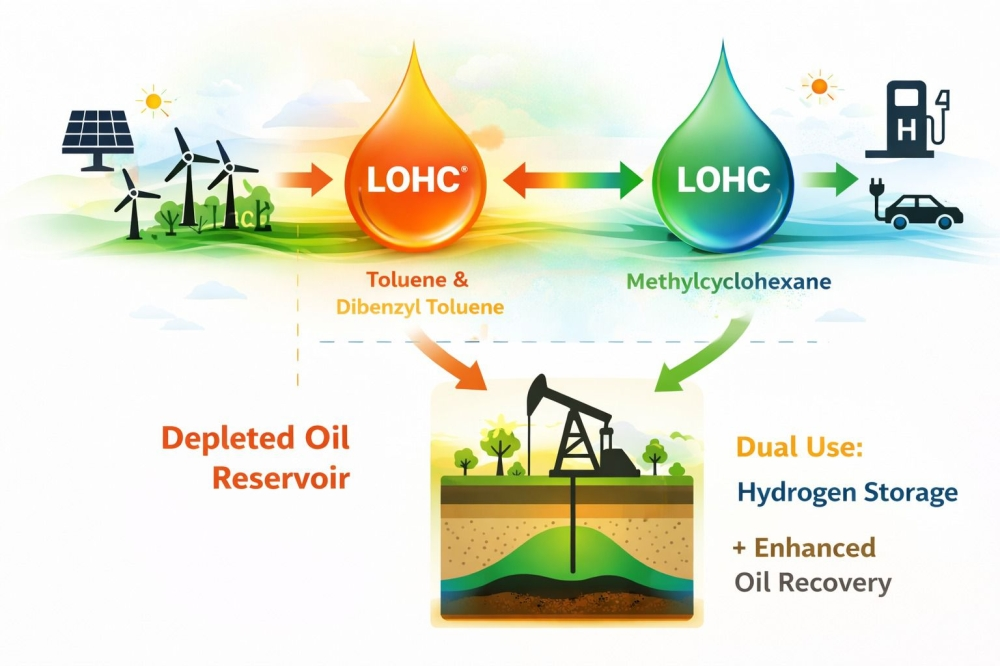
In a scientific breakthrough that could revolutionize the sustainable energy sector, a recent research study conducted by a team of researchers at King Abdullah University of Science and Technology (KAUST) has revealed the potential to repurpose depleted oil reservoirs as strategic underground hydrogen storage sites. This innovative technology relies on the use of liquid organic hydrogen carriers (LOHCs), chemical compounds that bind to hydrogen, enabling its safe and efficient transport and storage. It represents a promising solution to one of the biggest challenges facing the global hydrogen economy.
Global context: The hydrogen storage challenge
With the accelerating global shift towards renewable energy sources and carbon neutrality, hydrogen, particularly green hydrogen produced from clean sources, has emerged as the fuel of the future and a key component of the clean energy system. However, the physical nature of hydrogen, being a very light gas, presents enormous challenges to storing it in large quantities. Conventional methods require extremely high pressure or cooling to very low temperatures, processes that are costly and energy-intensive. Therefore, finding safe and cost-effective storage solutions, such as geostor storage, has become essential to enabling a full transition to a hydrogen economy.
The importance of the study and its expected impact
The KAUST study, led by Professor Hussein Hoteit and Dr. Zeeshan Tarek, is significant because it presents an integrated approach that combines long-term energy storage with enhanced oil recovery. By injecting liquid organic hydrogen carriers into mature reservoirs, hydrogen is not only stored safely, but the process can also help drive remaining crude oil towards production wells, increasing the project's economic viability and maximizing the use of existing infrastructure.
At the local level, this study aligns directly with the goals of Saudi Vision 2030 and the Saudi Green Initiative, which aim to diversify the Kingdom's economy and position it as a leader in clean energy and hydrogen. By leveraging the Kingdom's existing infrastructure and deep geological knowledge in the oil and gas sector, legacy assets can be transformed into cornerstones of the future energy economy, reducing costs and accelerating the transition.
At the regional and international levels, this research presents a model applicable worldwide, particularly in oil-producing countries seeking to transform their economies. Demonstrating the feasibility of storing hydrogen in depleted oil reservoirs opens the door to large-scale projects, addresses bottlenecks in the hydrogen value chain, and contributes to achieving global climate goals and accelerating the transition away from fossil fuels.
A promising future for an integrated energy system
Professor Hoteit emphasized that the rapid evolution of energy systems necessitates a comprehensive reassessment of existing infrastructure. He pointed out that reservoirs historically dedicated to conventional energy production can, based on a sound scientific understanding, be adapted to meet future energy demands. The study's findings demonstrate that depleted oil reservoirs can be transformed from underutilized assets into active components of the energy transition system by being used as long-term hydrogen storage facilities, thereby supporting the stability of the electrical grid and enhancing energy security.