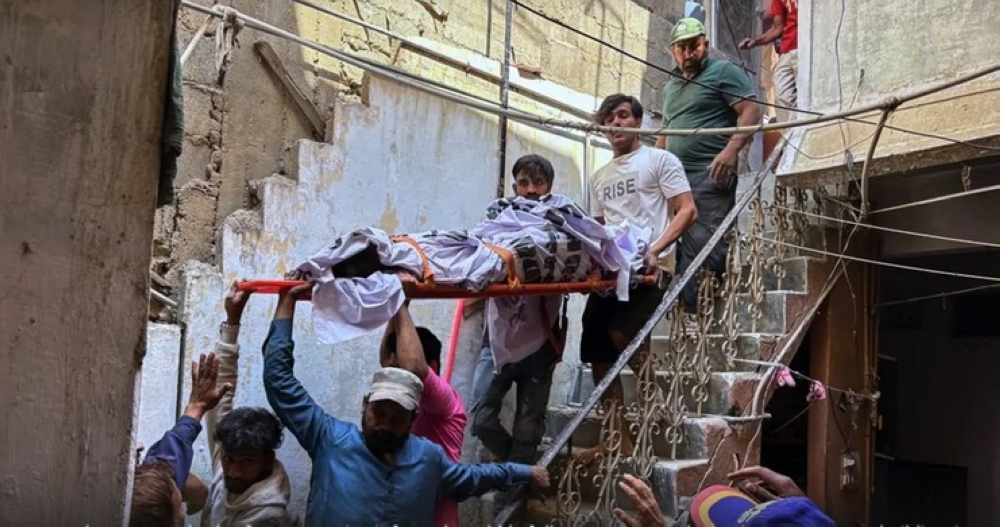
In a tragedy that rocked the Pakistani city of Karachi early Thursday morning, at least 16 people, including women and children, were killed and 13 others injured when a powerful explosion caused a three-story residential building to collapse. The devastating incident occurred in the densely populated Soldier Bazaar area as families were preparing for their pre-dawn meal (suhoor) during the holy month of Ramadan, compounding the shock.
Rescue and civil defense teams rushed to the scene of the explosion, which occurred around 4:00 AM, and began a frantic search for survivors under the rubble. Hassan Khan, a spokesperson for the regional ambulance service, confirmed that the recovery of bodies and the injured continued for hours, with victims being transported to nearby hospitals for treatment. He indicated that the building collapsed completely for reasons that remain officially "unknown," but initial indications point to a gas leak as the cause.
General context: A worsening infrastructure crisis
This incident is not isolated in Pakistan, where building collapses are a recurring tragedy in major cities like Karachi and Lahore. Karachi, the country's economic capital and most populous city, suffers from dilapidated infrastructure and haphazard urban sprawl. Many buildings are constructed without adhering to engineering safety standards, using substandard building materials and illegally adding floors, making them ticking time bombs that threaten the lives of thousands of residents. Gas cylinder explosions or leaks in main pipelines are a common cause of such disasters, due to inadequate maintenance and oversight.
Expected impact and calls for accountability
This tragic incident underscores once again the urgent need for strict enforcement of building codes and regular inspections of old and dilapidated buildings. Locally, the disaster has sparked public outrage and raised questions about the municipal authorities' responsibility for oversight and supervision. It also puts pressure on the provincial and national governments to develop effective strategies for revitalizing older urban areas and providing safe housing for citizens to prevent such disasters from recurring. While investigation teams continue their work to determine the precise cause of the explosion, Karachi remains in mourning for its victims, awaiting concrete measures to ensure this tragedy is never repeated.