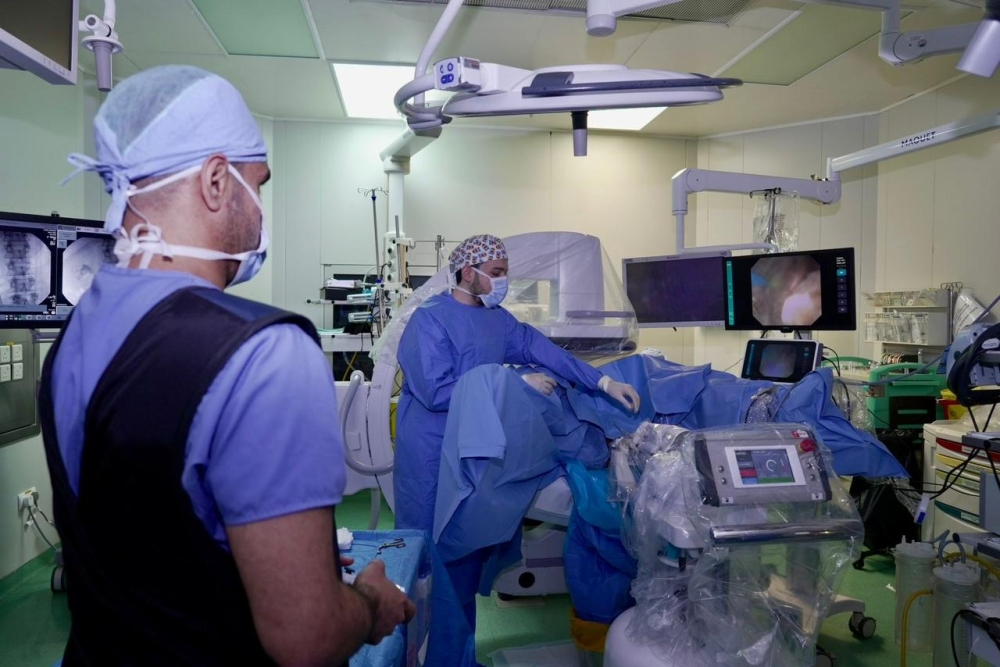
In a move reflecting the rapid development of the health sector in the Kingdom of Saudi Arabia, the Makkah Health Cluster announced the success of a specialized medical team in the Urology Department at King Abdullah Medical City in performing two delicate surgical operations to remove kidney stones, using the latest advanced robotic surgical systems.
A technological breakthrough in the treatment of kidney stones
The medical team explained that the two procedures, led by consultant urologist Dr. Muhanna Saleh Subhi, were completely successful using a robotically assisted flexible nephroscope (RIRS). This technology represents a revolution in urological surgery, as the robot provides the surgeon with unparalleled precision and stability in the nephroscope's movement within the kidney, a feat previously dependent on manual control, which could be affected by human fatigue. This precise control reduces physical and mental strain on the surgeon, especially during lengthy and complex procedures, allowing for greater focus on the efficient removal of stones.
Historical context and importance of the achievement
Historically, kidney stone treatment has undergone several stages of development, from open surgeries requiring large incisions and a long recovery period, to minimally invasive techniques such as extracorporeal shock wave lithotripsy (ESWL) and percutaneous nephrolithotomy (PCNL). The integration of robotic technology with flexible endoscopes represents the latest and most advanced generation in this field. King Abdullah Medical City's successful adoption of this technology not only places it among the world's leading medical centers but also underscores the Kingdom's commitment to providing the best treatment options for its citizens and residents.
Expected impact on healthcare and Vision 2030
This achievement directly benefits the patient, as robotic surgery reduces operating time, lowers the likelihood of complications, and accelerates recovery, resulting in a faster return to normal life. At the national level, this development aligns with the health transformation goals of Saudi Vision 2030, which aims to build an efficient and sustainable healthcare system based on cutting-edge technologies to enhance quality of life. This success also reinforces the Kingdom's position as a leading center for advanced healthcare in the region and opens new horizons for research and training in the field of minimally invasive robotic surgery.
This achievement confirms King Abdullah Medical City’s ongoing commitment to adopting the latest medical innovations, ensuring enhanced patient safety, improved surgical performance, and higher quality healthcare services to meet the aspirations of the community and achieve the ambitious goals of the Vision.