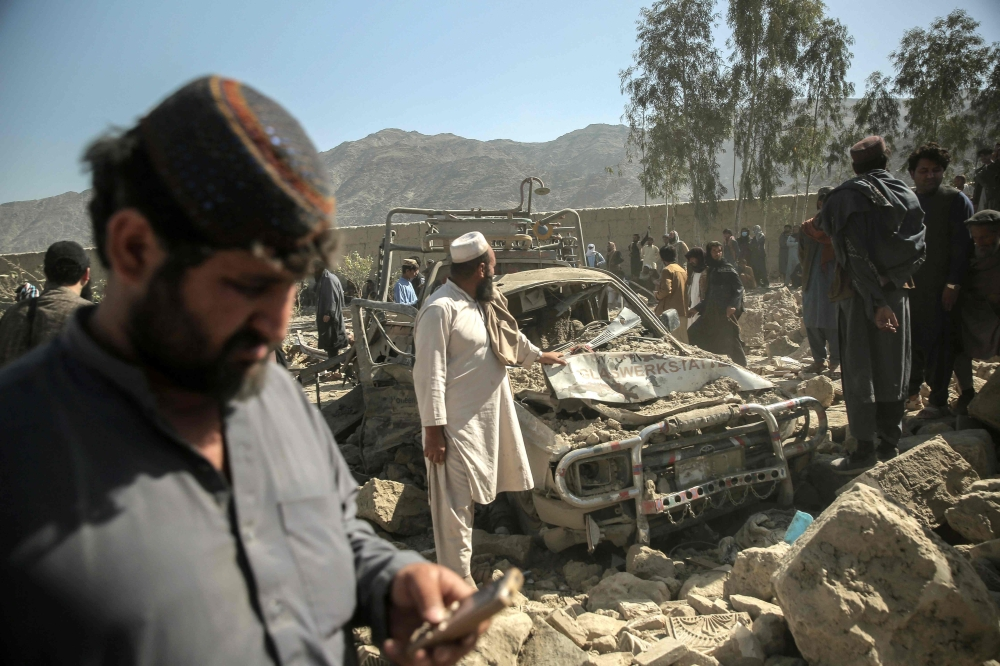
The Afghan capital, Kabul, witnessed a series of powerful explosions followed by sporadic gunfire early Friday morning, in a dangerous escalation that comes just hours after the Taliban government announced a military offensive against Pakistani border posts in response to deadly airstrikes launched by Islamabad on Afghan territory days earlier.
According to media reports and eyewitnesses, explosions rocked various parts of the city around 1:50 a.m. local time, preceded by fighter jets flying overhead. AFP quoted a resident who said he counted up to eight explosions, some of which were close and shook his house. He added that gunfire continued until 2:30 a.m., causing widespread panic among residents.
Background to the border tension between Kabul and Islamabad
These events come amid a rapidly deteriorating relationship between Afghanistan and Pakistan, neighbors sharing a long and volatile border known as the Durand Line. The latest escalation began when Pakistan launched airstrikes into the Afghan provinces of Khost and Paktika, claiming to be targeting militants from the Pakistani Taliban (TTP), whom Islamabad accuses Kabul of harboring. In response, the Taliban government's Ministry of Defense announced on Thursday that its forces had launched heavy weapons attacks on Pakistani military positions along the border, claiming to have killed and captured several Pakistani soldiers. Pakistan's Ministry of Information described the Afghan attack as "unprovoked firing" and vowed a "swift and effective response.".
The roots of the conflict and its regional significance
Relations between the two countries have historically been strained. The Durand Line, drawn by the British administration in 1893, remains a major point of contention, as no successive Afghan government has recognized it. Tensions have escalated significantly since the Taliban's return to power in August 2021, particularly with the increasing attacks by the Pakistani Taliban (TTP) within Pakistani territory. Islamabad accuses the Afghan Taliban of providing safe havens for the TTP, an accusation Kabul consistently denies.
Expected impact and international repercussions
This escalating military tensions raise serious concerns at both the regional and international levels. Domestically, it exacerbates the suffering of the Afghan people, who are already facing a severe humanitarian crisis. Regionally, any large-scale armed conflict between the two countries could destabilize the entire region, disrupt trade, and potentially trigger new waves of displacement. Internationally, major powers such as China, the United States, and Russia are watching this tension with concern, given its implications for counterterrorism efforts and the security of vital trade routes in Central and South Asia. The situation remains poised to deteriorate further unless diplomatic efforts succeed in containing the crisis and preventing it from spiraling into a full-blown confrontation.