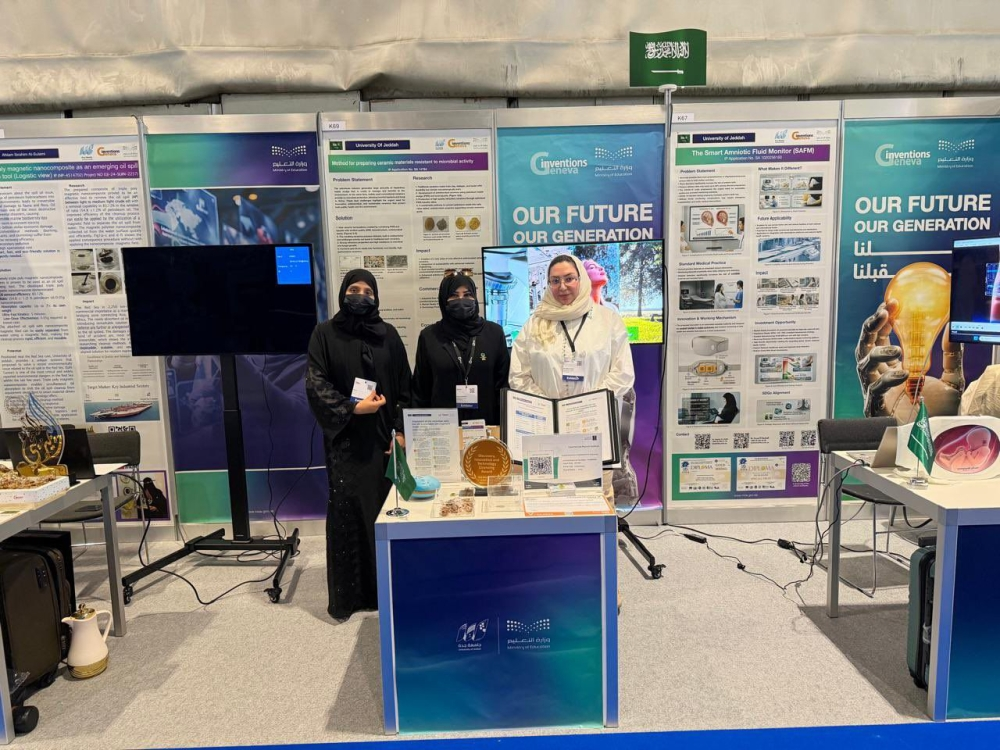
The Kingdom of Saudi Arabia has achieved a new scientific milestone on the international stage, with Jeddah University making a notable appearance at the Geneva International Exhibition of Inventions. This achievement was showcased through an exceptional scientific innovation from the College of Science, which aims to transform petroleum waste into advanced ceramics with unique properties that resist microbial activity. This accomplishment not only reflects the advancements in research at Saudi universities but also offers a practical solution to complex environmental and industrial challenges.
Environmental and industrial background: The need to convert petroleum waste into ceramics
Historically, managing oil waste, particularly petroleum sludge, has posed a significant environmental challenge for oil-producing nations. Traditional disposal methods are costly and risk pollutant contamination of soil and groundwater. Meanwhile, the ceramics and building materials industries rely heavily on the depletion of natural resources. This has created a pressing need for innovative solutions that promote a circular economy. In line with the goals of Saudi Vision 2030 and the Saudi Green Initiative, this innovation offers a sustainable approach that integrates the safe disposal of industrial waste with the production of high-value economic materials.
Innovation mechanism and integration of vital characteristics
The pioneering project, presented by Professor Dr. Amna Ali Siddiq, aims to address two major challenges simultaneously: the safe disposal of petroleum waste and the reduction of microbial growth on ceramic surfaces in public and healthcare facilities. Dr. Yousef Mohamed El-Gamal revealed the details of this innovative approach, explaining that the scientific mechanism relies on combining petroleum waste sludge with locally sourced bauxite ore. This combination produces a new class of ceramics that incorporates antimicrobial properties structurally within the material itself.
What distinguishes this technology is its qualitative superiority over traditional ceramics; the resistance here is not merely a superficial coating that may erode over time, but rather an integral part of the material's chemical and physical composition. This composition ensures sustained effectiveness in inhibiting bacterial and fungal growth for very long periods, making it ideal for use in hospitals, laboratories, and healthcare facilities.
Amazing research results and optimal RCB3 formulation
In a related context, Dr. Afraa Mohammed Baghdadi confirmed that the research team, after a series of rigorous laboratory experiments, arrived at the optimal formula, designated RCB3. This innovative formula consists of 60% bauxite ore and 40% petroleum waste. Advanced analyses have demonstrated the formula's ability to produce highly efficient ceramic phases and refractory stones capable of withstanding extreme temperatures exceeding 1500 degrees Celsius.
The expected impact of innovation locally and internationally
The impact of this innovation extends far beyond the local level, heralding radical changes at both the regional and international levels. Locally, the project supports the construction sector with high-quality, durable materials, reducing import costs and boosting local content. Regionally and internationally, this research offers a model for transforming the environmental challenges posed by oil waste into promising industrial opportunities that support global sustainability goals and contribute to reducing the industrial sector's carbon footprint.
A well-deserved crowning achievement in international forums
This scientific endeavor did not go unnoticed, culminating in a Saudi patent for 2024. Furthermore, the project garnered prestigious awards, including being selected as one of the top 100 entrepreneurial projects by the Ministry of Education and receiving the Jeddah University Innovation Award. This success at the Geneva International Exhibition of Inventions underscores the prominence of Saudi innovation and its ability to compete globally, reaffirming that investing in human capital and scientific research is the cornerstone of building a sustainable and prosperous future.