In a proactive step to ensure the safety of citizens and residents, the Jeddah Municipality, in cooperation with relevant authorities, conducted a large-scale field inspection campaign in the eastern part of the city. The campaign resulted in the closure of four unlicensed sites used for illegal commercial activities, in addition to the destruction of nearly one ton (1,000 kilograms) of spoiled food that posed a direct threat to public health.
Ongoing efforts to enhance quality of life
This campaign is part of a series of ongoing efforts by municipalities across Saudi Arabia, in line with the goals of Vision 2030, which prioritizes “quality of life.” These efforts are particularly important in Jeddah, the gateway to the Two Holy Mosques and a vital commercial hub that welcomes millions of visitors annually. Ensuring the highest food safety standards not only protects local residents but also safeguards the health of pilgrims and visitors, reflecting the Kingdom’s commitment to providing a healthy and safe environment for all.
Details of the offending sites
Yasser bin Siraj Bakhsh, Director General of the General Administration for Monitoring and Addressing Negative Phenomena, explained that field teams identified four non-compliant sites lacking the most basic health and regulatory requirements, and these were dealt with firmly. The violations included the following:
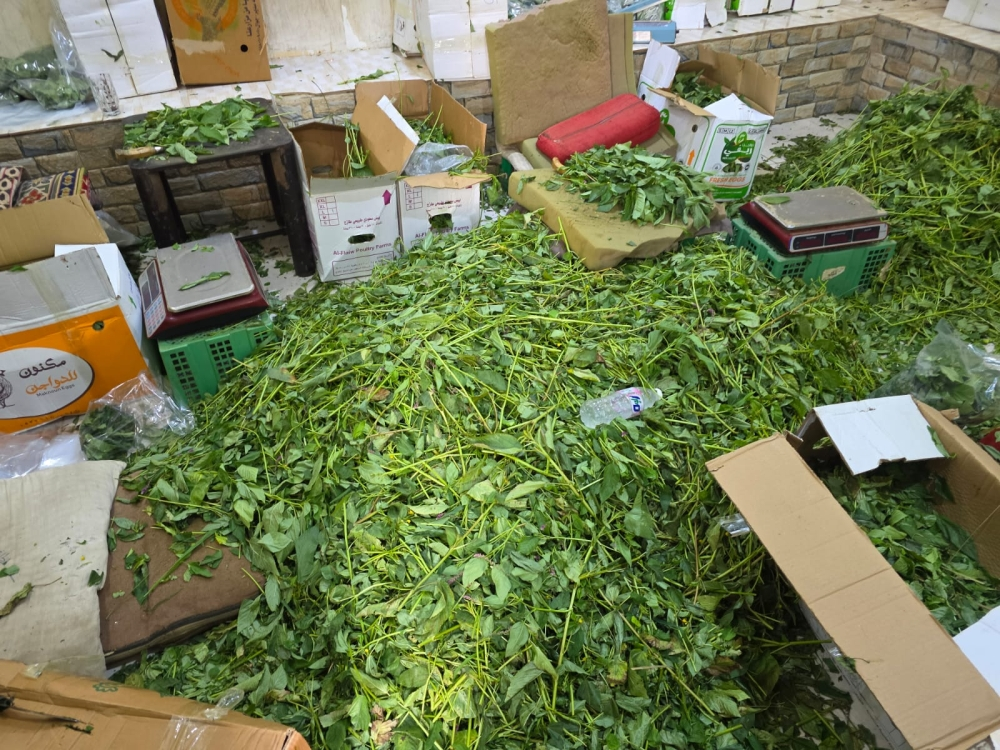
- The first site was a yard being used to store and pack leafy vegetables and dates in an unsanitary environment infested with insects and rodents. This resulted in the destruction of one ton of vegetables, the confiscation of 47 cartons of dates, 5 electronic scales, and 4 packaging machines, and the complete closure of the site.
- The second location: Another yard that had been converted into an unlicensed dairy (cream) production facility under extremely poor conditions. All equipment used and 40-kilogram bags of powdered milk were confiscated, and the site was immediately closed.
- The third site: an unregulated site used to store car parts and large quantities of empty cartons without obtaining the necessary licenses, posing a safety risk.
- The fourth site: A large yard that was used for shipping food and clothing, in addition to being used as a "dismantling" of cars, all without fulfilling the regulatory procedures, which necessitated its complete closure.
Positive impact on health and economy
The importance of these campaigns extends beyond simply addressing violations; they also have numerous positive impacts. From a health perspective, these measures help prevent outbreaks of foodborne illnesses and protect consumers from food poisoning. Economically, they ensure fair competition for licensed businesses that comply with regulations and curb the informal economy. Furthermore, they contribute to improving the city's urban landscape by removing unsightly slums.
A call for community cooperation
The Jeddah Municipality affirmed that these campaigns are ongoing and that it will not tolerate any violations of regulations. In this context, the Municipality called upon all citizens and residents to participate in community oversight by promptly reporting any observations or violations through the unified reporting center (940) or via the "Baladi" mobile application, to ensure a healthy and safe environment for everyone.