Jeddah: A pivotal moment in the journey of regional climate action
The eyes of the region and the world will be on Jeddah on Thursday, as it hosts the second session of the Ministerial Council of the “Green Middle East Initiative.” The meeting will be chaired by the Minister of Environment, Water and Agriculture, Engineer Abdulrahman Al-Fadhli, with broad participation including representatives from 31 countries across Asia and Africa, in addition to the United Kingdom as an observer. This event marks a crucial turning point, as the initiative moves from the planning and establishment phase to the actual implementation of massive environmental projects aimed at addressing the challenges of climate change and safeguarding the future of generations to come.
Historical background: From vision to reality
The Middle East Green Initiative was launched in March 2021 by His Royal Highness Prince Mohammed bin Salman bin Abdulaziz Al Saud, Crown Prince and Prime Minister, as part of the Kingdom’s ambitious Vision 2030. The initiative serves as the broader regional framework for the “Saudi Green Initiative,” aiming to unify the efforts of countries in the region to address shared environmental challenges, primarily desertification, air pollution, and biodiversity loss. The first summit was held in Riyadh in 2021, where the general framework was established. This was followed by the second summit in Sharm El Sheikh in 2022, which saw the announcement of the establishment of the initiative’s secretariat, to be hosted in Riyadh. The Kingdom pledged $2.5 billion to support the initiative’s projects and operational costs, underscoring its leading role in climate action across the region.
Ambitious goals to change the face of the region
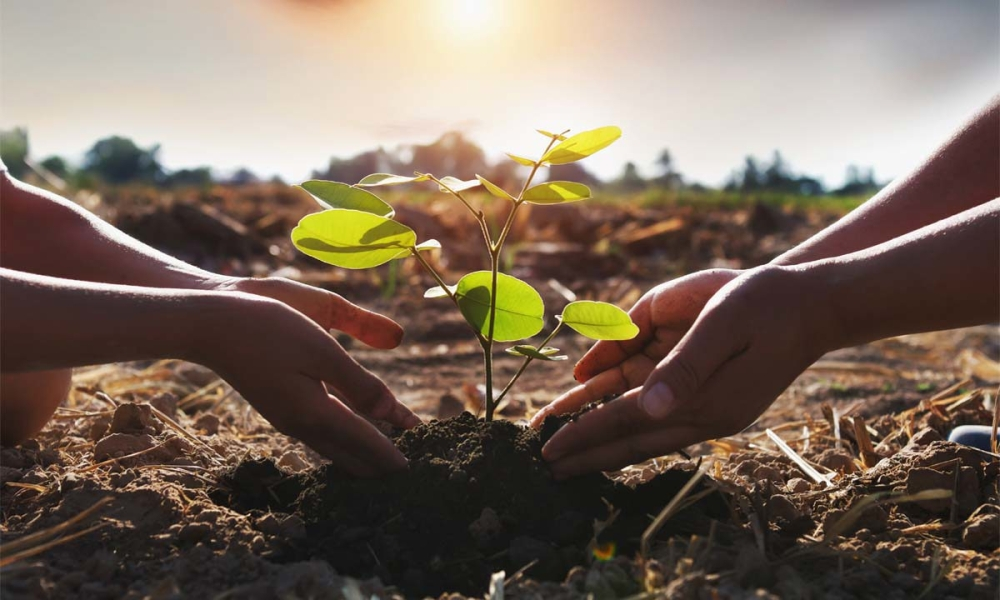
This ministerial meeting marks the launch of one of the world's largest afforestation programs, aiming to plant 50 billion trees across the region. Of this total, 10 billion trees will be planted within the Kingdom of Saudi Arabia, while the remaining 40 billion will be planted in other Middle Eastern countries through collaborative efforts. This ambitious project not only aims to increase vegetation cover but also seeks to rehabilitate an estimated 200 million hectares of degraded land, representing 5% of the global afforestation target. Furthermore, the initiative aims to reduce carbon emissions by more than 670 million tons, equivalent to 10% of the targeted global contributions, which will directly contribute to improved air quality and public health, enhanced water and food security, and the protection of vital ecosystems.
Strategic importance and expected impact
The strategic importance of the Jeddah meeting lies in its ability to translate political commitments into concrete action plans. The Council is expected to issue crucial decisions regarding financing mechanisms, implementation schedules, and frameworks for technical cooperation among member states. Regionally, the initiative promotes integration and joint action to address transboundary challenges such as sandstorms and water scarcity. Internationally, the Green Middle East Initiative solidifies the region's position as an active and responsible partner in global efforts to combat climate change, offering a unique model of regional cooperation that can be emulated in other parts of the world, demonstrating that the countries of the region are not only part of the problem but also an essential part of the solution.