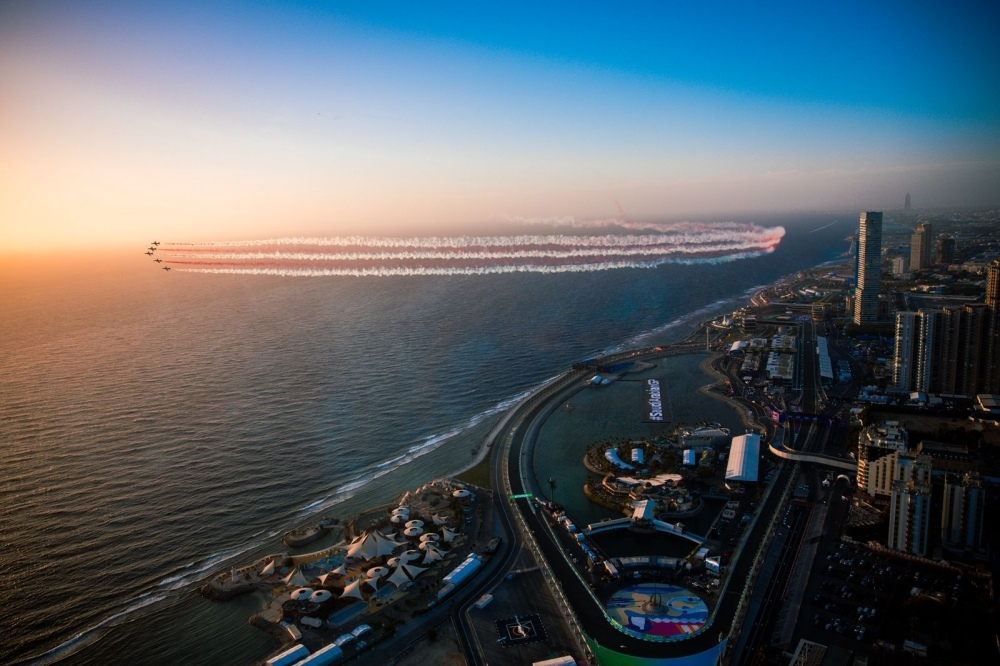
The Jeddah Corniche Circuit, described as the “fastest street circuit in the world,” continues to cement its position as one of the most prominent stops on the Formula 1 World Championship calendar. With the confirmation of the return of the Formula 1 Saudi Grand Prix, speed enthusiasts around the world are looking forward to a new chapter of excitement and competition on the Jeddah waterfront, reinforcing the Kingdom’s role as a major player on the international motorsport scene.
Historical background and ambitious vision
The Kingdom's hosting of the Formula 1 race was no accident; it is an integral part of the ambitious "Saudi Vision 2030," which aims to diversify the national economy and boost non-oil sectors such as tourism, entertainment, and sports. The Saudi Grand Prix was launched for the first time in December 2021, with the Jeddah Corniche circuit being built in record time, dazzling the world with the Kingdom's engineering and organizational capabilities. Since then, the race has become a regular annual event on the Formula 1 calendar, attracting millions of viewers and drawing thousands of tourists to the Red Sea city.
A unique design that combines speed and challenge
The Jeddah Corniche Circuit stretches along the picturesque waterfront and boasts a sleek design that blends the characteristics of street circuits and traditional track circuits. At 6.174 kilometers long, it's the second longest circuit of the season after Spa-Francorchamps in Belgium. But what truly sets it apart is its incredible average speed, exceeding 250 km/h, thanks to its long straights and fast corners. The circuit comprises 27 turns (16 left and 11 right), constantly testing drivers' concentration and precision. Its close proximity to the barriers leaves no room for error, adding to the excitement and challenge of the race.
The 12-degree angled Turn 13 is one of the circuit's most notable features, subjecting drivers to near-5G lateral G-forces – a true test of physical and mental endurance. Its design has been praised by world champions, with Lewis Hamilton describing it as "incredibly fast," while Carlos Sainz likened it to the adrenaline rush of the famous Macau circuit.
Strategic importance and multidimensional impact
The significance of hosting a Formula 1 race extends far beyond its status as a mere sporting event. Locally, the race boosts tourism in Jeddah, creates jobs, and inspires a new generation of young Saudis to take an interest in motorsports, engineering, and event management. Regionally, it solidifies the Kingdom's position as a major sporting hub in the Middle East. Internationally, the event's organizational success reflects Saudi Arabia's capacity to host major global events, enhancing its image as a leading global investment and tourism destination.
An integrated platform for motorsports
The Jeddah Corniche Circuit's activities are not limited to Formula 1; it has become a platform for hosting other important championships, such as Formula 2 races and the Aramco Saudi Formula 4 Championship, which aims to develop young talent in the region. This diversity demonstrates the circuit's flexibility and high operational capacity, and underscores the Kingdom's long-term investment in developing the motorsports sector. With each new edition of the race, experience accumulates and capabilities develop, allowing Jeddah to write a new and bright chapter in the history of global sports.