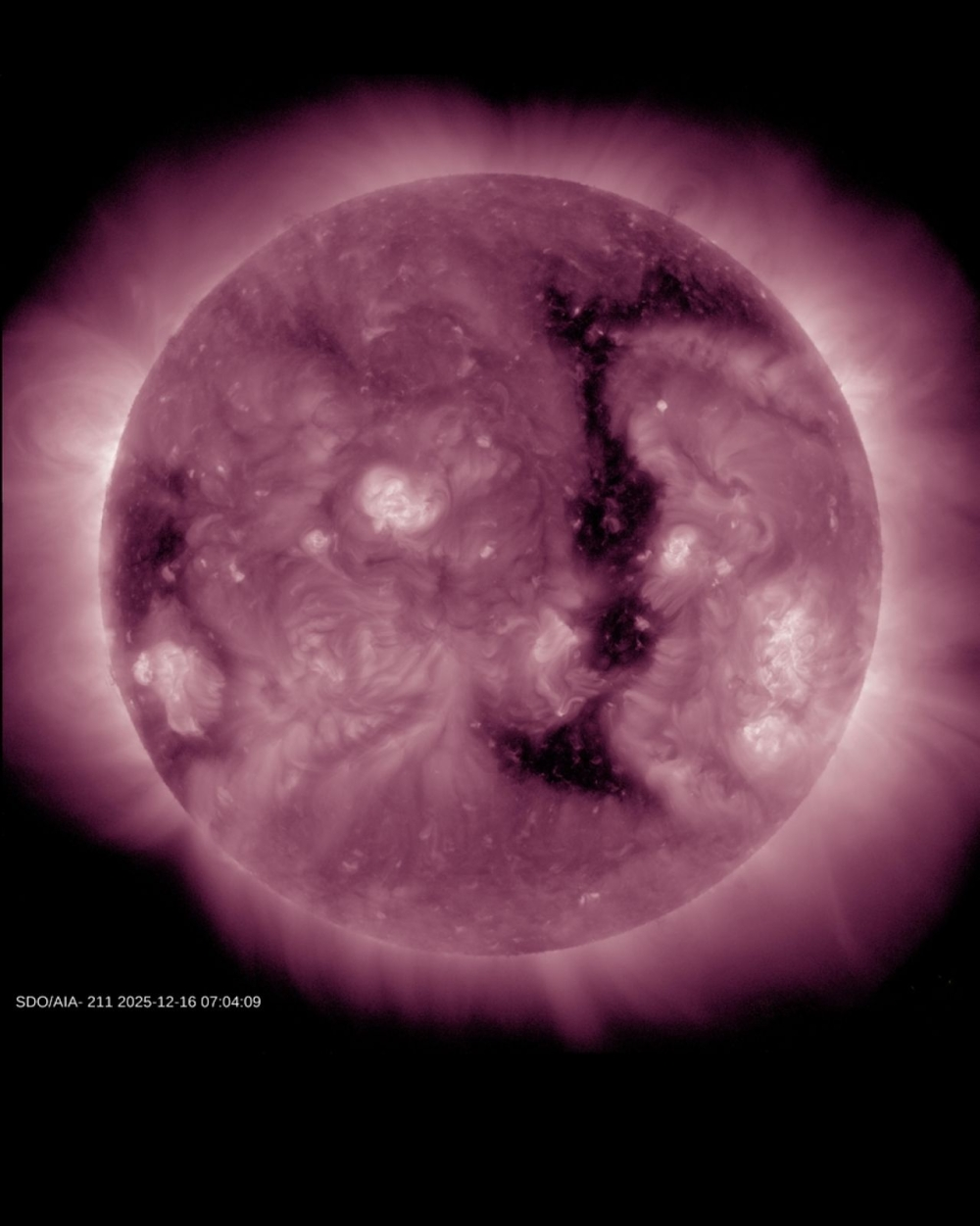
كشفت الجمعية الفلكية بجدة عن رصد تطورات جديدة في النشاط الشمسي، حيث أعلن المهندس ماجد أبو زاهرة، رئيس الجمعية، أن الأقمار الاصطناعية المخصصة لمراقبة الشمس وثقت وجود ثقب إكليلي واسع النطاق في الغلاف الجوي الخارجي للشمس. ويتميز هذا الثقب ببنيته الممتدة التي تشبه الأخدود العميق أو الوادي، وهو يتخذ حالياً وضعية مواجهة مباشرة لكوكب الأرض، مما يجعله مصدراً لتيارات من الرياح الشمسية السريعة.
تفاصيل العاصفة المتوقعة وموعد وصولها
أوضحت بيانات الرصد المعتمدة على الأشعة فوق البنفسجية الشديدة أن هذا الثقب الإكليلي يقذف تياراً نشطاً من الجسيمات المشحونة (الرياح الشمسية) بسرعات عالية باتجاه كوكبنا. ووفقاً لنماذج طقس الفضاء والمحاكاة الحاسوبية، من المتوقع أن تصل هذه الرياح إلى المجال المغناطيسي للأرض يوم 18 ديسمبر 2025. وتشير التوقعات إلى احتمالية حدوث عاصفة جيومغناطيسية من الفئة G1، وهي الفئة الأضعف على مقياس العواصف الشمسية المكون من خمس درجات.
ما هي الثقوب الإكليلية؟
لتقديم فهم أعمق لهذه الظاهرة، تُعرف الثقوب الإكليلية علمياً بأنها مناطق في الهالة الشمسية (الطبقة الخارجية للغلاف الجوي للشمس) تكون فيها كثافة البلازما ودرجة الحرارة أقل مقارنة بالمناطق المحيطة بها، مما يجعلها تظهر كبقع داكنة في صور الأشعة السينية وفوق البنفسجية. الميزة الأهم لهذه المناطق هي أن خطوط المجال المغناطيسي فيها تكون "مفتوحة" وتمتد بعيداً في الفضاء، بدلاً من أن تعود لتنغلق على سطح الشمس، مما يسمح للرياح الشمسية بالانطلاق بسرعات فائقة تتجاوز أحياناً 600 كيلومتر في الثانية.
سياق الدورة الشمسية وتأثيراتها
تأتي هذه الظاهرة في سياق النشاط الطبيعي للدورة الشمسية الحالية (الدورة 25)، حيث تمر الشمس بدورات نشاط تمتد لقرابة 11 عاماً تتراوح بين الهدوء والذروة. وتُعد مراقبة هذه الثقوب أمراً حيوياً لعلماء الفلك ووكالات الفضاء، ليس فقط لفهم فيزياء النجم الأم، بل لحماية التكنولوجيا الأرضية والفضائية. تاريخياً، تسببت العواصف الشمسية الكبرى في الماضي، مثل "حدث كارينغتون" عام 1859، في اضطرابات هائلة، ولكن العاصفة الحالية المتوقعة (G1) بعيدة كل البعد عن تلك المستويات الخطيرة.
التأثيرات المحتملة على الأرض والمنطقة العربية
فيما يتعلق بالتأثيرات المباشرة للعاصفة المتوقعة من الفئة G1، أكد المهندس أبو زاهرة أنها لا تشكل خطراً على سلامة البشر أو البنية التحتية الكهربائية الرئيسية. قد تقتصر التأثيرات على:
- تذبذبات طفيفة جداً في شبكات الطاقة ببعض الدول الواقعة في خطوط العرض العليا.
- تأثيرات محدودة على عمليات الأقمار الصناعية في المدارات المنخفضة.
- ظهور أضواء الشفق القطبي (Aurora) في المناطق القطبية وشمال أوروبا وكندا، وهي ظاهرة بصرية خلابة تنتج عن تفاعل الجسيمات الشمسية مع الغلاف الجوي.
أما بالنسبة للمنطقة العربية، فقد طمأن رئيس الجمعية الفلكية بجدة الجمهور بأن الموقع الجغرافي للدول العربية ضمن خطوط العرض المتوسطة والمنخفضة يجعلها في مأمن تام من التأثيرات المباشرة لهذه العواصف المغناطيسية الضعيفة، ولن يشعر السكان بأي تغييرات، ولن تتأثر خدمات الاتصالات أو الإنترنت أو الملاحة الجوية في المنطقة.