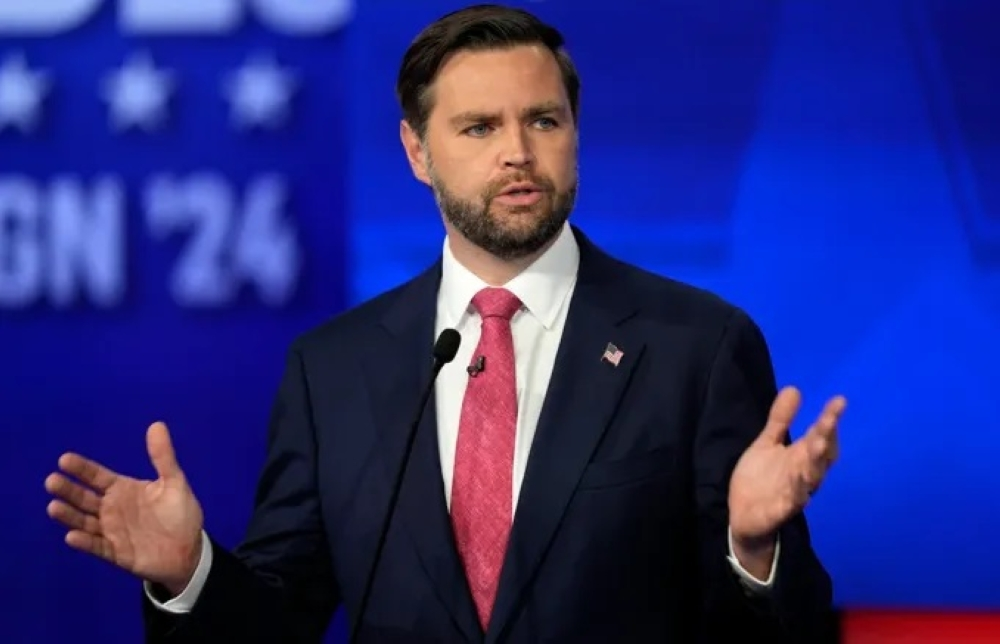
In a statement that sparked widespread debate in political circles, US Senator Jay D. Vance, whose name has been floated as a potential running mate for former President Donald Trump, dismissed the possibility that a US military strike against Iran would lead to a protracted war in the Middle East. Vance's remarks came during an interview with The Washington Post, where he downplayed warnings that any military action could embroil Washington in a new quagmire in the region.
“The idea that we’re going to be fighting a war in the Middle East for years with no end in sight is completely unthinkable,” said Vance, a former Marine who served in the Iraq War. He dismissed criticism that a potential Trump administration could lead the country into a costly and complex conflict, asserting that any decision would be made with the utmost care.
A historical background of ongoing tension
These statements come against the backdrop of decades-long strained relations between the United States and Iran, dating back to the 1979 Islamic Revolution and the hostage crisis at the US embassy in Tehran. This relationship has witnessed periods of mutual escalation, most notably the dispute over Iran's nuclear program. Despite the nuclear agreement (the Joint Comprehensive Plan of Action, or JCPOA) reached in 2015, former President Donald Trump's unilateral withdrawal from the agreement in 2018 and the reimposition of sanctions under his "maximum pressure" policy brought tensions back to a peak.
Trump’s presidency witnessed serious incidents that nearly sparked a direct war, such as Iran shooting down an advanced American drone, attacks on oil tankers in the Gulf, and culminating in January 2020 with the assassination of Quds Force commander Qassem Soleimani in an American airstrike in Baghdad, which put the region on the brink of disaster.
The importance of the event and its expected impact
The significance of Vance's remarks lies in their reflection of a prevailing sentiment within the conservative wing of the Republican Party, which believes that decisive military deterrence can curb Iran's influence without the need for a full-scale war. However, many analysts warn that any military strike, no matter how limited, carries significant risks of spiraling out of control.
Regionally, a US strike could prompt Iran to retaliate through its proxies in the region, such as Hezbollah in Lebanon, the Houthis in Yemen, and allied militias in Iraq and Syria, threatening US forces and interests, as well as those of its allies, most notably Israel and Saudi Arabia. Internationally, any conflict in the Gulf would directly threaten global energy supplies via the Strait of Hormuz, through which one-fifth of the world's oil consumption passes, potentially leading to a dramatic price surge and a global economic crisis.
The diplomatic option is still on the table
Despite his harsh tone, Vance did not completely close the door to diplomacy, noting that “it really depends on what the Iranians do and say.” These discussions coincide with ongoing indirect diplomatic efforts, as a round of US-Iranian talks concluded in Geneva, described by Iran’s acting foreign minister, Abbas Araqchi, as the “most intensive” yet, indicating that communication channels remain open despite the mutual threats.