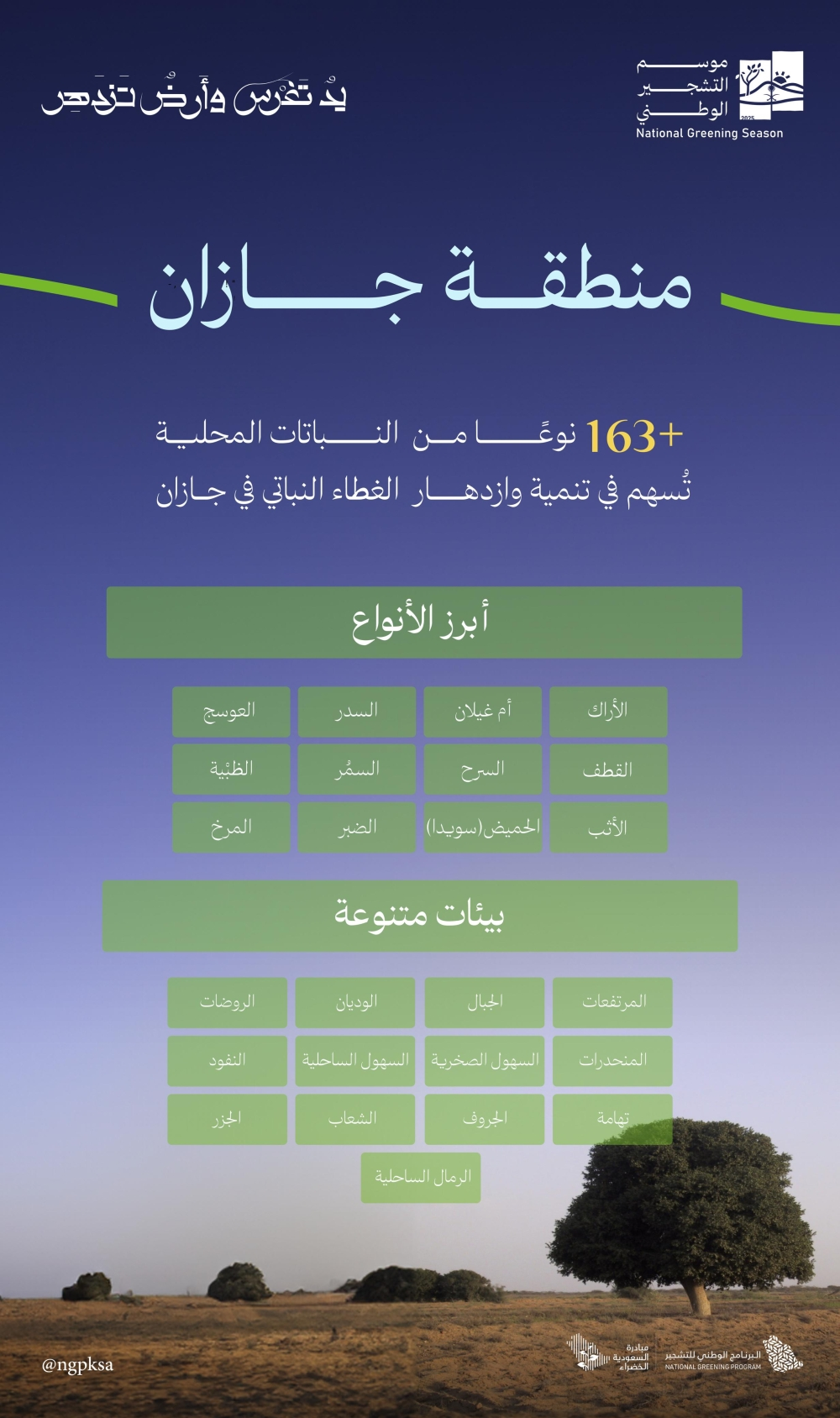
In a strategic move reflecting the unique biodiversity of Saudi Arabia, the National Afforestation Program a comprehensive plant map of the Jazan region, featuring more than 165 native plant species suitable for the environment. This announcement reinforces the Kingdom's efforts to achieve the goals of the Saudi Green Initiative and Vision 2030, which aim to increase vegetation cover and combat desertification.
Geographical diversity fosters plant life
The Jazan region boasts an exceptional geography, combining extensive coastlines, expansive Tihama plains, and towering mountains that seem to touch the clouds, in addition to islands and salt flats. This diverse topography has created varied environments that have allowed hundreds of plant species to grow and adapt throughout history. Jazan is one of the richest regions in the Kingdom in terms of biodiversity, with its complex terrain and varied climate contributing to the growth of rare and valuable plant species.
The program explained that the selected plants are distributed with high flexibility to cover all these terrains, from the slopes and rocky cliffs in the mountains, to the valleys and meadows, making them a fundamental pillar for the success of afforestation projects in various environments, whether harsh or temperate.
Plant varieties that support environmental sustainability
Official data revealed a precise classification of the plant families to which these species belong, including the Anacardiaceae, Palmaceae, Compositae, Leguminosae, Ziziphus, and Salvadora persica families. The list also includes families of high ecological value such as Oleander, Amaranthaceae, Oliveaceae, and Lamiaceae. This biological richness is not only aesthetically pleasing but also plays a vital role in maintaining ecological balance.
The program identified a golden list of the species most suitable for afforestation projects, topped by:
- Arak, Dhubr, Labakh and Sidr trees: for their high adaptability.
- Mangrove trees: which are the first line of defense for the coasts and a breeding ground for fish stocks.
- Wild olives and eastern almonds: which are widespread in mountainous areas and form part of the region's identity.
- Acacia and tamarisk trees: known for their drought tolerance and their role in producing the famous Jazan honey.
Economic and social impact
Relying on native plants such as boxthorn, thorny bush, sesbania, and tamarisk not only helps stabilize the soil and prevent erosion in valleys, but it is also a smart, economical choice. Native plants require significantly less water than imported plants and are more resistant to local pests and diseases, greatly reducing maintenance and irrigation costs and ensuring the long-term sustainability of projects.
Moreover, expanding the cultivation of trees such as Sidr and Talh contributes to supporting the beekeeping and honey production sector, which is an important economic resource for families in the Jazan region, thus linking environmental goals with the economic development of the local community and establishing a culture of sustainable afforestation as part of the quality of life.