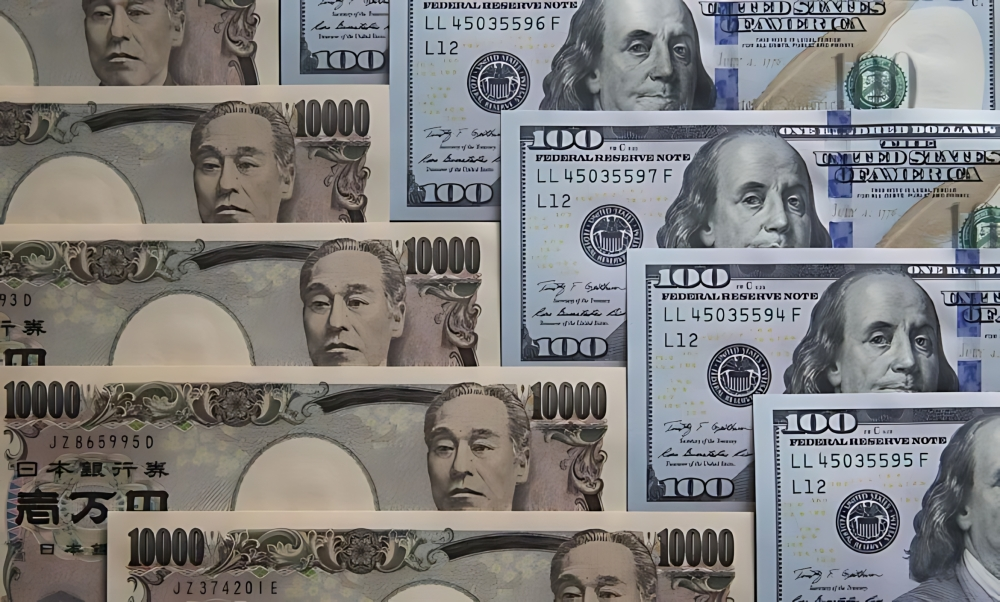
The Japanese yen rose slightly against the US dollar during trading today, at a time when caution and anticipation prevail among traders in global financial markets, fearing that the continued weakness of the Japanese currency could prompt officials in Tokyo to intervene directly in the foreign exchange market to support their national currency.
Price movements and market performance
The Japanese yen rose 0.25% to 155.84 against the dollar in recent trading, attempting to recover some of its recent losses. Meanwhile, the dollar index, which measures the performance of the US currency against a basket of six major currencies including the yen and the euro, edged up 0.07% to 97.96.
These moves come amid a noticeable drop in trading volumes, due to the closure of US markets and many global exchanges tomorrow, Thursday, because of public holidays, which makes liquidity in the markets low and increases the likelihood of sharp price fluctuations with lower than usual trading volumes.
Economic context: Interest rate hikes and monetary policy challenges
Despite the Bank of Japan's (the central bank) announcement last Friday of an interest rate hike, the yen faced downward pressure in the following days. This apparent contradiction stems from the large and persistent gap between interest rates in Japan, which remain low by global standards, and those in the United States, which the Federal Reserve keeps high to combat inflation.
Historically, the Japanese economy relied for many years on a highly accommodative monetary policy (negative or zero interest rates) to stimulate growth, making the yen a preferred funding currency for investors (carry trade). As global central banks began tightening their monetary policies, the gap widened in favor of the dollar and the euro, increasing the attractiveness of assets denominated in those currencies at the expense of the yen.
Concerns about intervention and its impact on markets
Investors are currently focused on statements from officials at the Japanese Ministry of Finance. The sharp decline of the yen is increasing the cost of imports, particularly energy and food, which is hurting the purchasing power of Japanese households and small businesses. Therefore, markets consider certain exchange rate levels (such as the 160 yen-to-the-dollar mark) to be a potential "red line" that would necessitate government intervention through selling dollars and buying yen from foreign reserves.
Any potential intervention by the Japanese authorities could cause strong shocks in global currency markets, not only on the dollar/yen pair, but its impact could extend to other currencies and risky assets, as speculators would be forced to quickly close their short positions to avoid losses, creating a state of rapid volatility in financial markets.