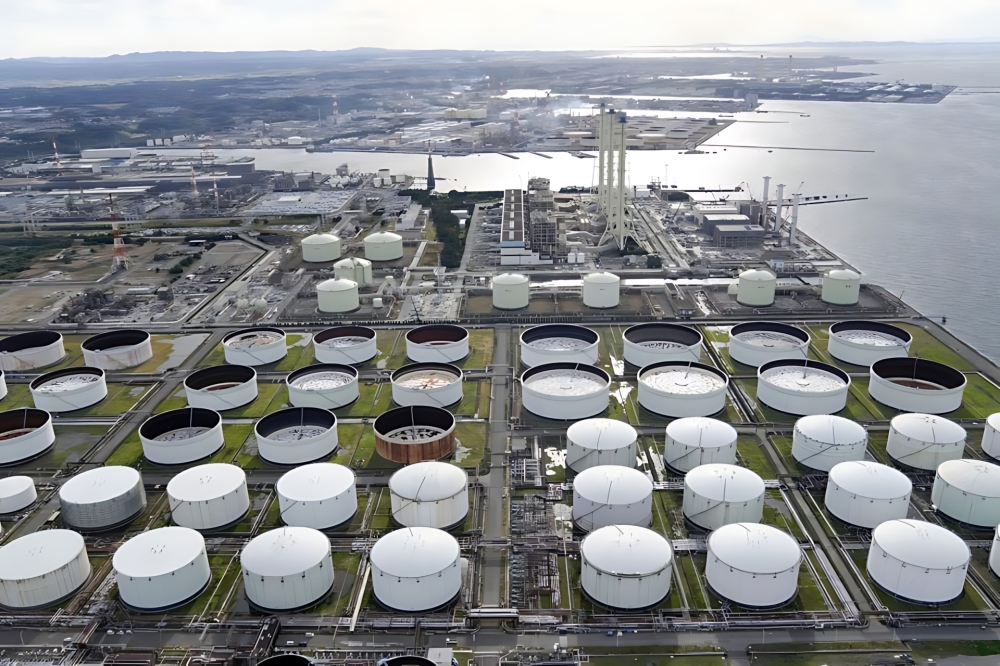
In a strategic move aimed at protecting its economy from the volatility of global energy markets, the Japanese government announced its intention to begin drawing on its strategic petroleum reserves starting Monday. This step comes in response to the recent military escalation in the form of a potential US-Israeli war with Iran, which has cast a long shadow over global energy security. Tokyo aims, through this measure, to mitigate the economic impact of disruptions to vital supplies and ensure stable fuel prices in the domestic market.
Reasons for resorting to Japan's strategic petroleum reserves
With gasoline prices soaring across Japan, Tokyo found itself compelled to intervene swiftly. This surge was primarily due to disruptions in oil supplies through the Strait of Hormuz in the Persian Gulf, a strategic waterway through which roughly one-fifth of the world's oil supply passes. Japan pledged to release a record 80 million barrels of oil, enough to cover the country's needs for approximately 45 days. In response, the government instructed domestic refineries to begin utilizing the released crude oil, which will reduce national reserves by 17%, as a necessary measure to secure domestic supplies and prevent severe fuel shortages.
The historical context of the establishment of strategic reserves
Japan's decision to build massive energy reserves was not a spur-of-the-moment one. Historically, as a country with limited natural resources, Japan began stockpiling strategic oil reserves as early as 1987. This policy stemmed from the lessons learned during the oil crises of the 1970s, which severely impacted the global economy. Tokyo relies heavily on the Middle East for approximately 90% of its oil needs. Thanks to this proactive approach, Japan currently possesses enough oil reserves to last up to 254 days, granting it significant flexibility in responding to sudden geopolitical shocks.
International coordination and the impact of the crisis on energy markets
The significance of this event extends beyond Japan's domestic sphere, impacting the regional and international economic landscape. Japan's decision is part of a coordinated effort led by the International Energy Agency to release 400 million barrels of oil globally, aiming to address the supply shock caused by the war and sharp price fluctuations. According to Japan's Ministry of Economy, Trade and Industry, the private sector will release enough oil to cover 15 days of consumption, followed by the use of the country's reserves for one month, beginning in late March.
The economic repercussions of the disruption to navigation in the Strait of Hormuz
The impact of these geopolitical tensions has been direct and severe on global oil markets. Futures prices for Brent crude and West Texas Intermediate (WTI) have skyrocketed by more than 40% this month, reaching their highest levels since 2022. This sharp increase is a direct result of the disruption to shipping through the Strait of Hormuz due to military attacks. Experts assert that the continuation of this crisis could lead to a reshaping of global supply chains, forcing major consuming nations, such as Japan, to seek sustainable alternatives and increase their investments to reduce their over-reliance on imported fuel.