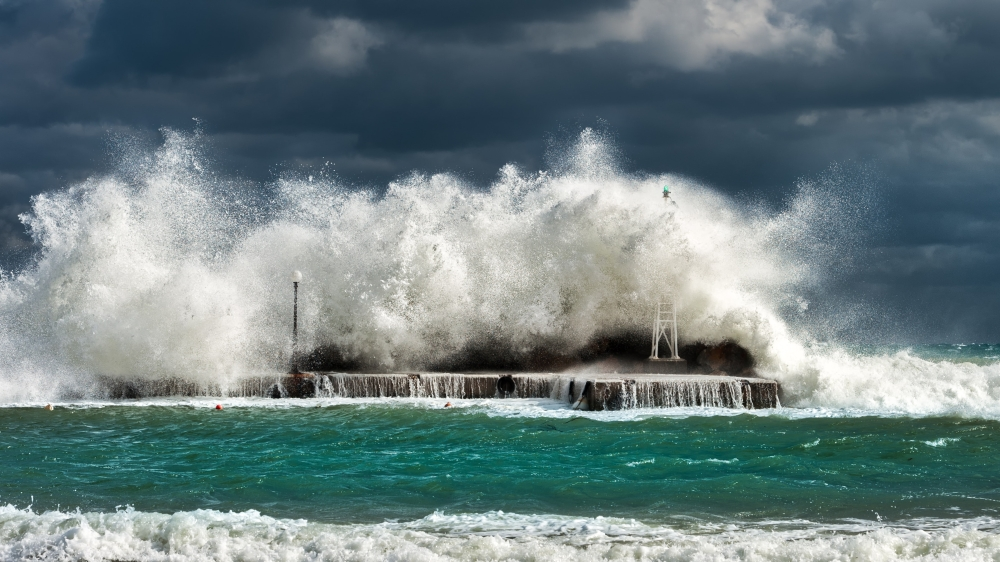
Japanese authorities reported on Monday the arrival of initial tsunami waves reaching a height of about 40 centimeters, following a powerful 7.6 magnitude earthquake that struck the country, prompting a state of high alert among the relevant agencies.
Urgent warnings from the Meteorological Authority
The Japan Meteorological Agency issued urgent official warnings, stating that the danger was not yet over. The agency predicted that higher and more dangerous tsunami waves would strike the country's Pacific coast, with waves potentially reaching three meters in height in some areas.
According to public broadcaster NHK, the first waves are expected to arrive by 23:40 local time (14:40 GMT), specifically targeting the northern coastal areas stretching from Aomori Prefecture to Iwate Prefecture.
Japan and the Ring of Fire: An Important Geological Context
These developments come in the context of Japan's sensitive geographical location, as the Japanese archipelago lies above the Pacific Ring of Fire. This region is a broad arc of intense seismic and volcanic activity that encircles the Pacific Ocean basin. It is characterized by the boundaries of tectonic plates that constantly collide and move, making Japan one of the most earthquake-prone countries in the world, experiencing a significant proportion of the world's earthquakes of magnitude 6 or greater each year.
Memories of the 2011 disaster and the lessons learned
This earthquake and tsunami warnings bring back painful memories of the March 2011 disaster, when a devastating 9.0 magnitude earthquake struck northeastern Japan, causing massive tsunami waves that killed thousands and led to the Fukushima nuclear disaster.
Since then, Japan has significantly developed its defense and protection systems. The Japanese government has invested billions of dollars in building massive sea barriers and developing some of the world's most advanced early warning systems, capable of sending instant alerts to mobile phones and television screens seconds or minutes before strong tremors arrive, giving residents precious time to take shelter.
The importance of a rapid response and the impact of the event
The swift response of Japanese authorities today in issuing warnings and evacuating coastal areas is a testament to their high level of preparedness. The international community, particularly Pacific Rim nations, is closely monitoring these developments, as major earthquakes in Japan often trigger tsunami warning systems in countries as far away as the United States, Chile, and Australia, given the ability of tsunami waves to travel vast distances across the ocean.
Local authorities are urging residents in the affected areas to immediately move away from the beaches and head to higher ground, and to follow the instructions of emergency teams to ensure their safety until the alert is lifted.