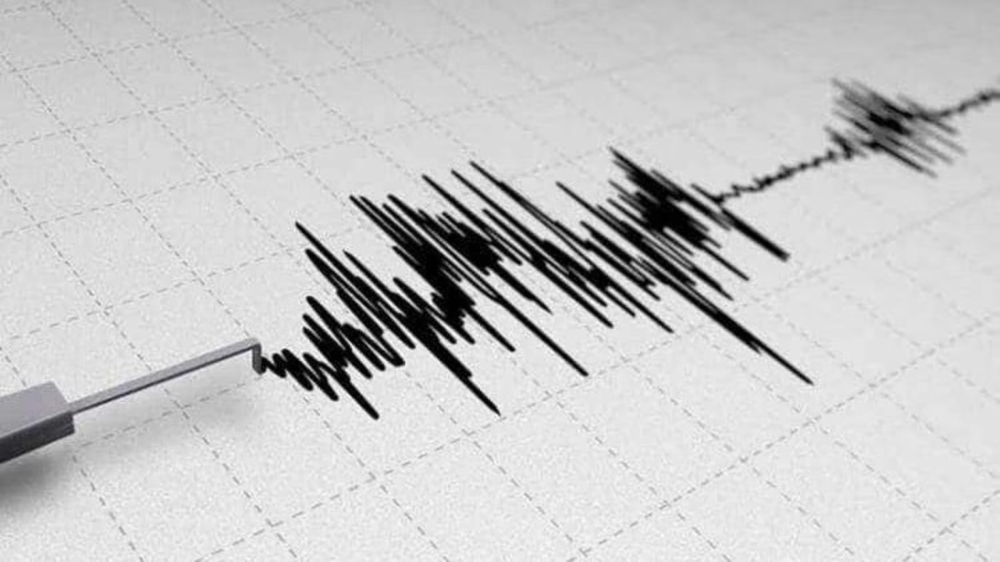
Japan experienced another seismic event today, as a 5.5 magnitude earthquake struck off the coast of Aomori Prefecture in the north of the country, once again highlighting the ongoing tectonic activity in this vital region of the Pacific Ring of Fire.
Details of the Aomori earthquake and the weather report
The Japan Meteorological Agency (JMA) reported in an official statement that the earthquake occurred off the coast of Aomori in the Pacific Ocean. The epicenter was located at a depth of 50 kilometers below the sea surface. The agency confirmed in its initial report that no tsunami warning was issued as a result of the earthquake, and there were no immediate reports of significant damage or injuries, reflecting the effectiveness of Japan's infrastructure in handling moderate earthquakes.
Japan and its geographical location in the "Ring of Fire"
To understand the context of this event, one must consider Japan's geographical location. The country lies at the intersection of four major tectonic plates and is part of the Pacific Ring of Fire, an area that experiences approximately 90% of the world's earthquakes. Aomori Prefecture, located at the northernmost tip of the main island of Honshu, is a seismically active region with a long history of earthquakes, keeping residents and authorities on constant alert.
Japan invests heavily in early warning systems and earthquake-resistant building technologies, which explains why there were no casualties in a magnitude 5.5 earthquake, which could have been devastating in other countries lacking such infrastructure.
Types of earthquakes and their scientific classifications
In discussing the increasing seismic activity worldwide, it is important to distinguish between the different types of earthquakes to understand the nature of what is happening. Earthquakes are scientifically classified into three main types based on their causes:
- Tectonic earthquakes: These are the most common and destructive type, and they occur as a result of the movement of tectonic plates and their sudden slippage along faults and earth fractures. This is the type that Japan often experiences.
- Volcanic earthquakes: These are directly related to volcanic activity, as the movement of magma and gases in the Earth's interior generates strong vibrations that precede or accompany volcanic eruptions.
- Induced earthquakes (human-caused): These are tremors resulting from industrial human activities, such as the construction of large dams that compress the Earth's crust, oil and gas extraction operations, and nuclear or construction explosions.
Global seismic activity: Is it on the rise?
Geological data and observations indicate that the world is experiencing significant seismic activity, with tremors occurring in varying locations and intensity across Asia, South America, and the Mediterranean basin. While long-term statistical studies suggest that the rate of major earthquakes (magnitude 7 and above) has remained relatively stable over the decades, technological advancements and the proliferation of monitoring tools and media have contributed to increased global awareness and documentation of tremors that previously went largely unreported.
Scientists also note a slight increase in small and medium earthquakes in some areas, which may be partly attributed to the aforementioned human activities, calling for careful monitoring and continuous development of emergency response mechanisms.