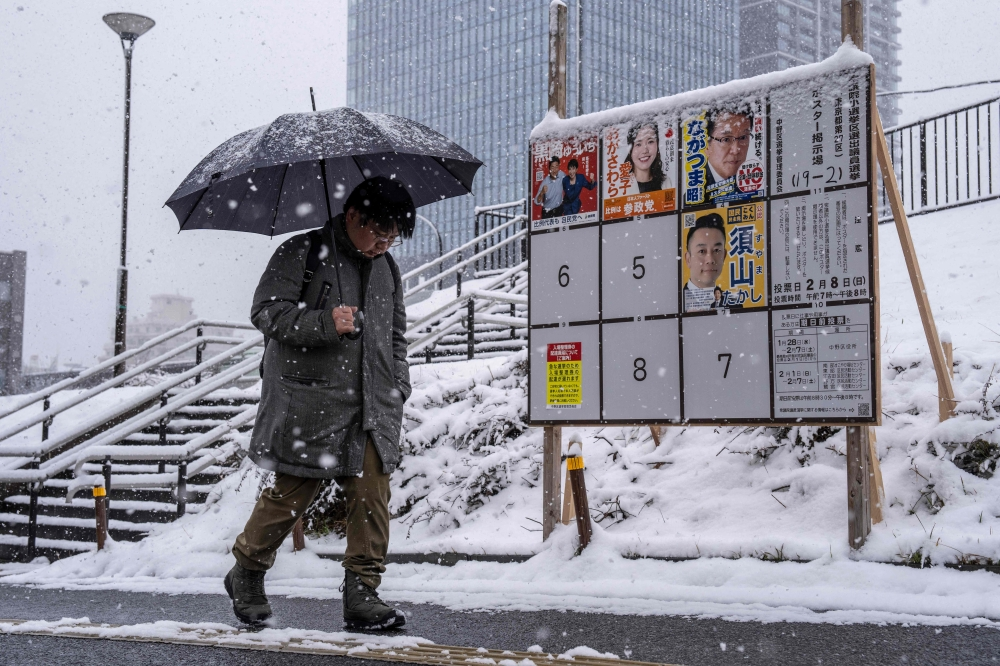
Japanese voters are heading to the polls today to cast their ballots in a snap parliamentary election for the House of Representatives, a crucial turning point that will shape the course of the world's third-largest economy for years to come. The election is seen as a public relations test for the new government led by the Liberal Democratic Party, which is seeking a clear mandate to address mounting economic and security challenges.
Background and context of early elections
These elections are taking place in a politically transformative context. Historically, the Liberal Democratic Party (LDP) has dominated the Japanese political landscape since its founding in 1955, a period known as the "1955 Regime." Despite intermittent periods in opposition, the party has remained the dominant political force. Newly elected prime ministers in Japan often call early elections shortly after taking office to gain a direct popular mandate for their policies, unify the party, and consolidate their political standing. This election is being held amidst pressing public concerns, most notably the post-COVID-19 economic recovery, high inflation, and the demographic challenges posed by an aging population.
The importance of the results and their expected impact
Opinion polls indicate that the ruling Liberal Democratic Party coalition with its Komeito party ally is on track to secure a comfortable majority in the 465-seat House of Representatives. The coalition may aim for a "stable majority" or even an "absolute majority," which would allow it to control all parliamentary committees and easily pass legislation.
Domestically, a decisive victory for the ruling coalition would mean a continuation of current economic policies, which focus on balancing economic growth and wealth redistribution. It would also give the government a strong boost to advance its agenda, including sensitive discussions about amending the country's pacifist constitution, specifically Article 9, to strengthen Japan's defense capabilities. Furthermore, it would bolster political stability after a period of frequent changes in prime ministers.
On both regional and international levels, the election results have implications that extend far beyond Japan's borders. A stable and strong Japanese government will likely continue to strengthen its strategic alliance with the United States as a cornerstone of its foreign policy. It is expected to maintain a firm stance on security tensions in the Indo-Pacific region, particularly in light of China's growing influence and North Korea's missile threats. The outcome will also affect Japan's role in international blocs such as the G7 and the Quad, and its engagement with global trade agreements, making this election a closely watched affair in world capitals.