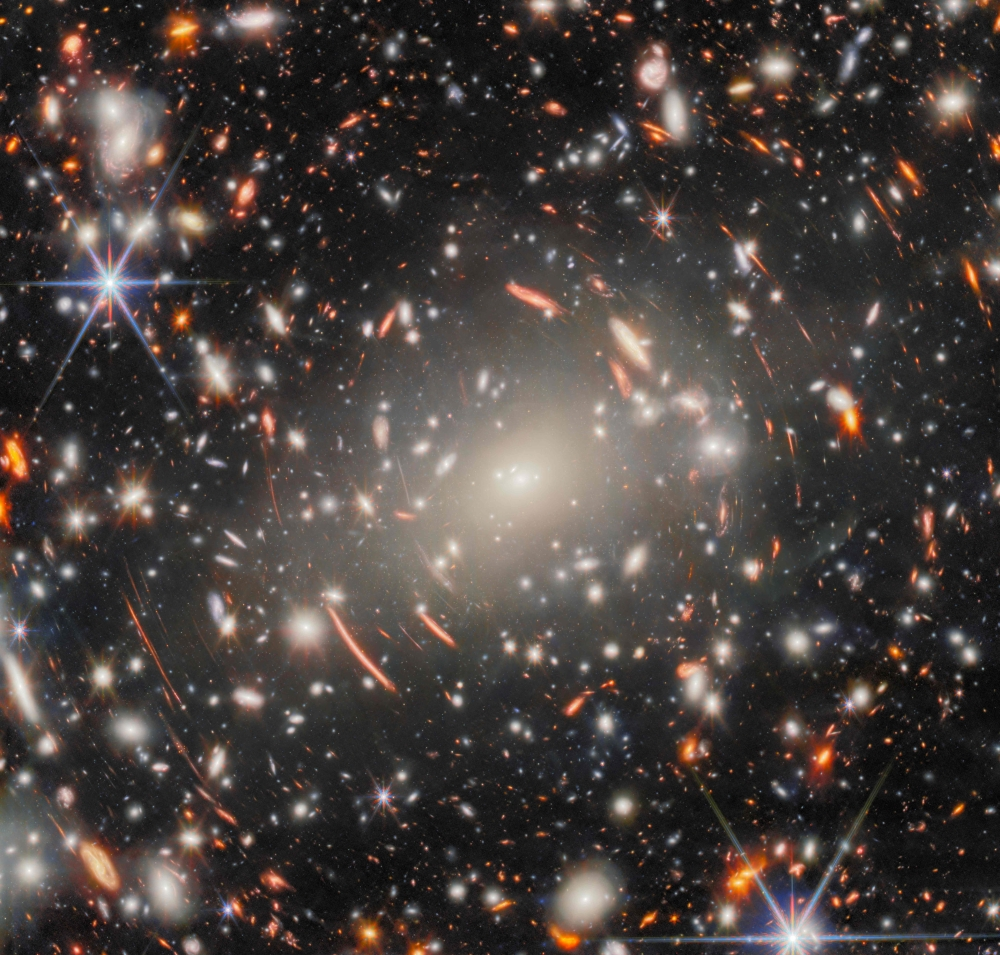
In an unprecedented astronomical achievement that could reshape our understanding of the origins of existence, a research team from the University of Toledo announced the detection of compelling and exciting evidence using NASA Space Telescope . The data points to the discovery of the first stars to form after the Big Bang, a mysterious class known scientifically as Population III.
Cosmic context: Emerging from the Dark Ages
To understand the magnitude of this discovery, we must go back in time, specifically to what is known as the "cosmic dark ages." After the Big Bang, the universe was a hot, opaque soup of elementary particles. As it expanded and cooled, it was shrouded in darkness for hundreds of millions of years before any sources of light appeared. The universe awaited that first spark, and the significance of the Population III stars lies in their role as that spark that ended the darkness and ushered in the "dawn of the universe," initiating the process of reionization that made the universe transparent as we see it today.
Gravitational lensing: Einstein's observational miracle
Due to their immense distance, directly observing these stars is impossible, even with the most powerful telescopes. This is where the ingenuity of the solution employed by scientists shines through, relying on the phenomenon of "gravitational lensing" predicted by Albert Einstein's theory of general relativity. The observed stars lie behind a massive galaxy that acts as a "cosmic magnifying lens." The mass of this intermediate galaxy warps spacetime and magnifies the background starlight by approximately 100 times, enabling the James Webb Space Telescope's highly sensitive sensors to capture this faint light emanating from the edge of time.
Scientific significance: The missing link in the periodic table
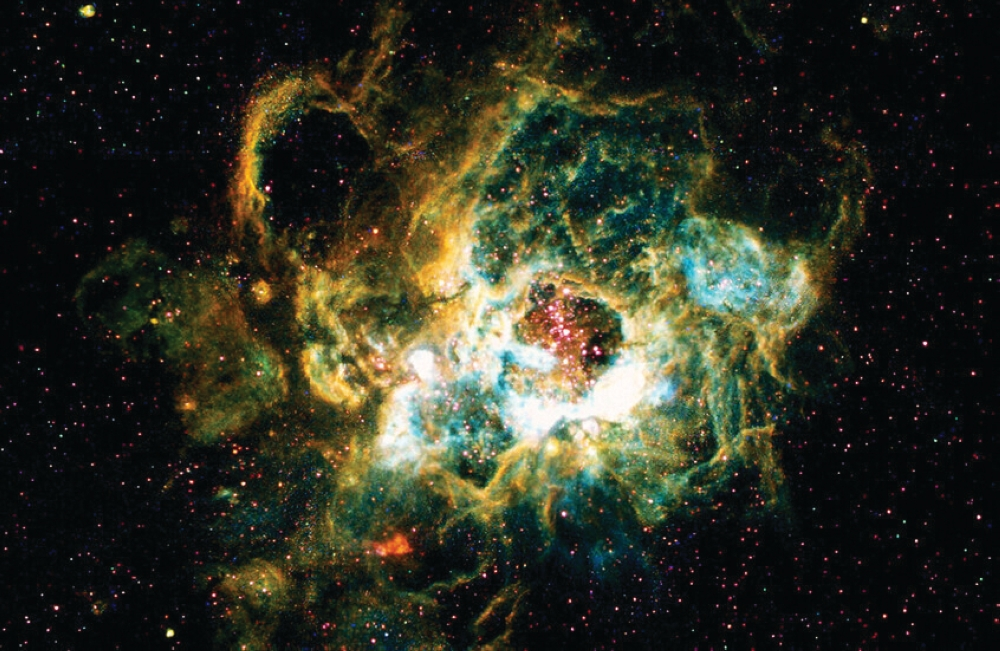
Population III stars are radically different from our Sun or any other stars we see today. They are giant, extremely hot stars composed exclusively of hydrogen and helium (the fundamental elements of the universe). Their paramount importance lies in the fact that they were the first factories of heavy elements; their short lives, which ended in colossal supernova explosions, scattered elements such as carbon, oxygen, and iron into space. Without this first generation, rocky planets would not have formed, and biological life would not have been possible. Therefore, studying these stars is studying the origin of the atoms in our bodies.
The James Webb Revolution and its Future Impact
This discovery highlights the significant leap forward made by the James Webb Space Telescope compared to its predecessor, Hubble. While Hubble provided stunning images in the visible spectrum, James Webb's ability to observe in the infrared range is key to seeing into the distant past, as the light from ancient objects is stretched and redshifted due to the expansion of the universe. Scientists anticipate that this observation will open the door to a deeper understanding of how matter coalesced to form the first galaxies, impacting globally accepted astrophysical models and answering fundamental questions about the origin of the universe.