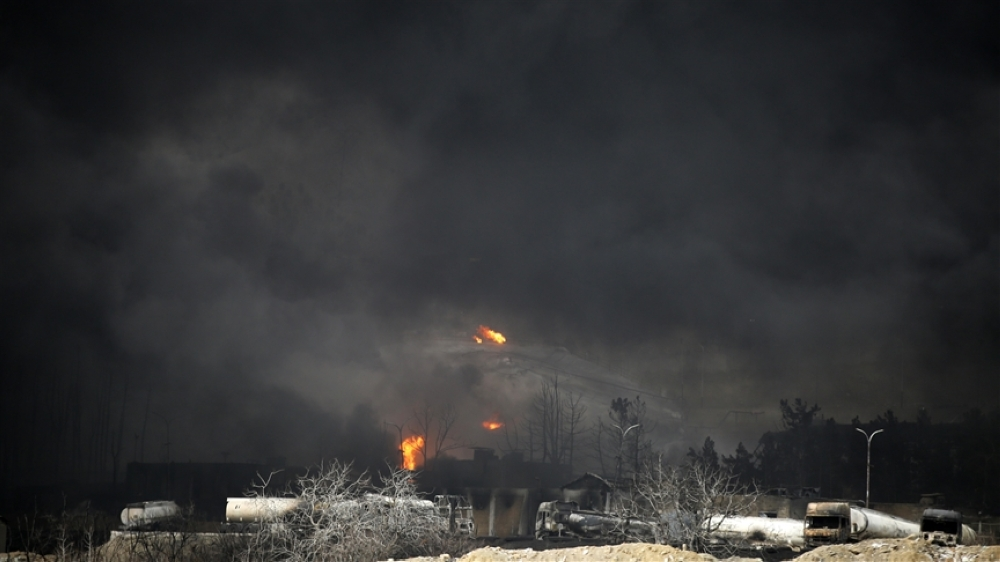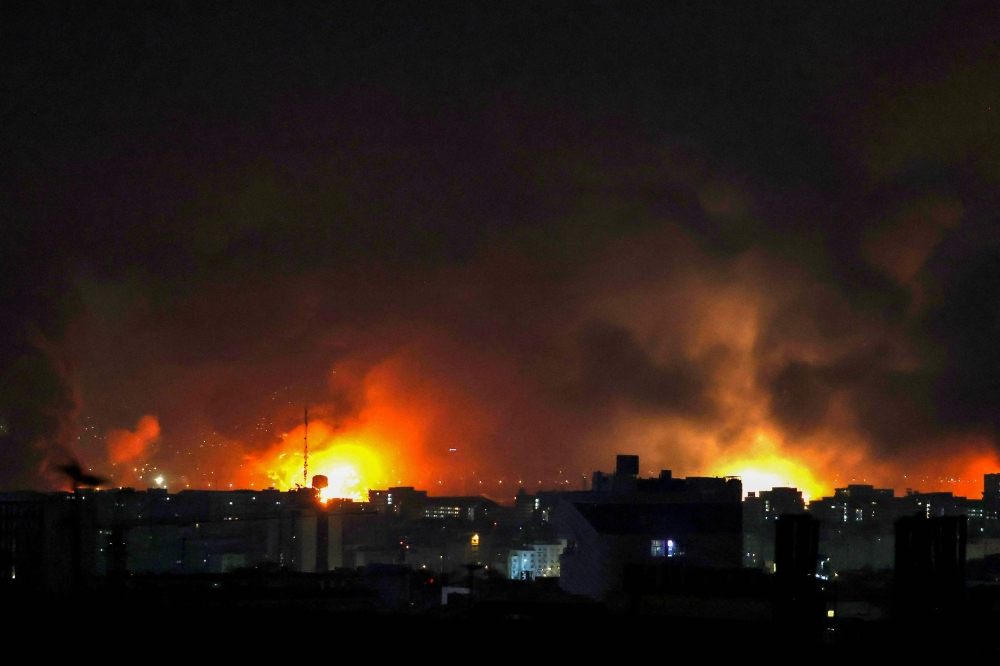
In an unprecedented military development that shook the Middle East, the Israeli army officially announced a massive wave of precision airstrikes targeting the capital, Tehran, and areas in central Iran. Initial reports revealed that the Israeli attack on Iran was carried out by a large air force comprising more than 80 fighter jets, making it one of the largest air operations conducted by Israel outside its borders in recent decades.
Details of the large-scale military operation
Reports indicate that the operation was not a mere raid, but a coordinated and complex attack involving dozens of fighter jets that flew long distances to reach deep into Iranian territory. The use of more than 80 fighter aircraft reflects the scale of the logistical and operational challenge, as this type of mission requires aerial refueling and precise intelligence coordination to overcome air defense systems and reach designated targets in Tehran and central Iran. Military planners in such strikes typically focus on neutralizing strategic military capabilities, such as missile factories and drone facilities, to ensure the reduction of the adversary's offensive capabilities.
The roots of the conflict and the context of the Israeli attack on Iran
This event cannot be understood in isolation from the tense historical and field context of the region. This escalation represents a new and dangerous chapter in the ongoing confrontation between the two sides, which has recently shifted from a "shadow war" and cyber or proxy attacks to direct military engagement. Historically, relations have been characterized by extreme tension, but the exchange of direct strikes between the two countries marks a strategic shift in the rules of engagement. This attack is often a reaction to previous actions or attacks, thus presenting the region with a new equation of deterrence in which each country attempts to demonstrate its military superiority and its ability to penetrate deep into the enemy's territory.
Regional repercussions and the international stance
This bombing raises serious concerns within the international community and among neighboring countries about the potential for the region to slide into a full-blown regional war. Targeting a capital city the size of Tehran and vital sites in central Iran carries political and military messages that extend far beyond mere physical destruction. World capitals, particularly Washington, Moscow, and European capitals, are closely monitoring the situation, amidst ongoing calls for restraint to avoid disrupting global energy supplies or threatening international shipping. This event is expected to have direct repercussions on global markets, including oil prices, and will likely lead to a reshaping of security and political alliances in the Middle East in light of these rapidly evolving developments.