Israeli authorities announced Saturday evening the complete closure of their airspace to all civilian flights, an exceptional measure taken amid unprecedented tensions with Iran. The decision was made as a precautionary measure following intelligence reports and warnings of an imminent Iranian attack in retaliation for Israel's targeting of the Iranian consulate in Damascus earlier this month.
Background of the escalation and historical context
This move comes in the context of a years-long “shadow war” between Iran and Israel, waged primarily through proxies in the region, cyberattacks, and sporadic assassinations. Tensions reached a dangerous turning point on April 1, 2024, when an airstrike, attributed to Israel, targeted the Iranian consulate in the Syrian capital, Damascus, killing several senior commanders of the Iranian Revolutionary Guard, most notably General Mohammad Reza Zahedi. Tehran subsequently vowed a swift and decisive response, putting the entire region on high alert.
Details of the decision and its local impact
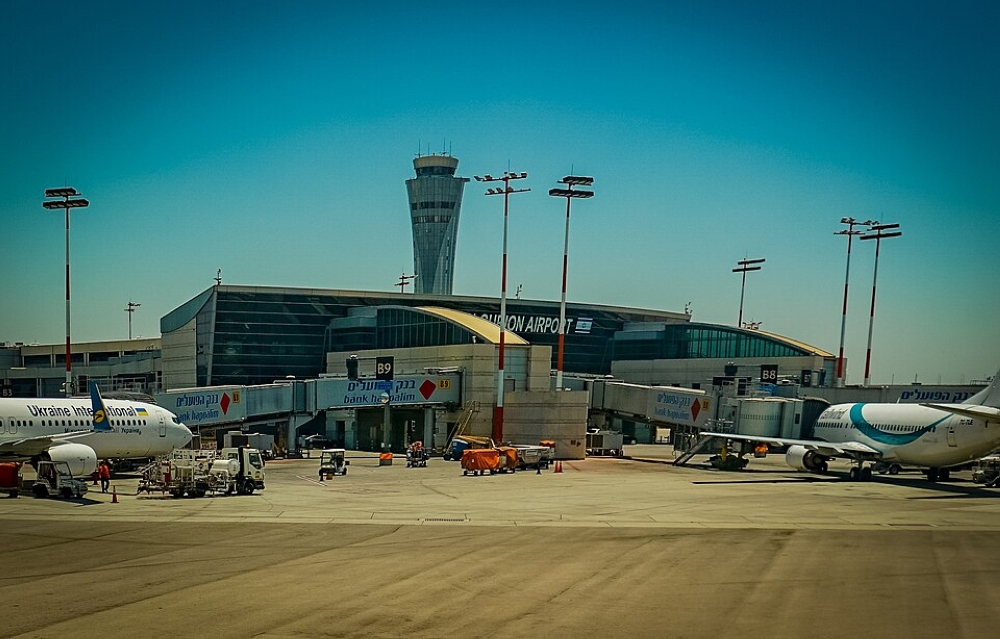
Based on the security situation, Israeli Transportation Minister Miri Regev instructed the Civil Aviation Authority to implement the immediate closure. The decision coincided with the sounding of sirens in various areas, including Jerusalem, and the dissemination of warnings via mobile phones urging residents to remain near shelters. The decision caused significant disruption at Ben Gurion International Airport, where incoming flights were diverted and departing flights were canceled or delayed, affecting thousands of passengers.
Regional and international importance and influence
The impact of this decision was not limited to Israel alone, but extended to the entire region. Neighboring countries such as Jordan, Iraq, and Lebanon announced the temporary closure of their airspace as a precautionary measure, fearing that missiles or drones might cross their territory. This collective closure brought air traffic in a vital part of the Middle East to a near standstill, forcing international airlines to drastically alter their flight paths to avoid the region, resulting in additional costs and widespread delays. Internationally, the escalation raised serious concerns, with the United States and several European powers calling for restraint and urging the avoidance of a wider regional war that could have dire consequences for the stability of the region and global energy markets.