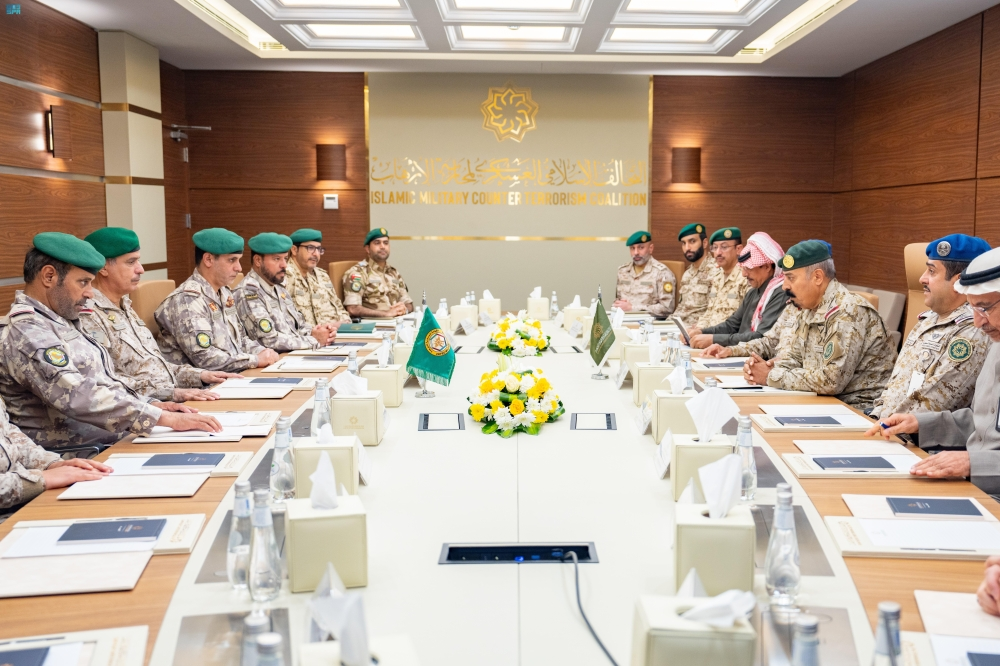
In a strategic move aimed at strengthening regional security and coordinating efforts to combat extremism, the headquarters of the Islamic Military Counter Terrorism Coalition in Riyadh, Saudi Arabia, received the Commander of the Unified Military Command of the Gulf Cooperation Council. Major General Abdulaziz bin Ahmed Al-Balawi and his accompanying delegation were received by the Secretary General of the Coalition, Major General Mohammed bin Saeed Al-Mughaidi. The meeting provided an important platform to discuss prospects for cooperation and unify visions in confronting shared security challenges.
Historical background and strategic context
This meeting comes amid growing regional efforts to establish an integrated security architecture. The Islamic Military Counter Terrorism Coalition (IMCTC) was established at the initiative of the Kingdom of Saudi Arabia in December 2015 and now comprises 41 member states. It aims to combat terrorism through a comprehensive strategy covering four key areas: ideological, media, counter-terrorism financing, and military. The coalition serves as a platform for coordinating efforts and exchanging expertise among its member states.
On the other hand, the unified military command of the Gulf Cooperation Council, also based in Riyadh, represents the military arm of the Gulf Arab states system. It was established to enhance defense integration and joint military action among the six member states, with the aim of protecting their security and stability and deterring any external threats.
The importance of the meeting and its expected impact
The great importance of this visit lies in its role as a bridge between two pivotal security systems in the region. While the Islamic Military Counter Terrorism Coalition possesses a broader reach and a comprehensive vision for combating terrorism in all its dimensions, the Gulf Cooperation Council's military leadership enjoys operational integration, advanced military capabilities, and a geographically concentrated presence. Coordination between them will create strategic synergy that enhances the effectiveness of efforts at both the regional and international levels.
During the meeting, Major General Al-Mughaidi reviewed the coalition's mission and strategic objectives, highlighting the impactful initiatives it implements to support member states. The Gulf delegation was also briefed on the advanced operational mechanisms within the coalition headquarters, including the information situation assessment system and training and capacity-building programs designed to enhance the capabilities of counterterrorism agencies.
Towards a more secure future
At the conclusion of his visit, the Secretary-General of the Alliance affirmed that this cooperation represents a pivotal step towards developing joint operational mechanisms, thereby fulfilling the aspirations of member states to consolidate security and stability and combat terrorism comprehensively and sustainably. This visit underscores the importance of unifying regional efforts to confront the growing terrorist threats and establishing institutional frameworks based on the exchange of expertise and information, capacity building, and enhanced operational readiness. This directly contributes to supporting security and stability in the region and strengthening international peace and security.