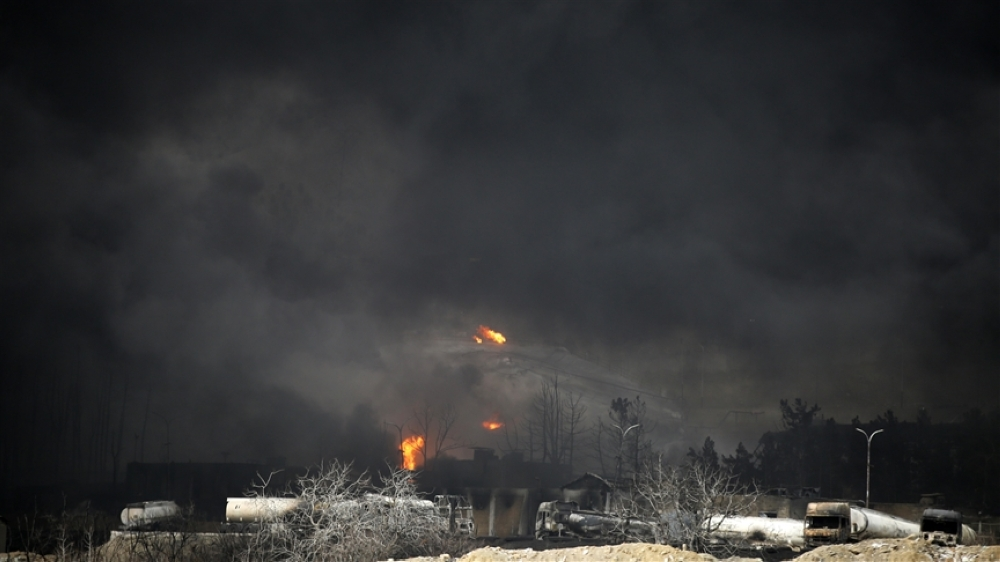
The occupied city of Jerusalem witnessed an unprecedented military escalation on Tuesday, with sirens blaring throughout the city following the Israeli army's announcement that it had detected Iranian missile launches toward the occupied territories. These warnings coincided with the sound of several loud explosions in the sky, triggering a widespread security alert.
Details of the latest escalation and the launching of Iranian missiles towards the occupied territories
The Israeli military stated in an official statement that its air defense systems were immediately activated to intercept threats coming from the east. In a related development, Israeli ambulance services reported that their medical teams treated a number of injuries, including physical injuries sustained while rushing to shelters and fortified rooms, as well as severe panic attacks caused by the sounds of successive explosions.
This incident on the ground comes as a continuation of a series of escalating tensions, as on Monday one person was killed and another injured in the city of Yehud in central Israel as a result of falling rocket fragments, after huge explosions rocked the area following the army’s announcement of detecting intense rocket barrages.
The historical roots of direct tension between Tehran and Tel Aviv
This escalation was not a sudden occurrence, but rather the culmination of years of what is known as the shadow war between the two sides. Historically, confrontations between Tehran and Tel Aviv have relied on cyberattacks, targeting ships, intelligence operations, and support for armed factions in the region. However, 2024 witnessed a dangerous strategic shift: the transition to direct military confrontation. This shift followed a surge in assassinations targeting prominent leaders and attacks on diplomatic missions, prompting Tehran to change its rules of engagement and respond directly into Israeli territory—a historical precedent that altered the landscape of the conflict in the Middle East.
Regional and international repercussions of this military escalation
This development on the ground is of paramount importance and has far-reaching implications on several levels. Domestically, the constant wailing of sirens and falling shrapnel are paralyzing daily life and the economy within Israel, while increasing domestic pressure on the government to provide security. Regionally, this direct escalation threatens to plunge the entire Middle East into a full-blown regional war, potentially involving multiple fronts from neighboring countries.
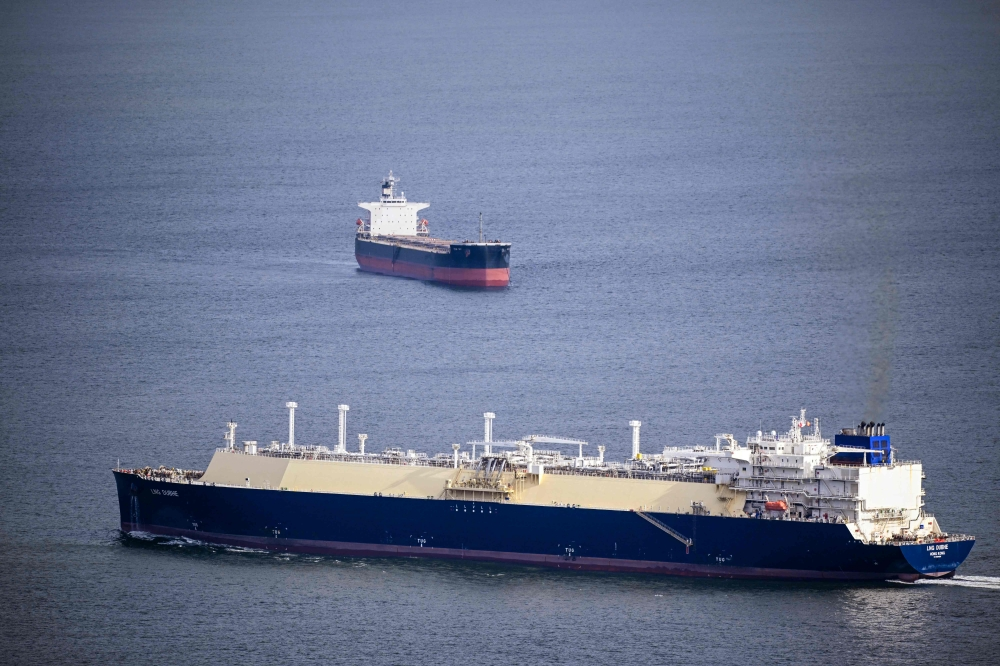
On the international level, this escalation presents the international community with major security and economic challenges, particularly concerning maritime security and global energy supplies. Major powers, led by the United States, have quickly bolstered their military presence in the region to support their allies, while the United Nations and the European Union have launched intensive diplomatic appeals for restraint and to prevent an escalation that could spiral out of control.
The role of air defense systems and international alliances
In response to these attacks, Israel relies heavily on multi-layered defense systems, such as the Iron Dome for short-range projectiles, David's Sling, and the Arrow system for intercepting ballistic missiles outside the atmosphere. These systems operate in close coordination with the radars and forces of the international coalition present in the region, highlighting the level of military and technological sophistication that modern confrontations in this ongoing conflict have reached.