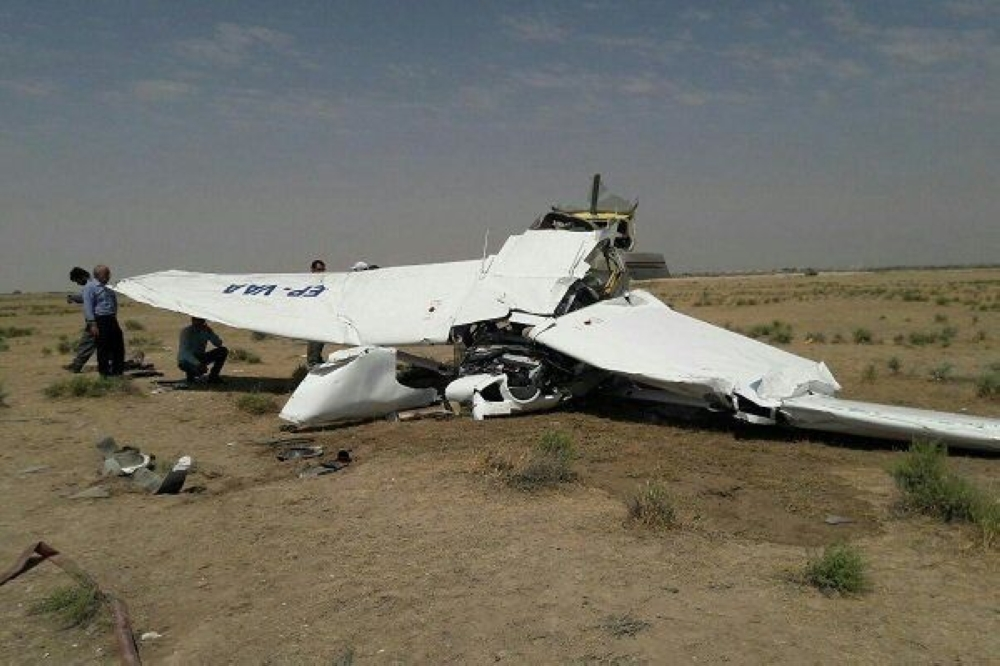
Iranian state media reported a tragic incident involving the Iranian Air Force, in which a fighter jet crashed on Thursday evening during a night training mission in Hamadan province in the west of the country, resulting in the death of one pilot and the survival of the other.
The official Iranian news agency IRNA quoted a statement from the Air Force's public relations office, saying: "An Air Force aircraft crashed this evening during a night training mission in Hamadan province." The statement added that the crash resulted in "the death of one of the pilots, while the other pilot survived," and confirmed that an investigation is underway to determine the exact cause of the accident.
Context of the incident and challenges facing the Iranian air fleet
This incident comes amid significant challenges facing the Iranian Air Force, which relies heavily on an aging fleet. A large portion of its fighter jets date back to the pre-1979 Islamic Revolution era, and are mostly American-made aircraft such as the F-4 Phantom, F-5 Tiger, and F-14 Tomcat.
Over the past four decades, international sanctions, particularly those imposed by the United States, have severely restricted Iran's access to genuine spare parts and modern technology necessary for maintaining and upgrading its fleet. This situation has forced Iran to rely on reverse engineering and domestic industries to procure spare parts, raising ongoing questions about the safety standards and operational efficiency of these aging aircraft.
Significance and potential impacts of the accident
Domestically, the recurring crashes of military aircraft raise concerns about pilot safety and the efficiency of military equipment. They also highlight the urgent need to modernize the air fleet to keep pace with technological advancements and ensure combat readiness. Each accident represents a loss of life and equipment that is difficult to replace under current circumstances.
Regionally and internationally, these incidents are seen as an indication of the relative weakness of Iran’s conventional air capabilities compared to its regional rivals. While Tehran has developed significant capabilities in other areas such as ballistic missiles and drones, its conventional air force remains a potential vulnerability. This incident further underscores the profound and long-lasting impact of international sanctions on Iran’s military infrastructure, limiting its ability to operate and maintain the sophisticated Western weapons systems it possesses.