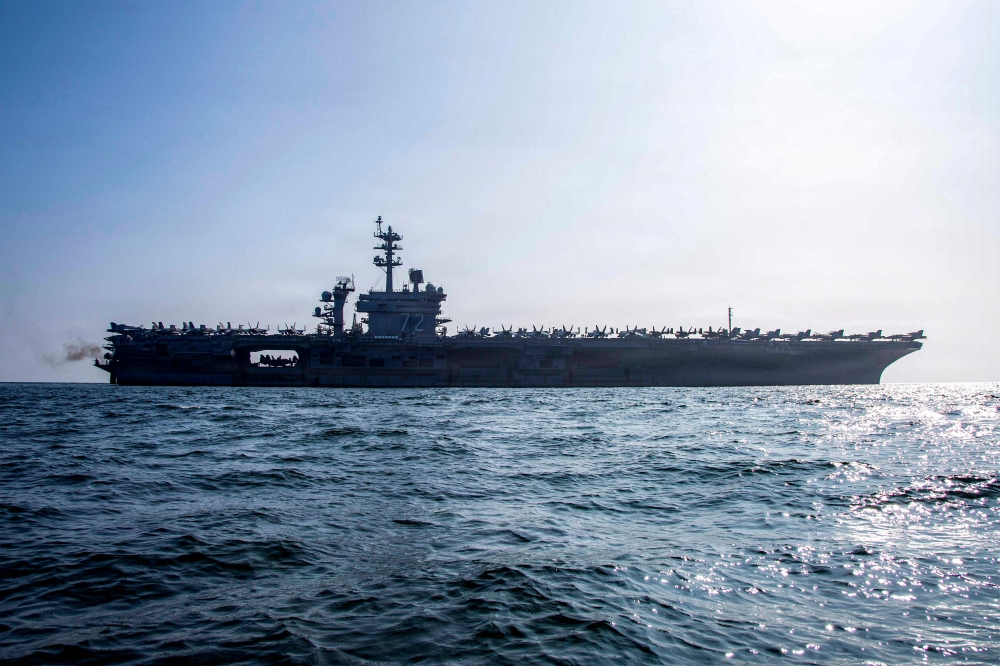
Iran issued a strongly worded warning, asserting that it would respond forcefully and decisively to any US military attack, regardless of its scale or nature. This stance came in response to reports that the administration of former US President Donald Trump was considering limited strikes against Iranian targets, a move that would have further escalated tensions in an already volatile region.
Background of the conflict and context of the tensions
The roots of the current tension go back to decades of hostile relations between the United States and Iran since the Islamic Revolution of 1979. But the final spark that ignited the situation was the Trump administration’s 2018 decision to unilaterally withdraw from the nuclear agreement (Joint Comprehensive Plan of Action – JCPOA) signed in 2015. Following the withdrawal, Washington reimposed harsh economic sanctions on Tehran as part of a policy dubbed “maximum pressure,” with the aim of forcing Iran to negotiate a new agreement on American terms.
Official statements and their implications
At a press conference, Iranian Foreign Ministry spokesman Esmail Baghaei stated, “The concept of a limited strike does not exist in our vocabulary. Any aggression will be met with a comprehensive and decisive response.” He added that Iran, based on its inherent right to self-defense, will not hesitate to protect its sovereignty and interests. These statements reflect Iran’s deterrence strategy, which aims to raise the cost of any military adventure Washington might contemplate and to emphasize that any attack, even a limited one, will open the door to a wider confrontation.
Importance and potential impacts
This escalation has serious repercussions at the local, regional, and international levels. Regionally, the threat of military confrontation raises fears of a full-blown war that could draw in other Gulf states and directly affect US allies in the region. It also threatens the security of vital waterways, most notably the Strait of Hormuz, through which a significant portion of the world's oil supply passes. Internationally, any instability in the region will inevitably lead to higher global energy prices, destabilize financial markets, and further complicate an already highly polarized geopolitical landscape.
Diplomatic efforts and the European position
Amid these mutual threats, diplomatic efforts did not cease entirely. Rounds of indirect talks took place between the two sides, mediated by third parties such as Oman and Switzerland. For its part, the European Union repeatedly called for restraint and a return to diplomatic solutions, stressing that the region could not afford another war. The EU's High Representative for Foreign Affairs expressed her deep concern, emphasizing the need to seize every opportunity to de-escalate the situation and find a political solution to the crisis.