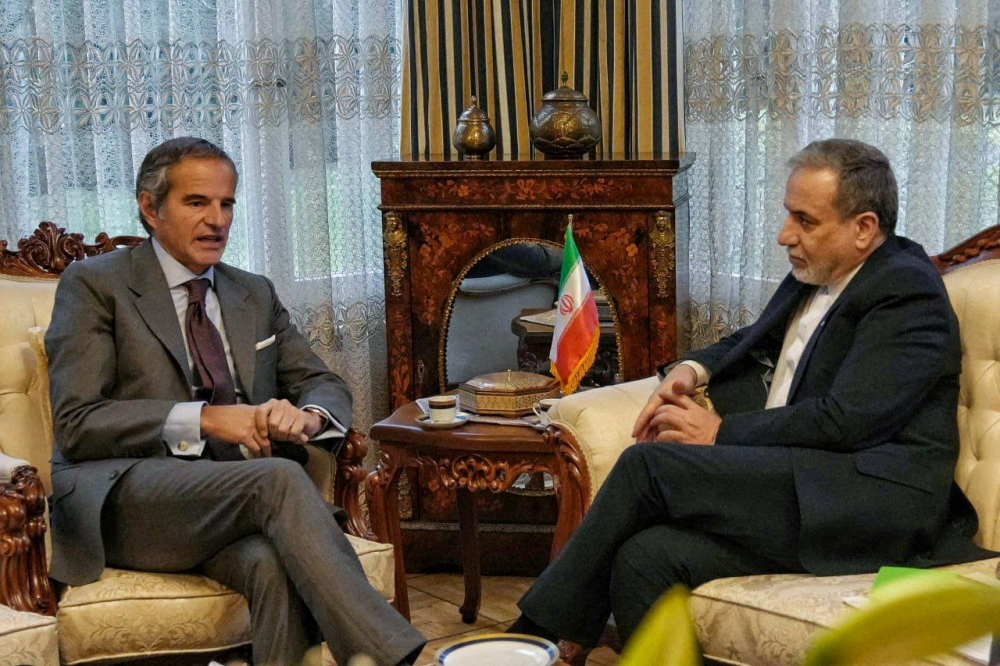
In a new diplomatic development, all eyes are on Geneva, where a new round of indirect talks between Iran and the United States is scheduled to take place, in an attempt to break the deadlock surrounding the landmark nuclear agreement. A high-level Iranian delegation, headed by Deputy Foreign Minister Abbas Araqchi, will participate in this round and will also meet with the Director General of the International Atomic Energy Agency, Rafael Grossi, to discuss the latest developments concerning Iran's nuclear program and its compliance with international agreements.
Historical background of nuclear negotiations
These talks come amid ongoing international efforts to revive the Joint Comprehensive Plan of Action (JCPOA), commonly known as the Iran nuclear deal, which was reached in 2015 between Iran and the P5+1 group of nations (the United States, Britain, France, Russia, China, and Germany). Under this agreement, Tehran agreed to strict limits on its nuclear program, including reducing its stockpile of enriched uranium and the number of centrifuges it operates, in exchange for the lifting of international economic sanctions.
However, the agreement suffered a major setback in 2018 when the administration of former US President Donald Trump unilaterally withdrew from it and reimposed harsh economic sanctions on Iran as part of its “maximum pressure” campaign. In response, Iran began gradually reducing its compliance with its nuclear commitments and increased its uranium enrichment levels to levels far exceeding those permitted by the agreement.
The importance of the talks and their expected impact
This round of talks is of paramount importance both regionally and internationally. Domestically, Tehran hopes that reaching an agreement will lead to the lifting of sanctions that have severely damaged its economy, potentially easing the economic hardship faced by its citizens. Iran has indicated its willingness to make concessions, such as reducing its stockpile of highly enriched uranium, provided that Washington commits to a complete and verifiable lifting of sanctions.
Regionally, Iran's neighbors, particularly the Gulf states and Israel, are closely monitoring these negotiations. Their success could reduce tensions in the Middle East and open the door to broader dialogue on other security issues. Failure, however, risks a dangerous escalation that could increase the likelihood of a nuclear arms race or even a direct military confrontation.
Internationally, the revival of the nuclear agreement represents a victory for multilateral diplomacy and the nuclear non-proliferation regime. The full return of Iranian oil to global markets could also contribute to stabilizing energy prices. The Sultanate of Oman plays a pivotal role as an impartial and trusted mediator between Tehran and Washington, leveraging its good relations with both sides to facilitate dialogue and bridge the gaps in this complex issue, the fate of which remains tied to the outcome of these crucial negotiations.