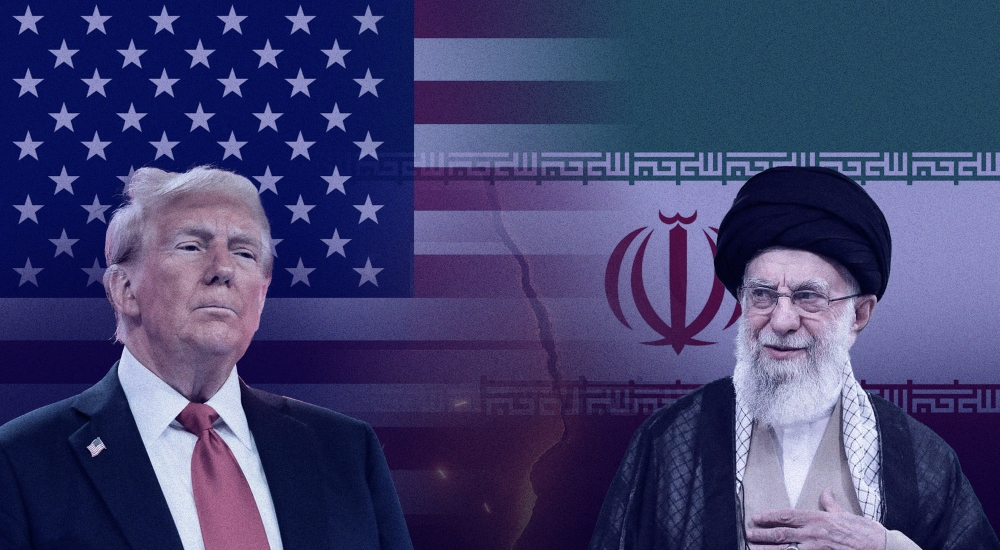
Iran expressed cautious optimism on the eve of a new round of indirect talks with the United States in Geneva, indicating that it sensed a “more realistic” American stance on its nuclear program. These statements come at a crucial time, as the two sides, with Omani mediation, seek to bridge the deep divide between them in order to revive the landmark 2015 nuclear agreement.
Historical background and context of negotiations
The roots of the current crisis can be traced back to 2018, when former US President Donald Trump unilaterally withdrew from the Joint Comprehensive Plan of Action (JCPOA), the agreement Iran had reached with world powers (the United States, Britain, France, Russia, China, and Germany). Under this agreement, Tehran agreed to strict limits on its nuclear program in exchange for the lifting of international economic sanctions. However, following the US withdrawal, Washington reimposed harsh sanctions as part of its “maximum pressure” campaign, prompting Iran to gradually reduce its compliance with its nuclear commitments and significantly increase its uranium enrichment levels, a move that alarmed the international community.
Tense atmosphere and crucial talks
Iran's chief negotiator, Abbas Araqchi, arrived in Geneva for the second round of talks, a continuation of the first round held in Muscat in early February. These diplomatic efforts coincide with an escalation on the ground, as the Iranian Revolutionary Guard conducted military exercises in the strategic Strait of Hormuz, a move widely seen as a show of force. In response, Washington has reinforced its military presence in the region, creating a tense atmosphere surrounding the negotiations.
In this context, the official Iranian news agency IRNA quoted Foreign Ministry spokesman Esmail Baghaei as saying, “Given the talks in Muscat, we can cautiously conclude that the American position on the Iranian nuclear issue has become more realistic.” Baghaei emphasized his country’s adherence to its “inalienable rights under the Treaty on the Non-Proliferation of Nuclear Weapons,” which include “the peaceful uses of nuclear energy, including enrichment.”.
The importance of the event and its expected impact
The success or failure of these talks will have repercussions that extend far beyond Iran and the United States. Internationally, reviving the agreement would represent a victory for diplomacy and the global nuclear non-proliferation regime. Araqchi met in Geneva with the Director General of the International Atomic Energy Agency, Rafael Grossi, underscoring the importance of the agency's role in verifying any future agreement.
Regionally, reaching an agreement would ease tensions in the Middle East, especially given the concerns of neighboring countries, such as Saudi Arabia and Israel, about Iran’s nuclear ambitions, its ballistic missile program, and its regional role. These are issues that Washington wants to include in any comprehensive agreement, something Tehran strongly rejects, insisting that the talks be limited to the nuclear issue only.
On the Iranian domestic front, lifting sanctions would be a lifeline for the ailing economy and could bolster the current government's position, while failure would mean continued economic hardship and escalating internal and external pressures. Therefore, all eyes remain on Geneva, where the outcome of this round of talks could shape the next phase in one of the most complex issues on the international stage.