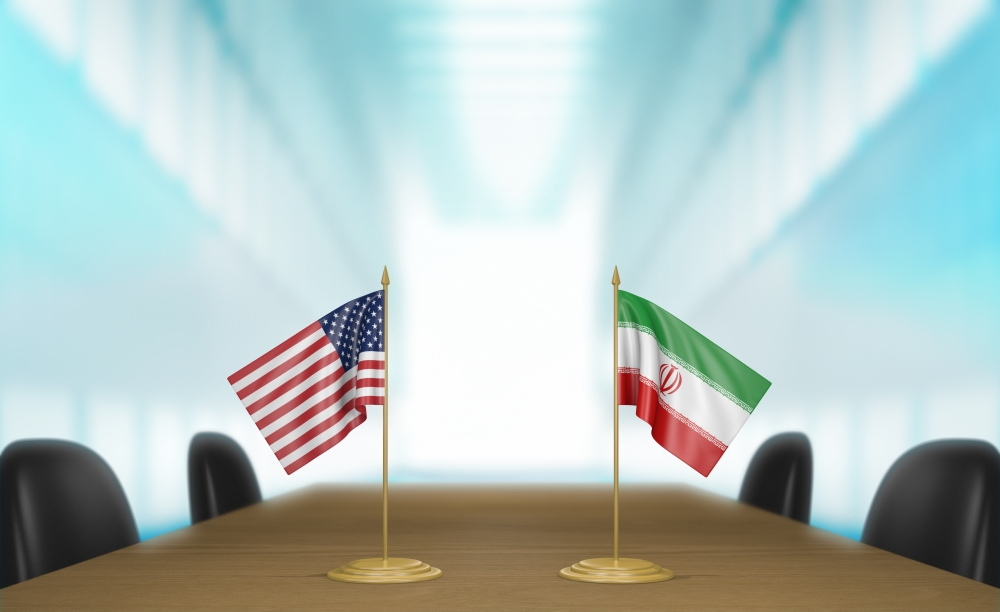
Iranian Deputy Foreign Minister Abbas Araqchi departed Tehran on Sunday evening, heading to Geneva at the head of a diplomatic and technical delegation to begin a second round of indirect talks with the United States regarding Iran's nuclear program. This round comes amidst a complex international climate and carries with it cautious hopes for a breakthrough in this issue, which represents one of the greatest challenges to regional and international security.
Historical background and context of negotiations
These negotiations trace their roots back to the landmark agreement known as the Joint Comprehensive Plan of Action (JCPOA), signed in 2015 between Iran and the P5+1 group of nations—the United States, Britain, France, Russia, China, and Germany. Under this agreement, Iran agreed to significantly curtail its nuclear program and place it under strict international monitoring in exchange for the lifting of economic sanctions.
But in 2018, former US President Donald Trump unilaterally withdrew the United States from the agreement and reimposed harsh economic sanctions on Tehran as part of a “maximum pressure” campaign. In response, Iran began gradually reducing its compliance with the agreement, leading to a dangerous escalation of tensions in the Persian Gulf region and pushing the agreement to the brink of collapse.
Details of the Geneva round and its importance
The Iranian Foreign Ministry confirmed in an official statement that “indirect” talks will be held on Tuesday, mediated by the Sultanate of Oman, which has historically played a pivotal role in facilitating dialogue between Tehran and Washington. During his visit to Geneva, Foreign Minister Abbas Araqchi is expected to hold a series of diplomatic consultations with his Swiss and Omani counterparts, in addition to anticipated meetings with the Director General of the International Atomic Energy Agency, Rafael Grossi, and other international officials, reflecting the multifaceted nature of these talks.
This round of talks is particularly significant as it follows an initial round held in Muscat last February, which paved the way for the resumption of dialogue after a period of stalemate. The talks coincide with continued US threats of military action and the deployment of aircraft carriers to the region, adding further pressure on the parties to reach a diplomatic solution.
Expected impact and existing challenges
The success of these talks, or even tangible progress in them, would have a significant impact on several levels. Internationally, it would represent a victory for diplomacy and nuclear non-proliferation efforts. Regionally, it would contribute to reducing tensions in the highly polarized Gulf region. Domestically, in Iran, reaching an agreement could alleviate the economic burden on citizens.
However, significant challenges remain. Iran insists that negotiations be limited exclusively to the nuclear issue and the lifting of sanctions, refusing any discussion of its ballistic missile program or its regional influence. Conversely, the United States and its Western allies insist that any final agreement must address these issues, considering them integral to the threat to regional security. This divergence in positions remains the primary obstacle that diplomacy will attempt to overcome in Geneva.