In a new escalation of tensions in the Middle East, the Islamic Republic of Iran a strongly worded warning to the United States, specifically to President Donald Trump, asserting that any military action targeting Tehran would be met with an immediate and devastating response. This warning came from the Speaker of the Iranian Parliament, Mohammad Bagher Ghalibaf, who stated during a parliamentary session on Sunday that the Iranian armed forces would consider Israel and US military bases in the region "legitimate targets" for Iranian missiles should Washington commit any military folly.
Regional context and escalating tensions
These threats come at a time of heightened geopolitical tension in the region, where the United States maintains a vast network of military bases across the Gulf states and Iraq, which Tehran has long considered a direct threat to its national security. Observers believe that Iran's threats to strike these bases, in addition to targeting the Israeli heartland, serve as a reminder of the deterrence equation that Tehran is attempting to establish, based on the principle of "unified theaters" and the expansion of the conflict to include Washington's allies in the region should it be attacked.
On the other hand, informed sources reported that Israel has raised its alert level to maximum within its army and security services. Tel Aviv fears that these statements could be a prelude to retaliatory operations or preemptive strikes, especially given reports of potential US intervention to support the popular movement inside Iran, which the Iranian leadership considers a red line and an internationalization of its internal crisis.
Internal protests and calls from the Shah's son
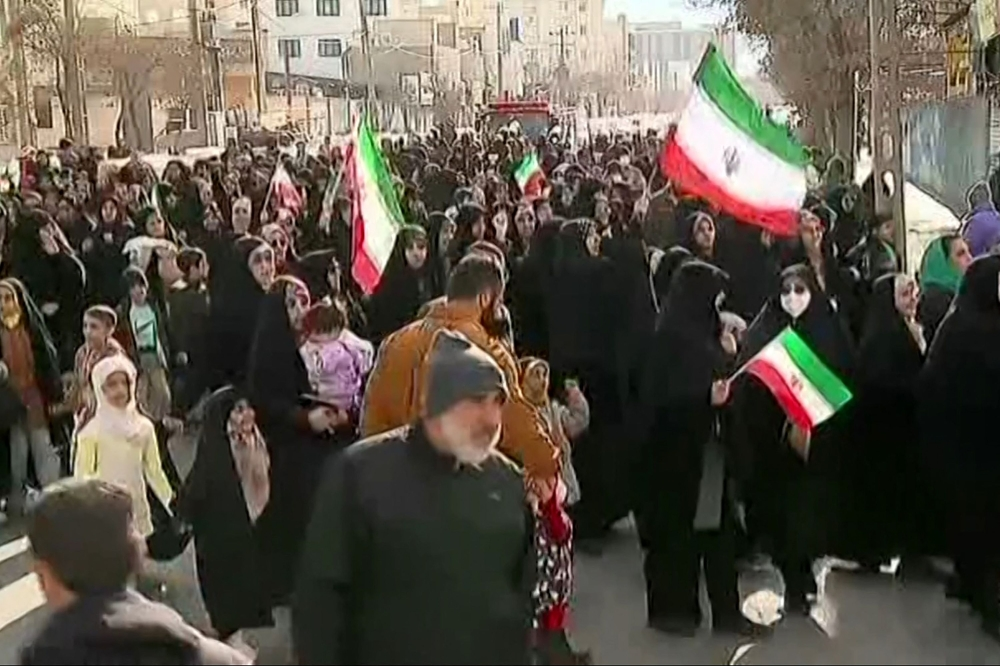
Alongside external tensions, Iranian authorities face escalating internal challenges. The protest movement, now in its fourteenth day, is a wave of popular anger sparked by deteriorating living conditions, the economic situation, and the plummeting value of the local currency, all of which have burdened ordinary Iranians.
In this context, Reza Pahlavi, the son of the deposed Shah and a resident of the United States, entered the fray, calling for a qualitative escalation in the protests. In a post on the "X" platform (formerly Twitter), Pahlavi urged protesters not to confine themselves to side streets, but to "prepare to take control" of major city centers and public squares.
In his message to the protesters, Pahlavi said, "Our goal is no longer just to control the streets; the goal is to prepare to seize and control the city centers," indicating that his return to his homeland could be "very soon," reflecting the desire of the opposition abroad to capitalize on the current momentum to achieve radical political change.
The Intertwining of Crises and the Future of the Region
This complex landscape reflects the intertwining of internal crises with regional conflicts. Tehran attempts to export its internal woes through escalating military rhetoric against external adversaries to unify the domestic front, while the opposition and international powers seek to exploit popular discontent to pressure the regime. The scenario remains open to all possibilities, ranging from an outbreak of regional military confrontation to dramatic shifts in the Iranian domestic scene.