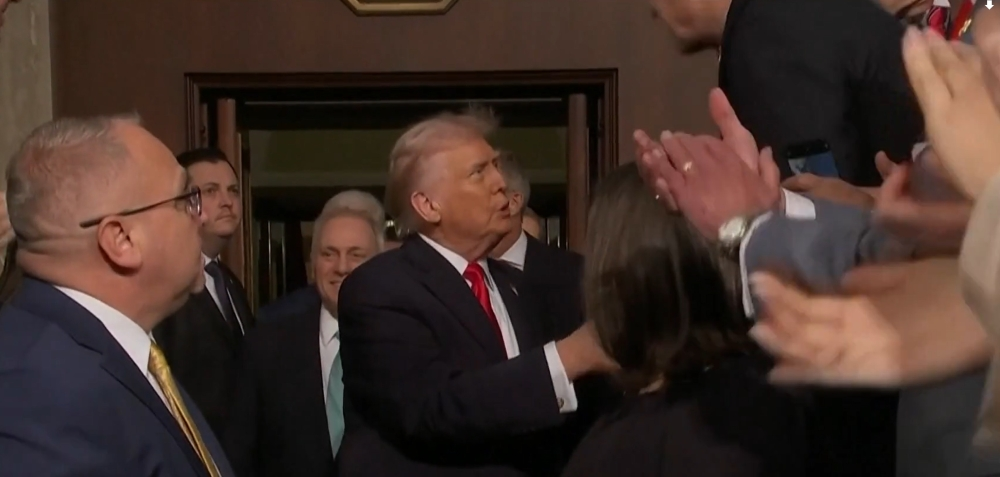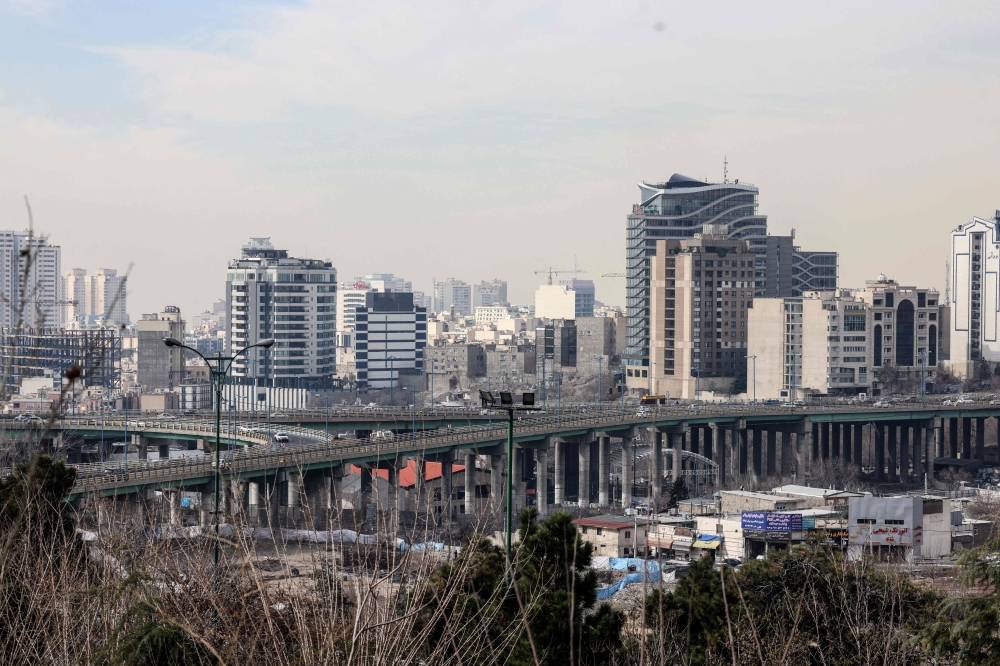
In a new escalation of the war of words between Tehran and Washington, the Iranian Foreign Ministry vehemently rejected US accusations regarding its missile program, describing them as “big lies” with no basis in reality. This firm response came just hours after a speech by US President Donald Trump, in which he accused Iran of seeking to develop ballistic missiles capable of directly threatening US territory.
Iranian Foreign Ministry spokesman Esmail Baghaei stated in a post that US claims regarding Iran's nuclear program, ballistic missiles, and even the number of victims of internal protests are nothing more than "repetitions of major lies" aimed at misleading global public opinion and exerting further pressure on Tehran. President Trump had declared in his annual State of the Union address to Congress that Iran was "once again pursuing its malign nuclear ambitions" and developing long-range missiles, asserting that his administration would never allow Iran to possess a nuclear weapon.
A historical context of tension and the nuclear agreement
This tension has its roots in decades of conflict, but it escalated significantly after the Trump administration's 2018 decision to unilaterally withdraw from the Joint Comprehensive Plan of Action (JCPOA), commonly known as the Iran nuclear deal. This agreement, reached in 2015 between Iran and the P5+1 group, aimed to restrict Iran's nuclear activities in exchange for lifting economic sanctions. The US withdrawal and the reimposition of harsh sanctions under its "maximum pressure" policy led to the gradual collapse of the agreement and prompted Iran to reduce some of its nuclear commitments.
The importance of the missile program in Iranian defense doctrine
Iran considers its missile program a cornerstone of its defense strategy and non-negotiable. Tehran consistently asserts that its missiles are purely defensive and deterrent, essential for protecting its national security in a volatile region, citing the experience of the Iran-Iraq War in the 1980s. In contrast, the United States and its regional allies, such as Israel and Saudi Arabia, view this program as a direct threat to regional stability, particularly with the development of missiles with ranges of thousands of kilometers, and consider it a violation of the spirit of UN Security Council Resolution 2231, which called on Iran not to develop missiles capable of carrying nuclear warheads.
Regional and international impacts
The ongoing dispute over Iran’s nuclear and missile programs casts a long shadow over the regional and international landscape. Regionally, this situation fuels an arms race and exacerbates tensions in the Middle East, increasing the risk of a direct or proxy military confrontation. Internationally, the US position has strained relations with European allies who attempted to salvage the nuclear agreement and poses ongoing challenges to international organizations, such as the International Atomic Energy Agency (IAEA), which seeks to verify the peaceful nature of Iran’s nuclear activities. This issue remains one of the most complex on the global stage, where national security considerations intertwine with international diplomacy and the global economy.