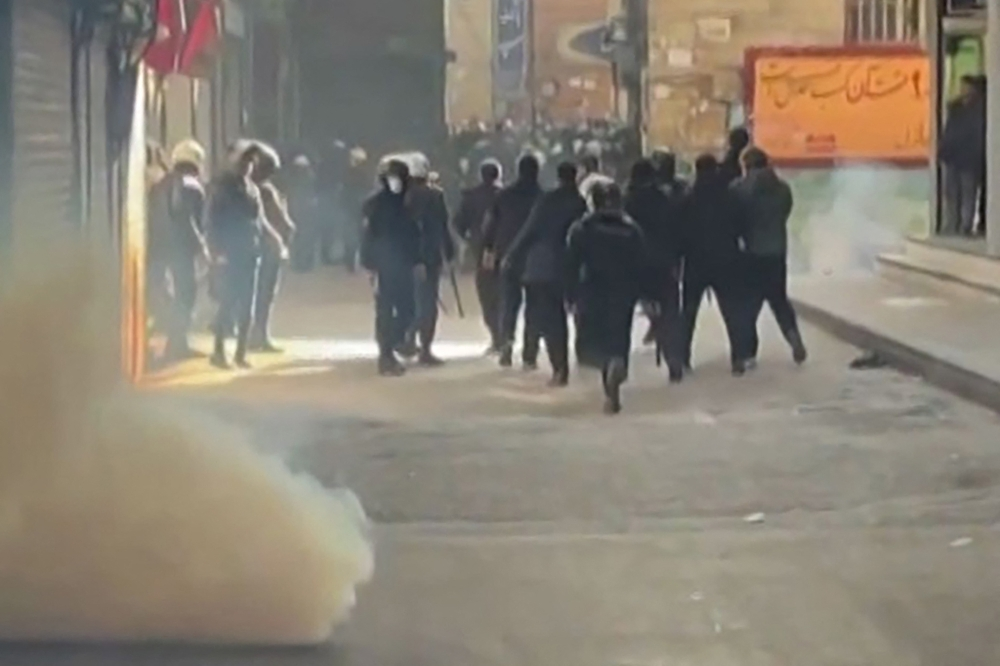
The Iranian scene has witnessed a dangerous escalation in clashes between protesters and security forces, with authorities resorting to excessive force, including tear gas and live ammunition, in an attempt to suppress the protests, which have now entered their twelfth day. These rapid developments come amid a sharp deterioration in living conditions and the economy, prompting the opposition abroad to call for general strikes and widespread protests.
Demands have shifted from economics to politics
What began as a spontaneous popular movement on December 28th, protesting rising prices and the collapse of the local currency in Tehran's bazaar, quickly transformed into a widespread political uprising. The demands broadened to include slogans against the entire political system, headed by Supreme Leader Ayatollah Ali Khamenei. This shift reflects the deep chasm between the public and the authorities, with protesters believing that the regime's economic and foreign policies have depleted the country's resources, particularly under the ongoing international sanctions that have crippled the Iranian economy.
The clashes have spread and resulted in casualties
Field reports indicate that protests have spread to large areas in the west of the country, particularly in Kurdish and Lur minority communities. In a significant escalation of violence, local media reported the stabbing death of police officer Shahin Dehghan in Malard, west of Tehran, while he was attempting to quell the unrest, highlighting the rising tensions and public anger.
In a related context, Iranian Kurdish opposition parties based in Iraq, including the Komala Party, called for a general strike in predominantly Kurdish areas, which have witnessed the most violent protest movement of its kind in recent years.
Human rights documentation of violations and repression
The human rights organization HRANA revealed alarming figures, recording protest movements in 348 locations spread across all 31 Iranian provinces. The organization documented, through videos and photos, the use of tear gas by security forces in the northern city of Tonekabon, and the direct firing of live ammunition at demonstrators in the city of Abadan.
For its part, Amnesty International confirmed that the security forces' handling of the protests was characterized by "unlawful use of force," noting that both protesters and bystanders were killed and wounded. Other human rights reports also pointed to repressive practices, including raids on hospitals to arrest the injured, which constitutes a flagrant violation of international human rights conventions.
Political dimensions and implications
This movement is particularly significant due to its persistence and wide geographical reach, posing unprecedented internal challenges to the Iranian regime. Observers believe that the continuation of the protests could have regional and international repercussions, especially given the increasing Western pressure on Tehran regarding its human rights record. The authorities' reliance on security measures instead of addressing the economic roots of the crisis could deepen the country's instability, leaving future scenarios open to all possibilities.