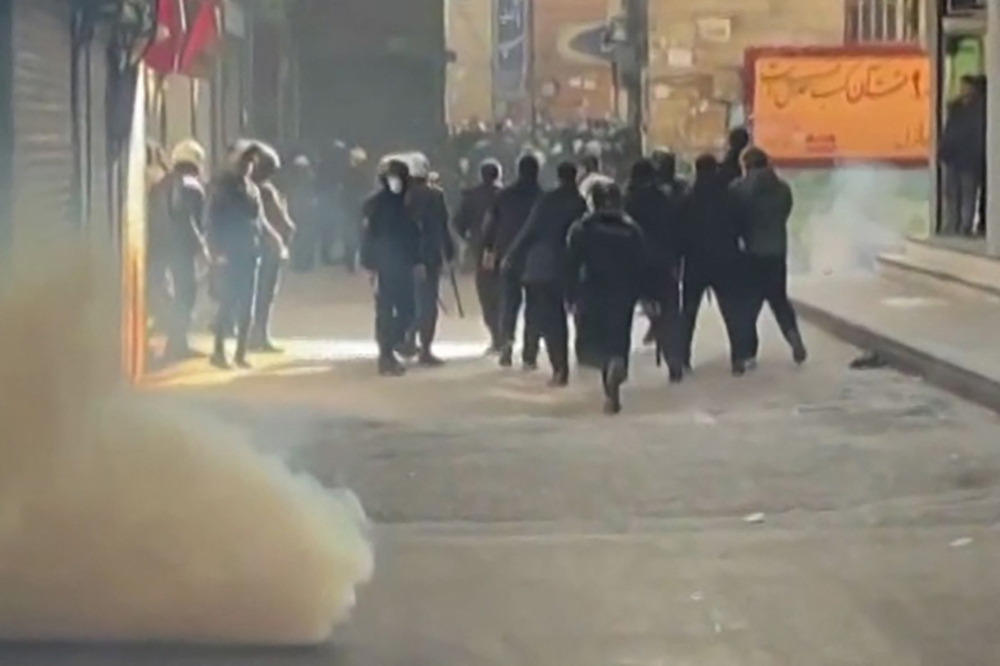
In a striking official announcement reflecting the scale of the unrest in the country, Iranian state television reported that a total of 3,117 people had died during the recent wave of protests against the authorities. This announcement was based on data released by the Iranian Foundation for Veterans and Martyrs, the official body responsible for documenting and caring for victims of conflicts and security operations in the country.
Statistics and victim classification
Iranian state television quoted a statement from the National Endowment for Human Rights detailing the death toll, noting that 2,427 of the total fatalities were considered "martyrs." According to the official classification, this category includes members of the security forces and Basij militia who died during the clashes, as well as civilians whom the authorities deemed "innocent victims" who perished during the events without participating in the unrest, according to the official narrative. This announcement highlights the heavy human cost of the internal turmoil that has gripped the country.
Context of the unrest and historical background
These figures come amid a series of protest waves that have swept Iran in recent years, fueled by a range of grievances including economic hardship, rising fuel prices, and demands for political and social freedoms. Protests have long posed a significant challenge to the political system in Tehran, with authorities typically responding with heavy-handed security measures. The revelation of a death toll exceeding 3,000 is a rare acknowledgment of the scale of violence that has accompanied these events, as previous official estimates have often been reluctant to disclose the total number of victims.
Political and security implications
The timing and nature of this announcement carry significant implications both domestically and internationally. Domestically, by classifying a large number of the victims as "martyrs," the authorities are attempting to contain the anger of the victims' families and offer material and moral compensation, as well as reinforce the official narrative that distinguishes between "rioters" and ordinary citizens or those defending security. Regionally and internationally, these figures could trigger a new wave of criticism regarding human rights and the mechanisms for dealing with peaceful demonstrations.
Expected impact and international stance
This announcement is expected to bring renewed attention to Iran's human rights record within international organizations. International human rights groups typically question official accounts, suggesting that the number of victims may be higher or that the classification of those killed may lack independent transparency. Nevertheless, this official acknowledgment remains an important document confirming the gravity of the events and their profound impact on social and political stability in Iran, presenting the government with ongoing challenges in addressing the root causes of public discontent.