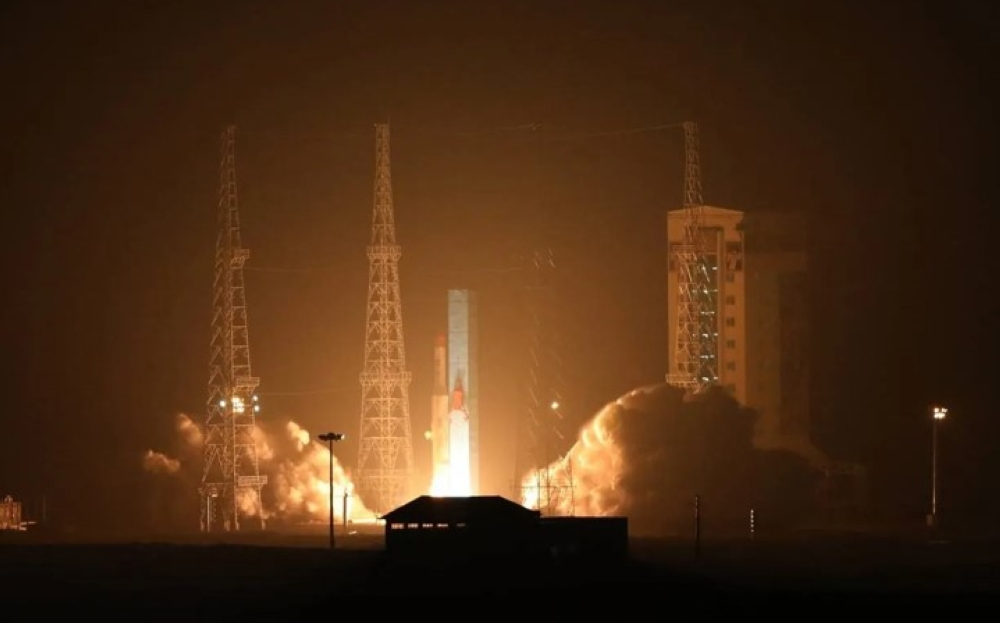
In a move reflecting the depth of strategic and technological cooperation between Tehran and Moscow, Iran announced the successful launch of three domestically manufactured observation and communications satellites using a Russian Soyuz rocket from the Vostochny Cosmodrome. This operation underscores Tehran's continued development of its ambitious space program despite stringent Western sanctions.
Details of the new satellites
According to Iranian state television and the official news agency IRNA, the space shipment included three high-performance satellites: Zafar-2, Paya, and Kowsar-1.5. These satellites were placed in low Earth orbit at an altitude of 500 kilometers, with a lifespan of three to five years.
The 150-kilogram “Paya” satellite represents a significant leap forward for Iranian industry, described by the agency as “the most advanced domestically manufactured imaging satellite.” Its importance lies in its use of artificial intelligence to enhance the resolution of satellite images, making it an effective tool for water resource management, environmental monitoring, and precise mapping—all vital areas for Iran, which faces environmental and climate challenges.
Signs of Russian-Iranian cooperation
This launch cannot be separated from the current geopolitical context. The use of the Russian Soyuz rocket, considered one of the most reliable in the world for transporting sensitive payloads, indicates an advanced level of partnership between the two countries, both subject to extensive Western sanctions. This space cooperation provides Tehran with a reliable access point to space, overcoming the technical challenges its domestic rockets faced in some previous attempts, and it strengthens Russia's position as an international partner capable of challenging Western isolation.
Western concerns and controversy surrounding the program
The accelerating pace of Iran's space program is causing increasing concern in the United States and European countries. Western concerns stem from the belief that satellite launch technology bears a striking resemblance to the technology needed to develop intercontinental ballistic missiles, which can be equipped with nuclear warheads.
Although Tehran repeatedly asserts the peaceful nature of its space activities and their compliance with UN Security Council resolutions, Washington considers these launches a violation of the spirit of international resolutions aimed at curbing Iran's missile capabilities. This launch adds to a series of successful operations carried out by Iran over the past two years, including the simultaneous launch of three satellites using the domestically produced Simorgh rocket at the end of 2014, demonstrating Tehran's determination to establish itself as a leading spacefaring nation in the region.