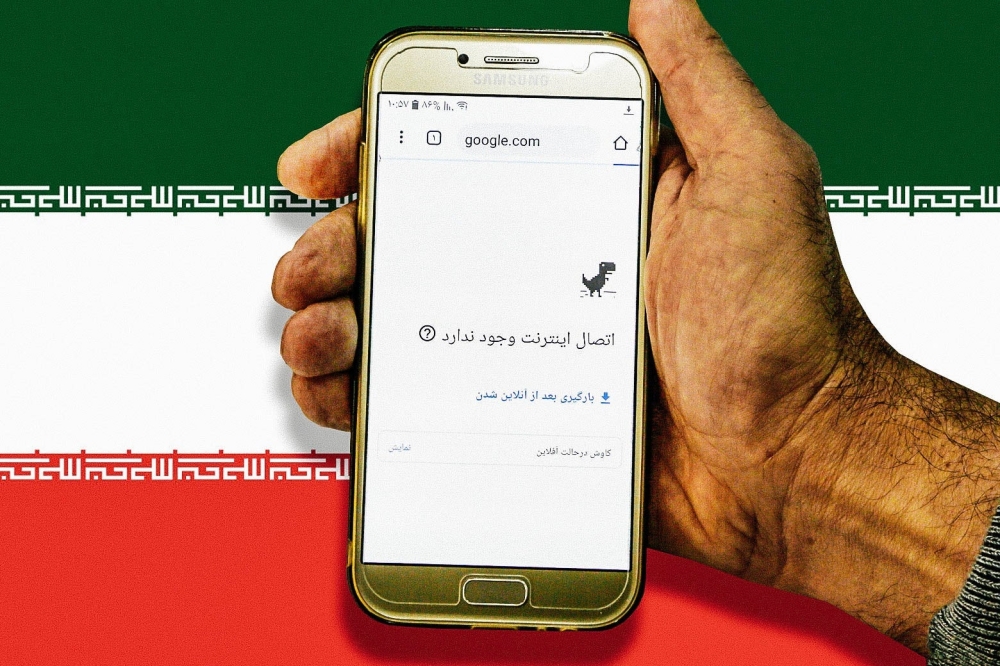
Despite Iranian authorities announcing a relaxation of internet restrictions imposed following recent protests, the digital reality for Iranian citizens remains far from free and fully accessible. After weeks of near-total blackout that began on January 8, service has returned in a limited and intermittent manner, underscoring the continuation of Tehran's long-standing policy of strict censorship aimed at controlling the flow of information and suppressing any potential dissent.
Historical background: A national network to isolate Iran from the world
The recent internet restrictions were not a spur-of-the-moment decision, but rather an extension of a long-standing strategy aimed at creating what is known as the “National Information Network” or “Halal Internet.” Work on this project began more than a decade ago, and it aims to establish an internal infrastructure that would allow authorities to isolate the country from the global internet when necessary, while maintaining essential domestic services such as banking and government websites. Iran saw this strategy used extensively during the November 2019 protests, when the internet was almost completely shut down for a week, severely hindering protesters’ ability to organize and document human rights abuses.
The repercussions of the recent blocking and its economic and social effects
The latest blackout came in response to calls for protests that spread via social media. Authorities imposed a comprehensive blackout that included disabling virtual private networks (VPNs) used by Iranians to circumvent censorship, as well as disrupting satellite internet services like Starlink. As the protests subsided, authorities began allowing limited and monitored access to some global services, such as Google and email, within a so-called "whitelist" of permitted websites.
However, this easing of restrictions has not restored the situation to what it was before. Major social media platforms such as Instagram, Facebook, X (formerly Twitter), and Telegram remain blocked, forcing users to rely on unreliable VPNs. NetBlocks, a global internet watchdog, has confirmed that internet access in Iran “remains heavily censored,” and that intermittent connectivity limits Iranians’ ability to communicate with the outside world.
International impact and high cost
The effects of internet censorship extend far beyond Iran’s domestic sphere, impacting its already struggling economy. Daily losses to the digital economy are estimated at around $3 million, while macroeconomic losses reach approximately $35 million per day, according to the Iranian Minister of Communications. These restrictions cripple startups, impede e-commerce, and exacerbate Iran’s economic isolation. Internationally, these practices are viewed as a blatant violation of freedom of expression and the right to access information, increasing diplomatic pressure on Tehran and complicating any attempts to integrate into the global economy. Maintaining internet restrictions, even if technically feasible, creates cumulative pressure that weakens economic efficiency and fuels social discontent within the country.