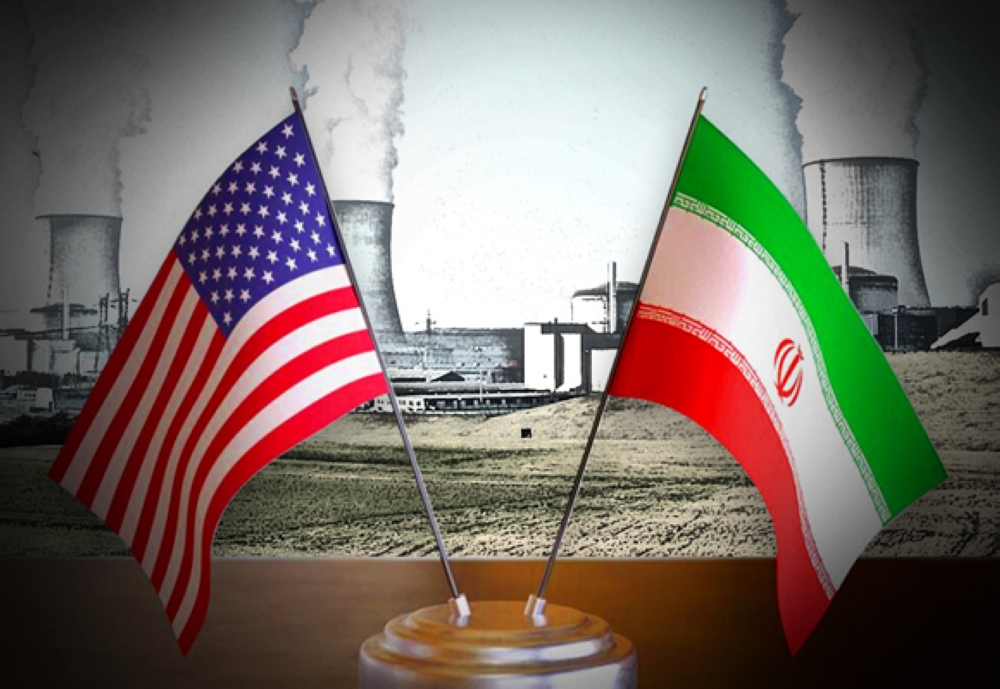
In a statement reflecting Iran’s hardline stance, acting Foreign Minister Abbas Araqchi asserted that Tehran would not relinquish its right to uranium enrichment under any circumstances, “even if war is imposed upon us.” This firm position came two days after indirect talks with the United States, mediated by Oman in Muscat, aimed at reviving the faltering nuclear agreement.
Speaking at a forum in Tehran, Araqchi explained that Iran has “paid a heavy price” for its nuclear program, which it describes as peaceful, emphasizing that the right to enrich uranium is a red line that cannot be crossed. He added, rhetorically, “Why are we so insistent on uranium enrichment and refusing to give it up? Because no one has the right to dictate our actions.”.
The historical context of the nuclear file
This tension stems from deep historical roots related to Iran’s nuclear program, which has concerned the international community for decades. Diplomatic efforts culminated in 2015 with the signing of the Joint Comprehensive Plan of Action (JCPOA), commonly known as the Iran nuclear deal, between Iran and the P5+1 group (the United States, Britain, France, Russia, China, and Germany). Under this agreement, Iran agreed to significantly restrict its nuclear program and open its facilities to intensive international inspections in exchange for the lifting of economic sanctions. However, the unilateral withdrawal of the United States from the agreement in 2018 under President Donald Trump and the reimposition of crippling sanctions prompted Tehran to gradually renege on its commitments and resume uranium enrichment activities at levels far exceeding those permitted by the agreement.
The importance and impact of uranium enrichment
The importance of uranium enrichment lies in its dual-use nature and sensitivity. While nuclear power plants require low-enriched uranium (around 3-5%) to generate electricity, the production of nuclear weapons necessitates a high enrichment level exceeding 90%. Iran consistently maintains that its program is entirely peaceful and aimed at meeting its energy and medical needs, while Western powers and Israel accuse it of secretly pursuing the capability to build a nuclear bomb. The right to enrichment is a central tenet of Iranian national identity and sovereignty, with Tehran considering it a non-negotiable scientific achievement.
Regional and international dimensions
Araghchi’s statements carry messages not only for the West but also have broad regional and international repercussions. Regionally, the progress of Iran’s nuclear program is raising concerns among neighboring countries, particularly Saudi Arabia and Israel, which view the program as an existential threat, potentially pushing the region into a dangerous arms race. Internationally, the failure of diplomacy could escalate tensions, increase the risk of military confrontation, and destabilize global energy markets. Diplomatic efforts, such as the talks hosted by Oman, continue in an attempt to find common ground that can bring all parties back into full compliance with the nuclear agreement and avert more dangerous scenarios.