In a significant security development reflecting escalating tensions in the region, British official sources confirmed that Tehran attempted a military strike targeting base on Diego Garcia in the Indian Ocean, but the attempt failed miserably. This news underscores the scale of the military escalation and the risks surrounding shipping lanes and international interests.
The strategic importance of the Diego Garcia base
To understand the dimensions of this development, one must consider the historical context and geographical location of Diego Garcia . Situated in the Chagos Archipelago in the central Indian Ocean, this base is one of the most important strategic military bases for the United States and the United Kingdom. It was established based on an agreement between Washington and London in the 1960s, whereby Britain leased the island to the United States for the development of an advanced military facility.
This base has played a pivotal role in numerous historical military operations, including the Gulf War and the campaigns in Afghanistan and Iraq. It hosts long-range strategic bombers such as the B-52 and B-2 Spirit, as well as massive naval support facilities and advanced satellite communications stations. This unique location makes it a vital staging point for protecting Western interests in the Middle East and Asia, which explains why it has been targeted during times of tension.
Details of the missile attack and the defensive response
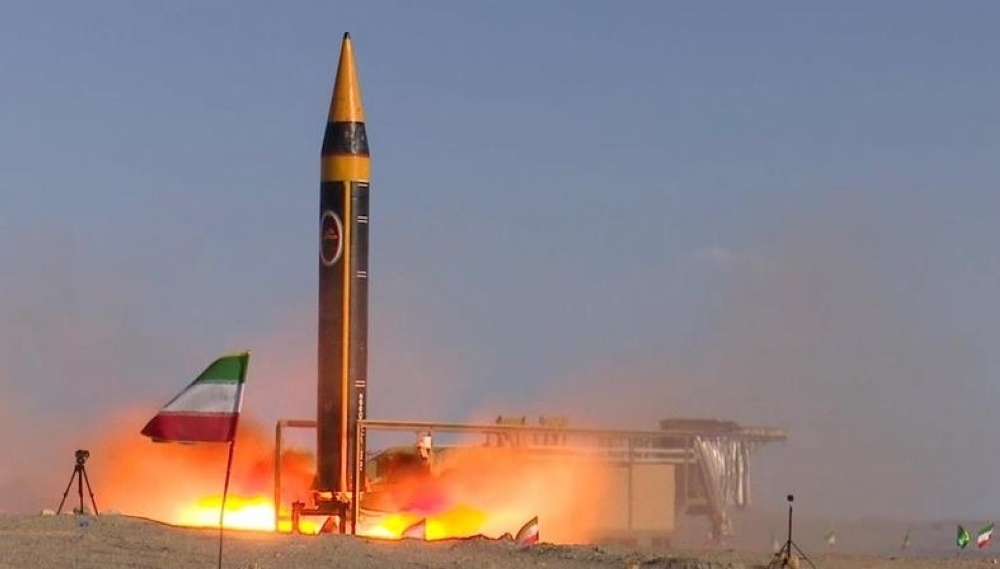
According to Agence France-Presse, citing a British official, the unsuccessful Iranian attempt occurred before the British government's recent announcement. The Wall Street Journal revealed more detailed information about the incident, indicating that Tehran launched two ballistic missiles toward the base. According to US officials, neither missile hit its target; the first suffered a technical malfunction and crashed mid-flight, while advanced air defense systems successfully intercepted and destroyed the second missile before it reached its target.
It is worth noting that this failed attack occurred shortly before London announced on Friday its decisive decision to allow Washington to use some of its military bases to launch strikes against Iranian targets. This joint British-American move comes in response to repeated attacks targeting commercial vessels and shipping in the strategic Strait of Hormuz.
Regional and international repercussions of this escalation
This event is of great importance and has anticipated repercussions on several levels. Regionally, this escalation reflects the precarious security situation in the Middle East and the Indian Ocean, where Tehran seeks to demonstrate its ability to reach distant targets, despite the attack's failure. This development may prompt countries in the region to strengthen their defense systems and increase security and military coordination with Western allies to ensure regional stability.
On the international level, targeting a facility of this size and importance sends a clear message of escalation to Washington and London. This is expected to lead to a strengthened Western military presence in international waters and intensified naval patrols to protect global trade routes, particularly in the Strait of Hormuz, through which a significant portion of the world's energy supplies pass. Furthermore, the success of missile interception systems reinforces confidence in American defense capabilities against the growing ballistic missile threat.