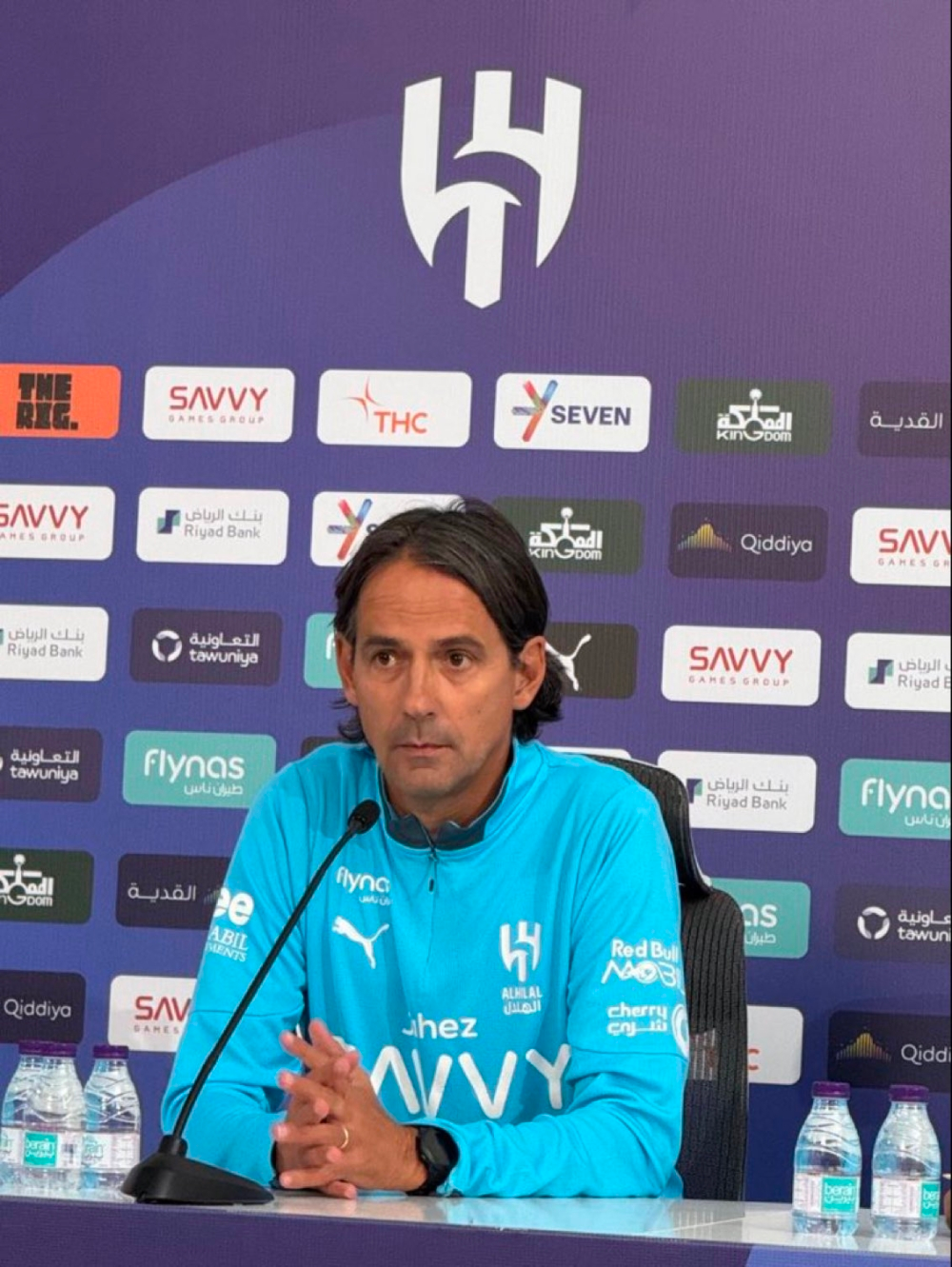
The Italian newspaper "La Gazzetta dello Sport" highlighted the radical transformations taking place at Inter Milan under the leadership of Romanian coach Cristian Chivu, drawing a detailed technical and administrative comparison between him and his Italian predecessor Simone Inzaghi, who currently manages Saudi club Al-Hilal. The report indicated that Chivu did not simply settle for the role of guardian of past achievements, but rather decided to reshape the team's identity to meet the demands of modern football.
A heavy legacy and the beginning of a new era
There is no doubt that succeeding a coach of Simone Inzaghi's stature is no easy task in Italian football, especially given the legacy Inzaghi left behind, studded with titles including a Serie A Scudetto, two Champions League final appearances, and five domestic cups. However, the newspaper explained that Chivu succeeded in moving beyond simply "preserving the legacy" to a phase of "comprehensive development," completely reshaping the team through astute dressing room management and the implementation of a tactical rotation system that made every player feel like a vital cog in the Nerazzurri machine.
Reviving the Stars: The Zelensky Model
The newspaper cited the case of Peter Zielinski as a prime example of this transformation. After a season plagued by marginalization and injuries that sidelined him for around 10 matches, resulting in limited performances, Zielinski has become a pivotal player in midfield under Chivu's management. This change reflects Chivu's distinct philosophy compared to Inzaghi's approach (both with Inter Milan and Al-Hilal), which often leans towards a fixed starting lineup and a specific group of players, potentially exhausting the key players and frustrating the substitutes.
Tactical flexibility: Inter's new weapon
On a technical level, La Gazzetta dello Sport praised the high level of flexibility brought by the Romanian coach. Instead of tactical rigidity, Inter demonstrated a remarkable ability to adapt to the opponent's tactics. The newspaper cited matches like those against Atalanta and Pisa, where the team adopted a 5-4-1 formation with a low defensive line and a free right winger – a style that differs radically from Inzaghi's approach, which often relied on fixed defensive positions and limited substitutions, sometimes hindering the team's ability to adapt to the changing circumstances of matches.
Group strength and smart discipline
The "involve everyone" policy has yielded impressive statistical results, with 13 different players scoring goals for the team in the league this season, confirming that Inter now possesses diverse attacking options that are not dependent on a single individual. The newspaper also touched on an important psychological aspect related to discipline; a player receiving a yellow card is no longer at risk of immediate substitution as was previously the case, reflecting Chivu's confidence in his players' maturity and their ability to manage match pressure without disrupting the team's balance.
The newspaper concluded its report by emphasizing that Inter Milan today appears more vibrant and balanced, and capable of competing fiercely on all local and European fronts, thanks to a coach who instilled confidence in everyone and created a healthy competitive environment within the team.