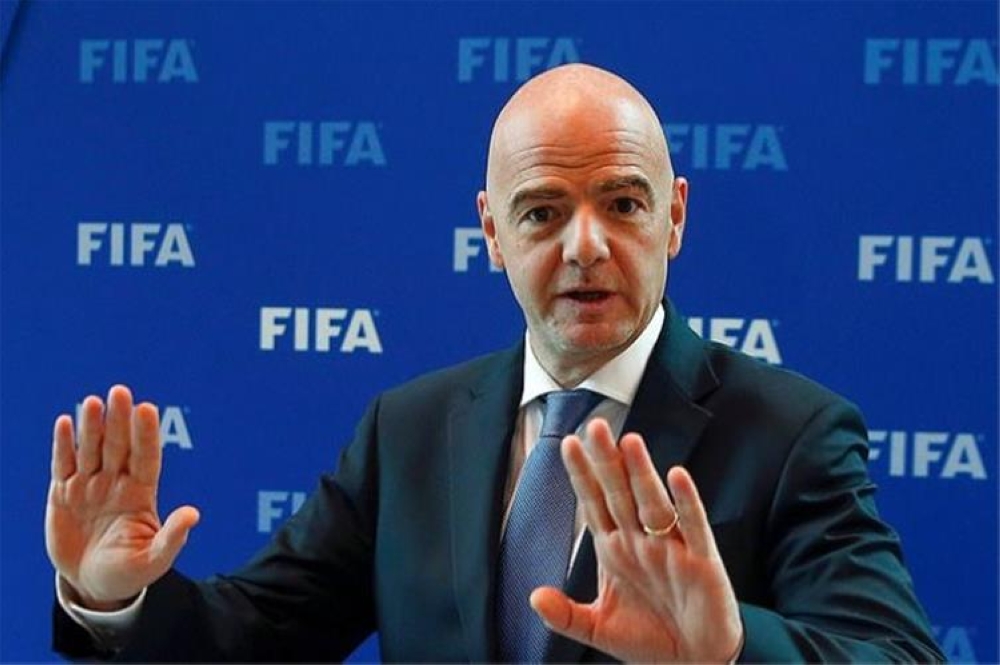
FIFA President Gianni Infantino has reaffirmed the world football governing body's commitment to holding the 2026 World Cup as scheduled, emphasizing that all qualified teams will participate without exception. These firm assurances come amidst growing doubts and media speculation regarding Iran's potential participation in the finals, stemming from escalating geopolitical tensions in the Middle East.
The 2026 World Cup faces exceptional challenges
During a virtual FIFA Council meeting held online from Zurich, Switzerland, Infantino explained that FIFA is eagerly anticipating all teams competing in the World Cup with a high level of sportsmanship that reflects the values of fair play and mutual respect. The FIFA president added that a precise timetable is being followed, and the identities of all 48 participating teams in this historic event will soon be known, emphasizing the unwavering commitment to holding the tournament as scheduled without any postponement.
Numerous questions have recently arisen regarding the fate of the Iranian national team's matches, as the initial arrangements placed them in the United States for their group stage games. Iran is scheduled to face both New Zealand and Belgium in Los Angeles, while their match against Egypt will be played in Seattle. This scheduling has presented FIFA with a real test of its ability to separate sports from politics.
Sports diplomacy in the face of global crises
Historically, the World Cup has always been intertwined with complex political events, from boycotts in the early editions to the tensions of the late 20th century. However, FIFA has consistently strived to maintain the game's independence. In the current context, the president of the Iranian Football Federation, Mehdi Taj, stated that his country would like to move its national team's matches to one of the other host countries, Canada or Mexico. Taj attributed this request to US and Israeli attacks targeting his country, explaining in a recently released video: “We will prepare for the World Cup with full force. We will boycott the United States, but we will not boycott the tournament itself.”.
In response to these developments, the Iranian Football Federation announced it had begun formal talks with FIFA to explore the possibility of moving matches to alternative venues. In a move reflecting regional solidarity and flexible diplomacy, Mexican President Claudia Sheinbaum expressed her country's full readiness to host Iran's group stage matches if necessary, opening the door to practical solutions that would allow the tournament to proceed.
The anticipated impact of the biggest tournament in FIFA history
This edition of the World Cup is of unprecedented importance, not only because it is being co-hosted for the first time by three countries (the United States, Canada, and Mexico), but also because it will feature 48 teams for the first time in the competition's history. This expansion enhances the tournament's economic and cultural impact internationally and provides a historic opportunity for new teams to emerge on the world stage, further motivating FIFA to overcome any political obstacles that might hinder this grand footballing event.
In closing, Infantino delivered a humanitarian message, acknowledging that FIFA lacks the power to resolve complex geopolitical conflicts, but emphasizing its unwavering commitment to using the power of football to build bridges and promote world peace. He expressed his solidarity, saying, “Our thoughts and hearts go out to all those affected by ongoing wars,” and affirming that sport must remain a haven that unites people despite all differences.