The disaster in West Java worsens
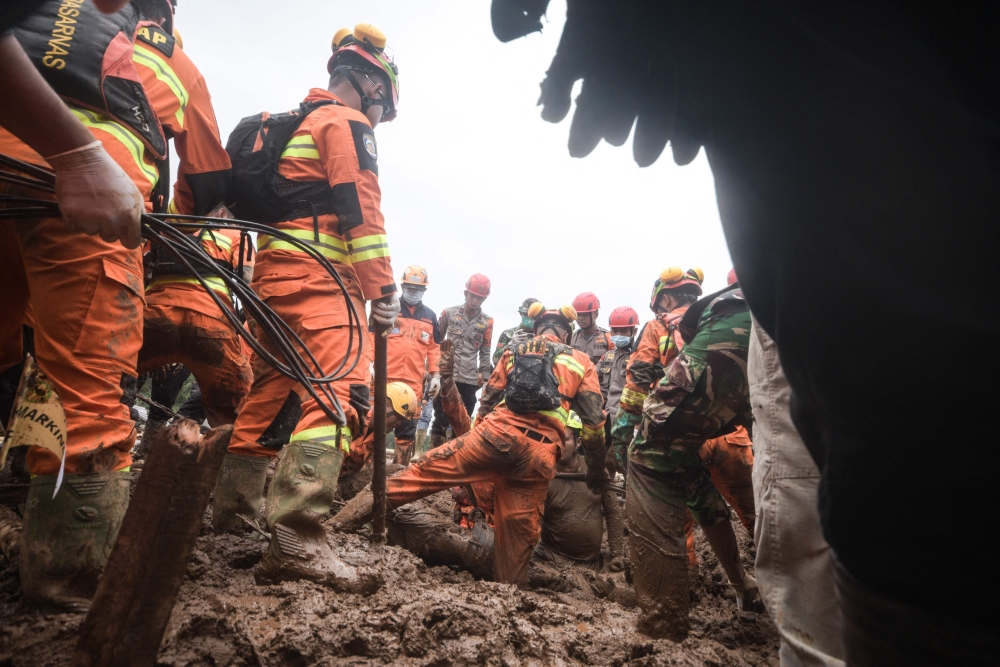
In a tragic development, Indonesian authorities announced that the death toll from the landslide that struck West Java province last weekend has risen to 50. Search and rescue efforts continue under extremely difficult conditions to find 33 people still missing under tons of mud and debris.
Indonesian police in the province confirmed that the Disaster Victim Identification Team (DVI) has received 50 bodies from the disaster site in West Bandung, and has identified 34 victims so far. Among those identified are four members of the Indonesian Navy, who were swept away when a nearby hillside collapsed onto their village in the early hours of Saturday morning, turning the area into a scene of devastation.
Background of natural disasters in Indonesia
Indonesia, a vast archipelago of thousands of islands, is one of the world's most disaster-prone countries. Its location on the Pacific Ring of Fire makes it a hotspot for seismic and volcanic activity. In addition, the monsoon season, which typically runs from November to March, brings torrential rains that frequently trigger deadly floods and landslides. These natural hazards are exacerbated by human factors such as widespread deforestation, which removes vegetation that helps stabilize the soil, and unplanned urban sprawl into mountainous areas and steep slopes, placing even more people in direct danger.
Local and international impacts of the landslide
Locally, the disaster has left immense devastation, with entire families losing their homes and loved ones, necessitating urgent relief and shelter efforts for survivors. Rescue teams, comprised of the army, police, and civilian volunteers, face formidable challenges due to the continued hazardous nature of the site and the potential for further collapses, forcing them to temporarily suspend search operations at times to ensure their safety.
Regionally and internationally, this recurring tragedy underscores Indonesia's urgent need to strengthen early warning systems and improve land-use management to prevent construction in high-risk areas. It also highlights the importance of international cooperation in disaster management and the sharing of expertise to address the growing impacts of climate change, which is believed to increase the intensity and frequency of extreme weather events that lead to such devastating disasters.