A tragic natural disaster struck the Indonesian island of Siau in North Sulawesi province, where torrential rains and flash floods killed at least 16 people and displaced hundreds who were forced to flee their homes in search of safety. This incident once again highlights the climate challenges facing Indonesia as a tropical archipelago vulnerable to hydrological disasters.
Details of the disaster and relief efforts
Indonesia's National Disaster Management Agency (BNPB) announced in an official statement that heavy rains on Monday caused a major river to overflow, flooding four towns on the small island in the eastern part of the archipelago. Agency spokesman Abdul Mahari stated that "the flash floods have resulted in the deaths of 16 people," adding that search and rescue teams are still looking for three missing individuals.
Al-Mahari added that the disaster left 22 injured people receiving medical care, while about 700 local residents were evacuated to temporary shelters and government buildings away from the flood path, in an attempt to secure their lives amid the continuing dangers.
Widespread destruction of infrastructure
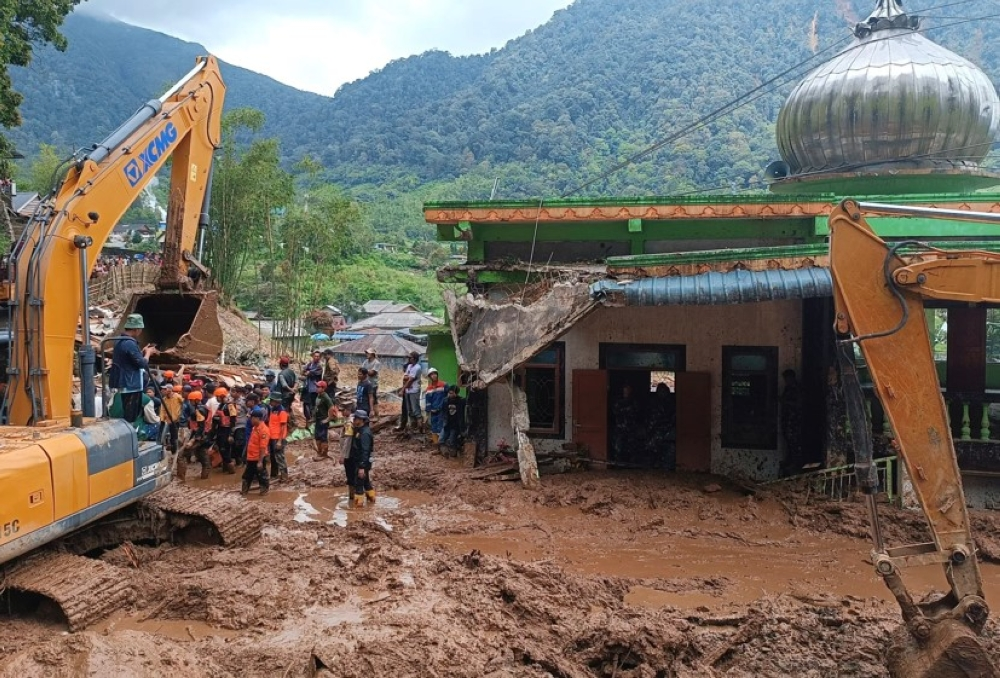
Images released by the search and rescue agency revealed the immense scale of the devastation, with floodwaters carrying massive boulders and uprooting trees, turning streets into raging torrents. A spokesperson explained that the floods cut off several vital roads, hindering aid deliveries in the initial hours, and severely damaged dozens of homes, public buildings, and essential infrastructure.
The climatic and geographical context of Indonesia
Comprising more than 17,000 islands, Indonesia is one of the world's most vulnerable countries to climate-related natural disasters. The country experiences an annual rainy season, typically lasting from October to March, during which the likelihood of torrential rainfall exceeds the capacity of the soil and rivers to absorb it increases. The mountainous and volcanic terrain of islands like Sulawesi plays a role in accelerating water runoff, transforming rain into flash floods in record time, which explains the sudden nature of these floods.
Seasonal challenges and regional impacts
This incident is not isolated from the regional context; Southeast Asia has recently experienced severe weather fluctuations. Indonesia suffered a similar disaster in late November on the island of Sumatra, which was ranked among the worst natural disasters in recent years. These events also coincide with waves of tropical storms and monsoon rains that have struck neighboring countries such as Malaysia, Thailand, and Sri Lanka, indicating a pattern of increasingly severe regional weather.
Environmental experts believe that global climate change, in addition to some local practices such as deforestation and urban expansion in floodplains, contribute to exacerbating these phenomena, increasing human and material losses annually, and calling for strengthening early warning strategies and sustainable urban planning.